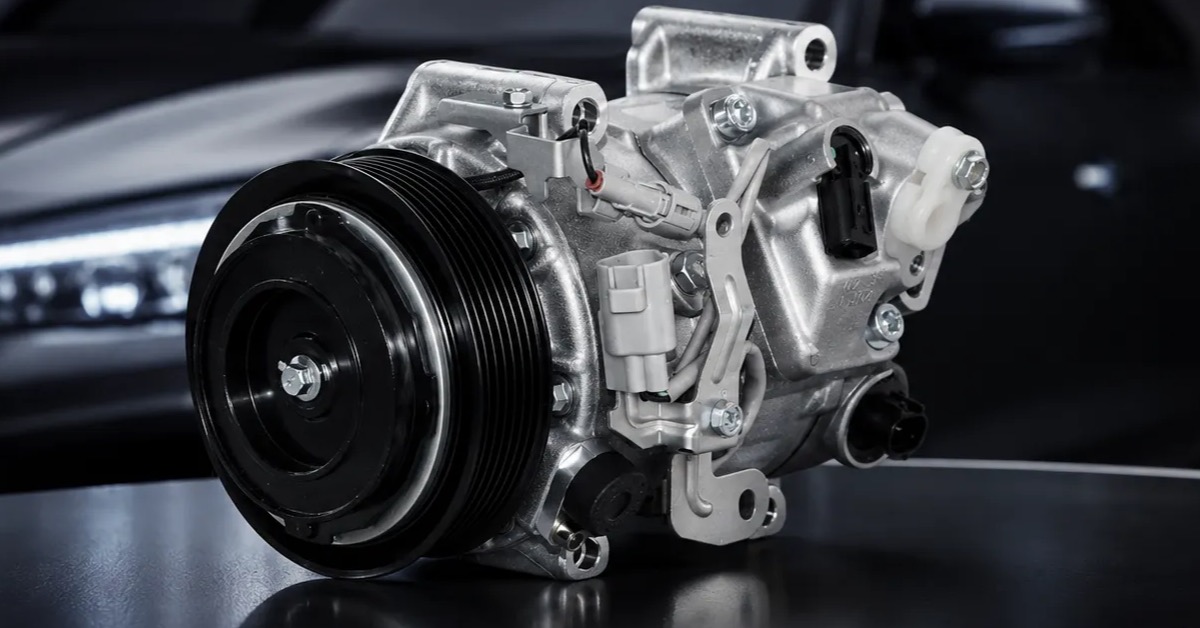
AC compressor durability testing should show whether a defined compressor revision can continue to operate under the loads, temperatures, speeds, pressures, lubrication conditions, starts, stops, and environmental exposures required by its intended vehicle application. It is not one universal test with one universal number of hours. The buyer must connect the plan to the compressor architecture, refrigerant circuit, vehicle duty, customer specification, and production process.
This ZUA Auto Parts resource helps distributors organize the evidence needed before quotation; confirm the exact application, interfaces, tests, and supplied scope for every requested part.
This guide is for importers, distributors, private-label brands, service networks, OEM/OES teams, and engineering buyers approving new or replacement automotive A/C compressors. It explains what to request, what a report should contain, and how to avoid accepting a test result that cannot be traced to the quoted product.
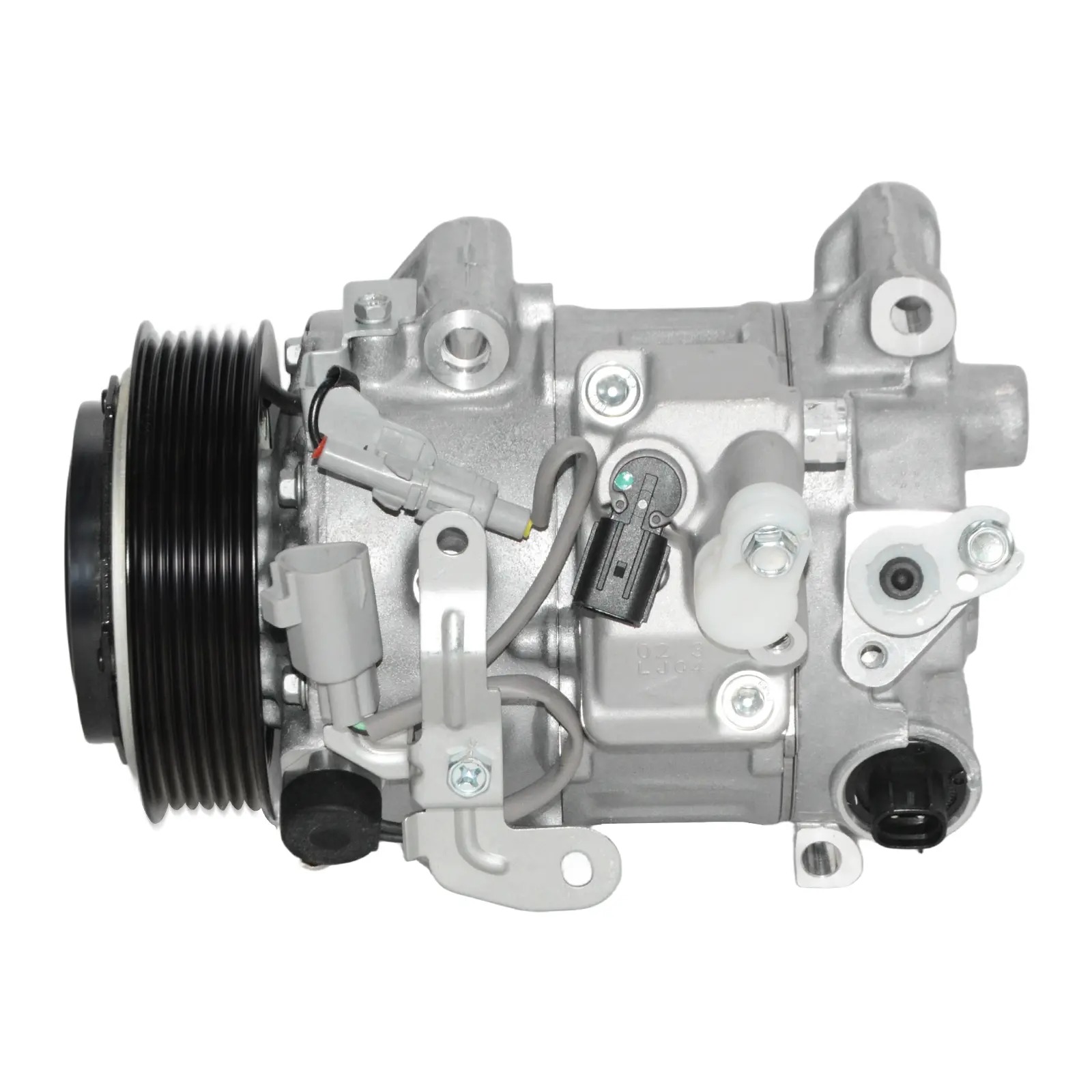
AC compressor durability testing: buyer checklist
| Review area | Buyer question | Required evidence |
|---|---|---|
| Purpose | Which design or field risk does the test address? | Requirement and risk reference |
| Sample | Does it match the quoted revision and production route? | Part, revision, lot, build record |
| Test cycle | Are speed, load, pressure, temperature, and cycling defined? | Controlled test procedure |
| System conditions | Are refrigerant, oil, charge, airflow, and controls representative? | Setup record and instrumentation list |
| Acceptance | What constitutes pass, interruption, or failure? | Approved criteria and deviation record |
| Monitoring | Which parameters are recorded during the run? | Raw data and alarm history |
| Post-test review | What is measured and inspected after testing? | Performance comparison and teardown |
| Failure response | How are causes, affected lots, and corrective actions controlled? | Failure analysis and action closure |
1. Define the validation question first
Start with the decision the test must support. A new compressor platform, a changed control valve, an alternative bearing, a seal compound change, a different lubricant, a new vehicle application, and a periodic production audit do not have the same purpose. Record the requirement source, risk, responsible approver, and evidence needed for release.
Separate design validation from production monitoring. A long development test can explore design margin, while an end-of-line check verifies assembly function on every unit. Periodic audit tests may detect drift. None should be presented as a substitute for the others.
2. Identify the exact compressor and application
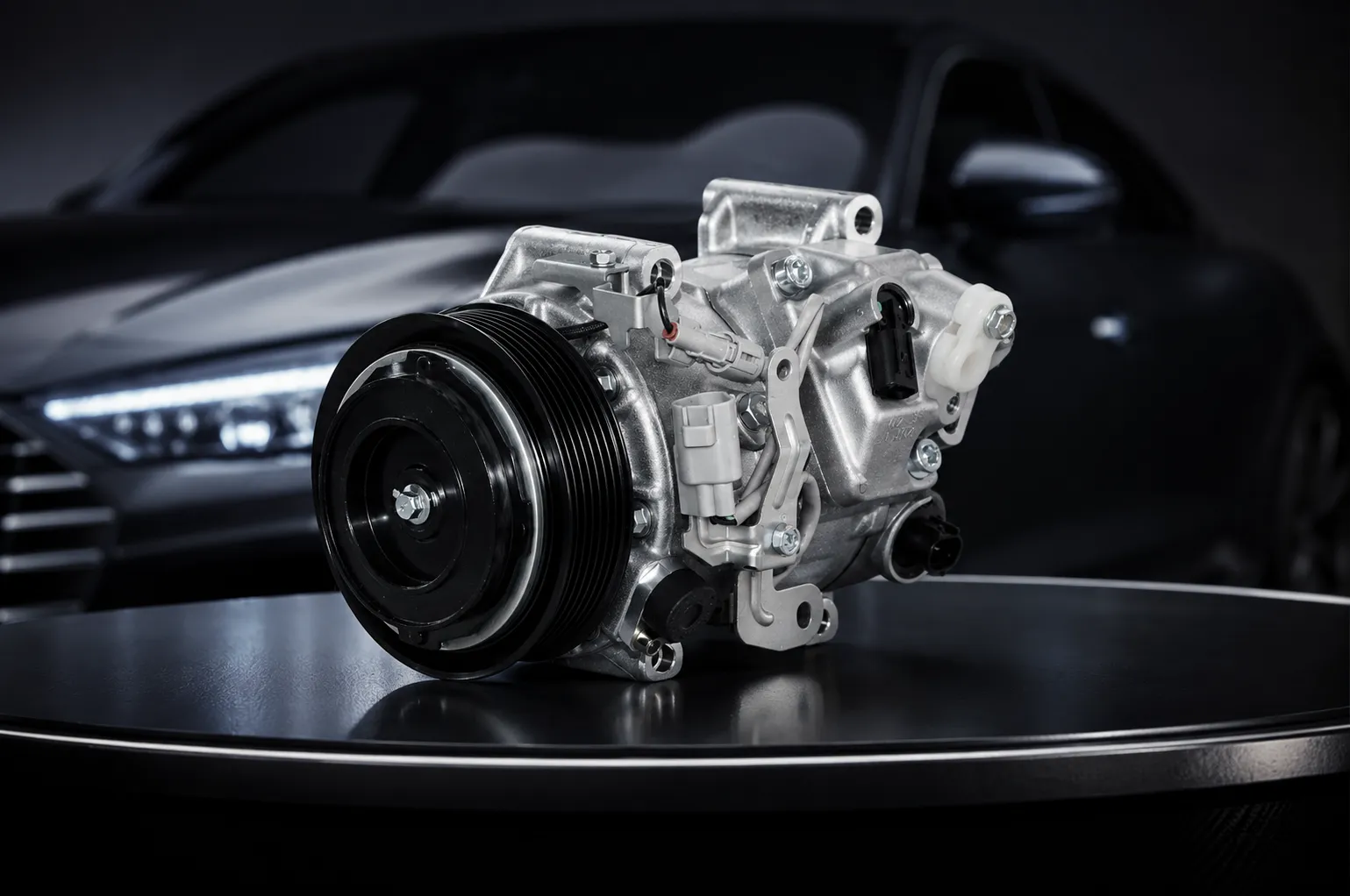
The report should identify part number, platform, displacement, fixed or variable control, control valve, clutch or pulley arrangement, housing and internal revision, refrigerant, lubricant type and quantity, sample lot, production date, and build route. Include the target vehicle, HVAC system, engine, market, and relevant operating assumptions.
ZUA lists BVC, BFC, TM, BV5, and BV6 compressor platform families on its compressor category page. Platform information supports an initial review, but validation must remain tied to the quoted model and revision.
3. Use production-representative samples
Ask whether samples came from normal materials, tooling, equipment, operators, cleaning, assembly, lubricant filling, and end-of-line testing. Identify any hand-built steps or temporary components. A specially prepared sample may help engineering learn, but it cannot automatically approve normal production.
The sampling plan should define quantity and selection logic. One passing unit cannot describe variation. Buyers should use project risk and customer requirements to decide whether samples come from different lots, lines, shifts, tooling positions, or component batches.
In AC compressor durability testing, the sampling record should also explain why the selected units represent the approved bill of materials and normal process variation.
4. Control refrigerant-circuit conditions
Compressor durability depends on the complete test circuit. Record refrigerant type and charge, oil type and quantity, oil return, suction and discharge conditions, superheat or other relevant thermal states, condenser and evaporator behavior, airflow, piping, reservoir volume, contamination controls, and moisture management.
Before the run, document evacuation, charging, oil balancing, leak checks, and instrumentation calibration. During interruptions, control whether the circuit is opened, recharged, or serviced. Unrecorded service can hide a developing problem or introduce a new one.
5. Define speed, pressure, and thermal cycles
A useful procedure states each operating segment, transition, speed, load, pressure range, temperature condition, duration, number of cycles, start-stop pattern, and control command. It also defines ramp rates, stabilization, shutdown, restart, and alarm actions. The sequence should represent the risk being evaluated rather than merely accumulate time.
AC compressor durability testing may include steady operation, high-load segments, low-speed lubrication challenges, thermal cycling, frequent clutch or command cycling, and off-design conditions where the customer specification requires them. Test severity must be approved; increasing one condition without understanding the system can create an irrelevant failure mode.
6. Monitor data throughout the test
Possible measurements include suction and discharge pressure, inlet and outlet temperature, refrigerant flow, compressor speed, torque or power, current or control signal where relevant, oil-related observations, vibration, noise, leakage, and cooling performance. The exact list depends on the design and objective.
Raw data should carry timestamps and sample identity. Define alarm limits, sensor accuracy, sampling rate, data gaps, interruptions, and operator actions. A final statement of “pass” is weak evidence if trends, alarms, and interventions are missing.
7. Combine durability with vibration and mounting review
Bench fixtures influence loads. Confirm mounting points, fastener torque, bracket stiffness, pulley alignment, belt tension, ports, hoses, and vibration input. If vehicle vibration is part of the plan, document axes, mounting, profiles, sequence, and whether the compressor operates during exposure.
ZUA reports laboratory capability for compressor performance, durability, vibration, noise, and after-sales analysis. Buyers should request equipment scope, procedure, calibration status, sample identity, and model-specific records rather than infer approval from a laboratory photograph.
8. Inspect performance before, during, and after
Measure agreed baseline characteristics before the durability run. At defined checkpoints and after completion, repeat comparable performance, leak, functional, noise, and control checks. Use the same or correlated equipment and conditions so changes can be interpreted.
Post-test inspection may include external leakage, oil condition, clutch or pulley, control valve, seals, bearings, pistons or scroll elements, plates, fasteners, wear surfaces, debris, and other architecture-specific parts. Photographs should identify location and scale. Teardown findings need acceptance criteria or an engineering disposition.
9. Treat interruptions as data
Power loss, fixture leakage, sensor faults, circuit service, alarm trips, abnormal noise, and parameter excursions must be recorded. The report should state elapsed test exposure, interruption cause, sample condition, corrective action, and whether the result remains valid. Restarting the clock without a documented decision weakens traceability.
When the compressor is removed for inspection, control any oil addition, component replacement, cleaning, or adjustment. These actions may change the item under evaluation and require a deviation approval.
10. Investigate failures without assigning cause too early
A failed system test does not automatically prove a compressor design defect. Preserve the sample and circuit state, confirm measurement validity, review refrigerant and oil, inspect the fixture, contain related material, and reproduce the symptom where appropriate. Separate the failure mechanism from the organizational root cause.
The analysis should identify evidence, contributing factors, affected revisions or lots, corrective action, verification, and revalidation scope. An AC compressor durability testing report is incomplete when it records only that a replacement sample passed.
11. Connect validation to supplier quality controls
The International Automotive Task Force describes IATF 16949 as an automotive quality-management standard intended to support consistent supply-chain methods. Verify certificate scope and site, then connect validation results to drawings, process controls, approved suppliers, calibration, traceability, nonconforming control, and engineering change approval.
ZUA states that its compressor operation uses automatic cleaning, helium leak detection, full-performance testing, Andon and Kanban management, and abnormal-product isolation. Project approval should show how those production controls preserve the characteristics demonstrated during validation.
12. Build a model-specific RFQ package
Ask the supplier to return a test matrix with requirement, method, sample quantity, responsibility, timing, acceptance source, report, and open items. Include application data, interfaces, control strategy, refrigerant, lubricant, target market, forecast, expected changes, and buyer-side vehicle validation.
Do not request “standard durability testing” without context. Suppliers may use different internal procedures, and a familiar test name does not guarantee the same setup or criteria.
Frequently asked questions
How long should an automotive A/C compressor durability test run?
There is no universal duration. The customer specification, compressor design, duty cycle, risk, and validation purpose must define exposure and cycles.
Is a passing durability report enough to approve a supplier?
No. Buyers also need application approval, process audit, production controls, traceability, sample identity, change management, packaging, and commercial support.
Should durability samples come from normal production?
Production-representative samples are important for release. Any prototype parts, temporary tooling, or special assembly should be documented and followed by appropriate production validation.
What data should be recorded during testing?
Record the parameters required by the plan, such as pressures, temperatures, speed, load, flow, control data, vibration, noise, alarms, interruptions, and service actions.
Why is lubricant control important?
Oil type, quantity, circulation, return, contamination, and service actions can affect wear, heat, sealing, and the interpretation of results.
What should happen after an abnormal noise appears?
Record the condition, preserve data, follow the approved stop criteria, inspect the system and sample, and determine cause before continuing or replacing the unit.
Does ZUA have compressor durability capability?
ZUA reports laboratory capability for performance, durability, vibration, noise, and after-sales analysis. Buyers should request the applicable procedure and records for their model.
How can I request a test-plan review?
Send compressor references, vehicle data, control type, refrigerant, lubricant, forecast, and validation requirements through the ZUA contact page.
Use AC compressor durability testing as release evidence
The strongest AC compressor durability testing program links a clear risk to a controlled sample, representative system, monitored cycle, approved criteria, post-test inspection, failure response, and production change control. That evidence helps sourcing teams distinguish a meaningful validation program from an isolated pass statement.