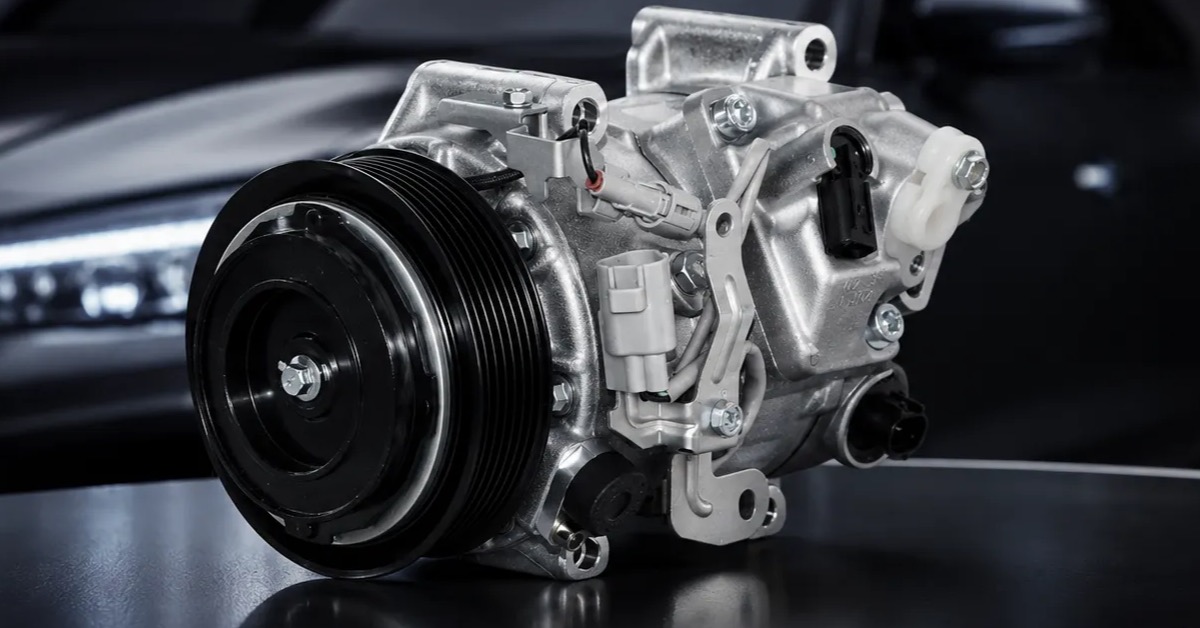
Automotive AC hose quality testing should verify more than whether an assembly holds pressure for a few seconds. Buyers need evidence that the correct hose, aluminum tube, fittings, seals, crimp geometry, routing, cleanliness, and protective packaging can be produced repeatedly for the target refrigerant circuit and vehicle application.
For buyers sourcing through ZUA Auto Parts, this framework connects the technical question to a controlled product inquiry; exact fitment and quoted specifications remain SKU-specific.
This guide helps importers, distributors, private-label brands, service networks, and OEM/OES teams approve refrigerant hose and pipe assemblies. It avoids universal test limits because pressures, temperatures, media, cycles, and acceptance criteria must follow the product design, applicable customer specification, and destination-market requirements.
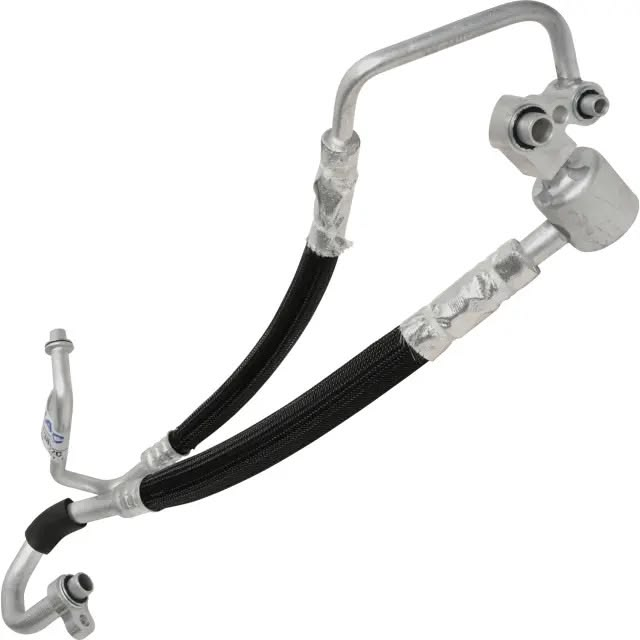
Automotive AC hose quality testing checklist
| Control | Main risk | Evidence |
|---|---|---|
| Application and routing | Wrong interfaces, interference, or stress | Drawing, fitment record, routing check |
| Hose and tube materials | Incompatible or uncontrolled construction | Specifications and incoming records |
| Crimping and joining | Leakage, pull-off, restriction, or damage | Validated parameters and inspection |
| Cleanliness | Compressor and valve contamination | Cleaning, capping, and handling controls |
| Leak and pressure tests | Refrigerant loss or structural failure | Defined methods and traceable results |
| Permeation and compatibility | Long-term refrigerant or material loss | Design validation evidence |
| Vibration and thermal durability | Fatigue at bends, brackets, and joints | Application-based test report |
| Packaging and traceability | Damage, contamination, and weak containment | Approved pack and lot drill |
1. Define the complete vehicle application
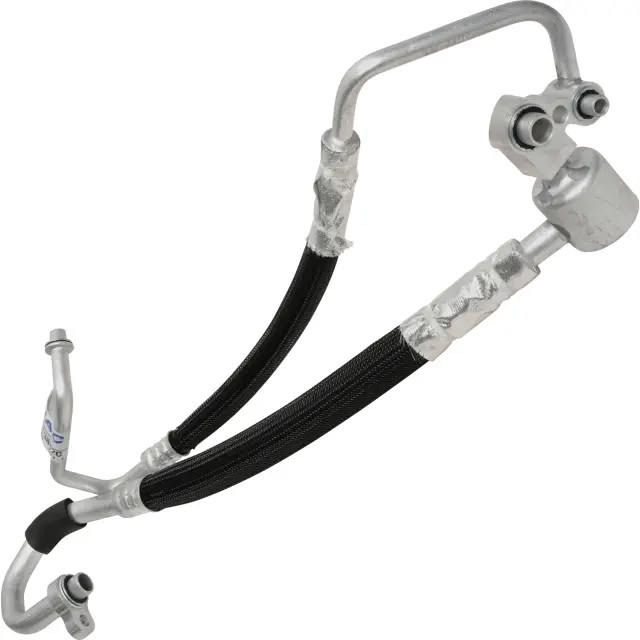
Provide OE and cross-reference numbers, vehicle, year, engine, market, refrigerant, compressor and heat-exchanger interfaces, service ports, sensors, routing, brackets, heat shields, clips, protective sleeves, and surrounding clearances. Identify whether the assembly is suction, discharge, liquid, or another line within the circuit.
ZUA lists hose and aluminum pipe assemblies on its A/C hose assembly page. Buyers should release fitment only after checking the complete part and vehicle variant, not from a cropped product image or one connector.
2. Control drawings, datums, and interfaces
The drawing should define tube bends, overall route, flexible length, clocking, fittings, sealing features, brackets, service ports, sensor bosses, crimp locations, sleeves, labels, and protected areas. Use datums and inspection fixtures that reflect how the part interfaces with the vehicle.
For initial samples, request a full dimensional layout and installation check. For production, review fixture correlation, measurement methods, sampling, calibration, and reaction plans. An assembly can pass overall length while still stressing a port because bend angle or fitting orientation is wrong.
3. Verify hose construction and material identity
Ask for the controlled hose specification, compatible refrigerant and lubricant, temperature and pressure application, barrier construction where required, reinforcement, cover, size, approved manufacturer, date or lot identification, storage, shelf-life controls, and incoming verification.
Do not approve alternative hose from printed markings alone. Material changes can affect flexibility, permeation, crimp response, chemical compatibility, aging, and vibration life. Define equivalence evidence and buyer notification before substitution.
4. Verify aluminum tubes, fittings, and seals
Control tube alloy and condition, wall thickness, forming, bends, beads, flares, manifolds, brazed or welded joints, fittings, threads, service ports, caps, brackets, and surface protection. For seals, confirm material, size, source, storage, cleanliness, and whether they are supplied installed or separately.
Review incoming and in-process checks. Appearance cannot confirm alloy, temper, seal compound, joint penetration, or internal restriction. Critical components need lot traceability appropriate to program risk.
5. Validate crimp design and process settings
Crimp performance depends on hose, fitting, sleeve, insertion depth, tooling, jaw condition, crimp diameter or profile, alignment, and process force. Establish validated settings for each hose-and-fitting combination rather than copying a setting from a similar size.
Automotive AC hose quality testing should connect crimp measurements to functional validation such as leak integrity, pull or retention behavior where specified, pressure cycling, and section inspection. Audit tooling identification, maintenance, setup approval, first-piece checks, frequency, data retention, and response to an out-of-control result.
6. Audit joining and bracket operations
Where the assembly includes brazing, welding, forming, or fastening, review preparation, cleanliness, fixtures, controlled parameters, distortion, operator qualification, equipment maintenance, inspection, and repair rules. Brackets and clips must be positioned and secured without damaging the tube or creating stress concentrations.
Any repair method should be documented with limits, identification, reinspection, and final testing. An uncontrolled local repair can change cleanliness, material condition, geometry, or durability.
For automotive AC hose quality testing, repaired samples should never be mixed with normal production evidence unless their status and purpose are explicit.
7. Define production leak testing
The leak plan should specify the test stage, medium, pressure or vacuum, temperature, stabilization, duration where relevant, acceptance criterion, equipment, fixture, frequency, and failed-part response. Confirm equipment verification, master parts, fixture-leak detection, alarms, calibration, and traceable data.
A short production check and a longer design validation answer different questions. Buyers should know which is applied to every assembly and which is performed on samples during development or periodic audits.
8. Separate burst, proof, impulse, and pressure cycling
Pressure-related tests have different purposes. Proof testing checks integrity at a defined condition; burst testing explores structural limit; impulse or pressure cycling evaluates repeated loading. The procedure must state sample conditioning, fluid or gas, temperature, pressure profile, ramp, cycles, restraints, acceptance, and post-test inspection.
Do not apply one test's result as proof of another. Gas testing can carry different energy and safety considerations than liquid testing, so qualified facilities and approved procedures are essential.
9. Review permeation and chemical compatibility
Long-term refrigerant containment depends on the complete hose construction and media. Where required, review permeation, refrigerant and lubricant compatibility, moisture, aging, and extraction or residue evidence under defined conditions. Confirm that the tested hose and fitting revision match the quotation.
Automotive AC hose quality testing for material compatibility should identify conditioning, medium, temperature, duration, measurements, acceptance criteria, and sample preparation. A certificate for a hose family may not cover a changed construction or crimp combination.
10. Protect internal cleanliness
Particles, metal chips, flux residue, oil, moisture, and damaged caps can affect compressors, expansion devices, seals, and heat exchangers. Review tube cutting and deburring, flushing or cleaning, drying, assembly exposure, rework, final inspection, capping, storage, and packaging.
Define cleanliness acceptance and measurement when the customer requires it. Caps should remain secure and protect sealing surfaces through transport. Opening a verified line for an unrecorded rework should trigger appropriate cleaning and final checks.
11. Validate routing, thermal exposure, and vibration
Install the assembly in a representative fixture or vehicle to verify port alignment, routing, bend radius, flexibility, clearance, brackets, clips, heat sources, moving components, and serviceability. Record installation forces or abnormal preload where relevant.
Durability plans may include vibration, thermal cycling, pressure cycling, engine movement, hose flexing, and environmental exposure based on application risk. Inspect crimps, bends, joints, brackets, sleeves, and contact points after testing, then repeat leak and dimensional checks.
12. Approve packaging as part of product quality
Long lines and bent tubes are easily distorted. Packaging should restrain movement without loading fittings, bends, ports, service valves, sensors, or flexible sections. Approve caps, bags where appropriate, dividers, supports, carton strength, pallet pattern, labels, and handling instructions.
Use a transport trial or inspection after a representative shipment when risk justifies it. Packaging changes can alter geometry and cleanliness, so they should follow revision and approval controls.
13. Verify traceability and supplier responsibility
Select a finished line and trace hose lot, tube or fitting lot where required, seals, production date, crimp equipment, operator or station, inspections, leak result, rework, and packaging. Perform a forward trace from a critical lot to finished and shipped assemblies.
The IATF 16949 overview provides context for automotive quality systems. Buyers should verify certificate scope and then audit the actual line, records, nonconforming controls, complaints, and change management. ZUA lists hose assemblies within its wider HVAC supply portfolio; confirm the responsible manufacturing and test route for the target item.
Frequently asked questions
Is a pressure test the same as a leak test?
No. Methods and purposes differ. The plan should define whether it checks leakage, proof integrity, cycling durability, or structural limit.
Can an A/C hose be approved from its printed marking?
No. Buyers must confirm construction, application, source, lot, compatibility, crimp combination, and validation evidence.
Why is fitting orientation important?
Incorrect clocking or bend geometry can cause installation stress, hose twist, interference, poor sealing, vibration, and premature failure.
What crimp records should buyers request?
Request tooling and setting identification, first-piece and periodic measurements, equipment status, functional validation, traceability, and reaction plans.
Why should line cleanliness be controlled?
Debris, residue, or moisture can circulate through the refrigerant circuit and affect compressors, valves, seals, and heat exchangers.
Should packaging be included in sample approval?
Yes. Packaging can affect tube geometry, ports, caps, contamination, labels, and installation condition.
Does ZUA manufacture every hose assembly it supplies?
ZUA's stated core manufacturing focus is compressors, while hose assemblies are listed in its wider HVAC portfolio. Confirm the target part's production and quality responsibility.
What information is needed for a hose quotation?
Send OE references, vehicle data, refrigerant, route, fittings, ports, hose and tube requirements, forecast, tests, labels, and packaging through the ZUA contact page.
Use automotive AC hose quality testing to control the full assembly
The strongest automotive AC hose quality testing plan connects application routing, materials, forming, crimping, joining, cleanliness, integrity, durability, packaging, traceability, and change notification. That full-chain evidence gives buyers a better basis for approval than price, visual similarity, or a single pressure result.