An automotive condenser bulk order succeeds only when every correct condenser reaches the correct warehouse with its fins, tubes, brackets, ports, labels, and traceability intact. Unit-price negotiation is incomplete without a packaging and logistics route that controls compression, vibration, moisture, abrasion, mixed-SKU errors, and receiving damage.
For buyers sourcing through ZUA Auto Parts, this framework connects the technical question to a controlled product inquiry; exact fitment and quoted specifications remain SKU-specific.
This guide is for importers, distributors, private-label brands, and logistics teams planning volume A/C condenser shipments. It uses a route-first method rather than a generic supplier checklist. Pack quantities, stack limits, container patterns, and acceptance criteria must be validated for the actual product and distribution route.
Draw the route before designing the carton
Map every physical handoff: factory packing, internal transport, export warehouse, container loading, ocean or land transport, customs inspection, deconsolidation, regional warehouse, parcel or pallet redistribution, customer storage, and final workshop delivery. Record handling equipment, stack duration, climate exposure, drop risk, and whether cartons are opened or relabelled.
The hardest step may not be the longest journey. A well-secured container can be followed by loose last-mile handling that bends ports or crushes fins.
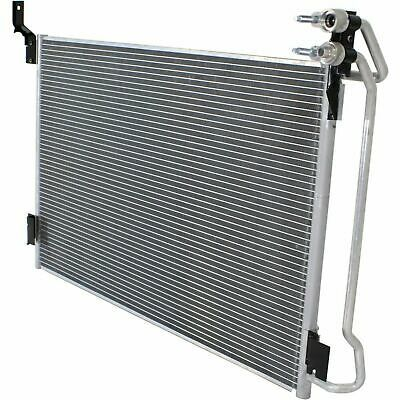
Turn each condenser into a damage map
| Feature | Likely route risk | Protection question |
|---|---|---|
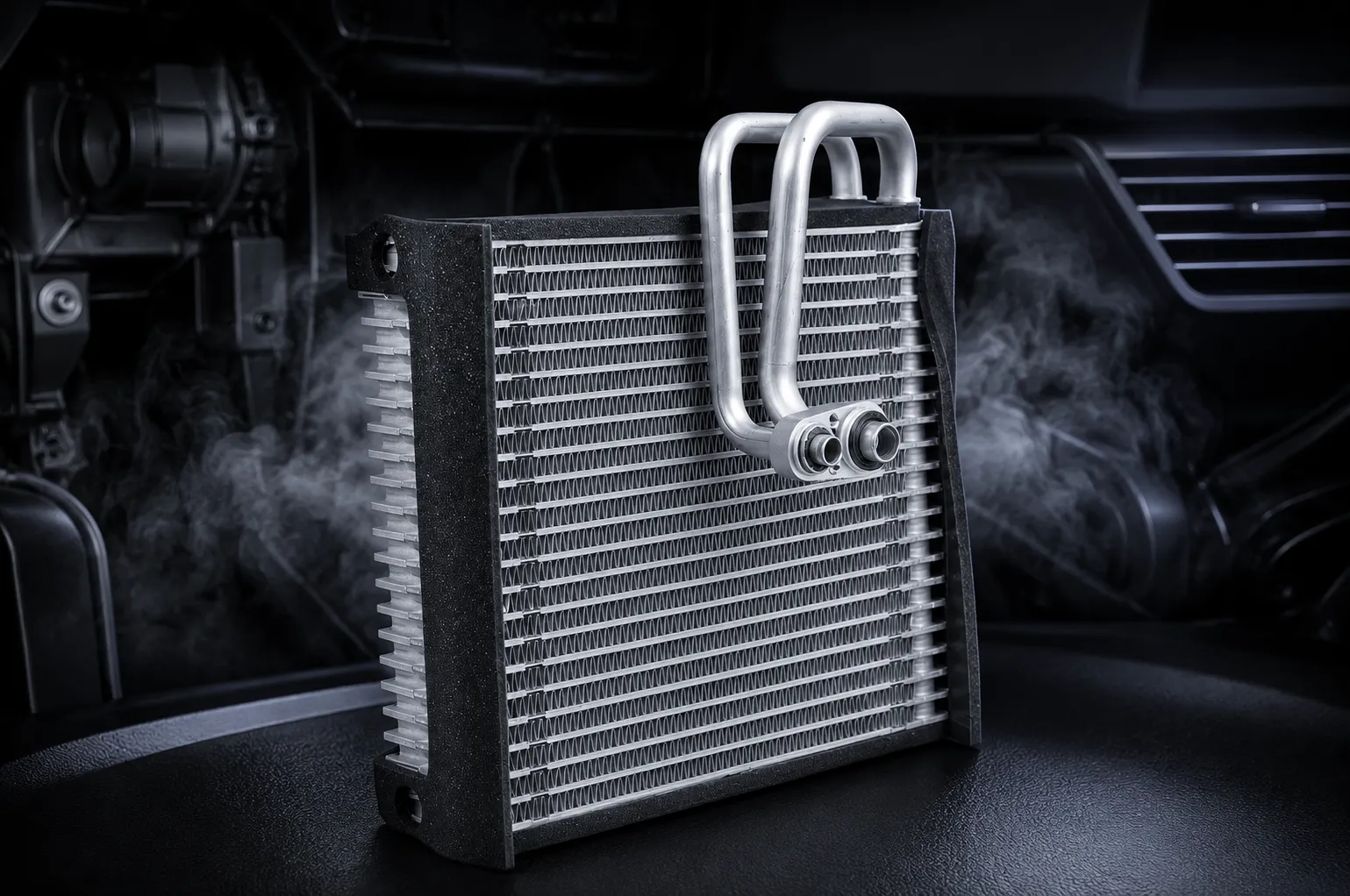
| Fin field | Compression, rubbing, puncture | Does the pack keep loads off the core? |
| Ports | Impact, contamination, lost caps | Are ports capped and isolated? |
| Brackets | Bending or carton breakthrough | Are hard points supported? |
| Tubes and headers | Local load, abrasion, corrosion | Are contact and moisture controlled? |
| Accessories | Missing or loose damage | Are seals and hardware retained? |
| Label | Scuffing, detachment, wrong scan | Can identity survive the route? |
| Carton | Collapse, opening, wetting | Is strength proven after conditioning? |
Separate product support from cosmetic cushioning
Effective packaging transfers external load through approved structural areas instead of the fin field, thin tubes, or protruding ports. Review inserts, corner blocks, trays, bags, partitions, sleeves, caps, and carton clearances. Confirm that the condenser cannot migrate until a bracket becomes a punch point.
Soft material alone is not proof of protection. It can compress during stacking or create abrasion under vibration. Use drawings and packed samples to show load paths.
Validate the primary pack as one controlled assembly
Freeze the condenser revision, accessories, caps, bag, insert, carton, tape or closure, label, pack orientation, and packing instruction. Record material grades and critical dimensions where they affect performance. A packaging test is valid only for the configuration represented.
For an automotive condenser bulk order, sample packs should come from normal production packing. Specially prepared laboratory cartons may miss variation in folding, taping, insert placement, or line handling.
Condition packs for the real environment
Humidity and temperature can change carton stiffness, adhesives, films, foam, corrosion risk, and label readability. Choose conditioning from the actual route and customer specification. Document preconditioning, duration, orientation, load, and time between conditioning and test.
Do not claim a universal climate profile. A dry truck route and a humid ocean route expose different weaknesses.
Test stacked load and dynamic handling
Validation may combine compression, vibration, shock, drop, impact, clamp or fork handling, pallet movement, and mixed-load simulation as relevant. The sequence matters because a carton weakened by humidity and vibration may fail under later stacking.
Inspect the product after each meaningful stage. Record fin deformation, port movement, bracket position, leakage or pressure integrity when required, carton condition, label scan, and accessory retention. A carton that looks acceptable can hide a damaged core.
Design pallet patterns from product limits
Specify carton orientation, layers, interlayers, edge protection, pallet footprint, overhang, straps or film, top protection, maximum validated stack, and unit-load label. Consider container height, weight distribution, door clearance, unloading equipment, and warehouse racking.
A higher cube utilization is not an improvement if it transfers load to condenser fins or creates unstable pallets. Compare landed usable units, not only cartons per container.
Control mixed-SKU loads visibly
Mixed orders need a location map and clear separation. Use pallet, layer, carton, and unit identity appropriate to the operation. Avoid visually similar cartons with only a small part-number difference. Scan checks can connect packing list, pallet, carton, and SKU.
If a product is substituted, split the approval and identity. An automotive condenser bulk order should never contain an unapproved interchange simply to complete container quantity.
Build labels from receiving tasks
Ask warehouse staff what they must decide at each scan: part, quantity, lot, revision, customer reference, destination, handling, or inspection status. Place human-readable data beside a verified barcode. Confirm contrast, size, adhesive, print durability, language, and restricted claims.
Reconcile product marking, unit label, carton label, pallet label, packing list, invoice, and digital advance-shipment data. One identity should flow through all layers.
Lock ports, caps, and cleanliness
Ports must remain protected from particles, moisture, impact, and cap loss. Define cap type, fit, retention, removal method, and inspection. Do not allow packaging material to shed debris toward open interfaces.
If a cap loosens at receiving, quarantine the unit under an approved disposition. Replacing the cap does not prove internal cleanliness or moisture condition.
Plan container loading and unloading together
Create a load plan that identifies pallet or loose-carton positions, restraint, void management, weight distribution, moisture control where required, inspection access, seals, and unloading sequence. Confirm that the destination can handle the chosen unit load without unsafe improvisation.
Photograph the empty container condition, loading stages, completed restraint, seal, opening at destination, and first unloading observations. These records help locate where damage occurred.
Use receiving inspection to preserve evidence
Inspect container or vehicle condition before unloading, then sample pallets, cartons, labels, caps, and products under a defined plan. Record position, SKU, lot, carton condition, fin and bracket damage, moisture, abrasion, leakage evidence, and photographs. Keep damaged packaging with the part until responsibility is assessed.
Distinguish factory packing nonconformity, transport event, warehouse handling, and product defect. A shared reason code supports fair claims and better prevention.
Close damage feedback with route evidence
Trend damage by SKU, packaging revision, pallet position, container position, route, carrier, warehouse, and failure mode. Use the pattern to test a mechanism. Crushed lower cartons suggest a different action from isolated bent ports after parcel delivery.
ZUA lists condensers in its automotive A/C product range. Buyers should confirm the responsible production route, product validation, packaging owner, and damage-analysis responsibilities for the quoted program.
Freeze changes before the next shipment
Review changes to condenser geometry, brackets, caps, accessories, carton grade, inserts, supplier, tape, label, pallet, pattern, container method, route, or warehouse. Revalidate the affected risks and identify the effective shipment. Do not mix packaging revisions without traceability.
The IATF 16949 overview provides automotive quality-system context. The shipping file should still show which approved product and pack reached each customer.
Audit one carton from order line to installed part
Select a carton at random and reconstruct its complete route. Start with the purchase-order line and approved automotive condenser bulk order specification, then verify supplier part, customer SKU, product revision, production lot, caps, accessories, packing instruction, carton revision, barcode, pallet position, shipment document, receiving scan, warehouse location, pick record, and customer dispatch. The audit should end at a usable condenser, not at a correct invoice.
Repeat the trace in reverse. Starting from a damaged or returned unit, can the teams find when it was packed, which packaging revision was used, where it sat in the load, how it was received, and whether similar stock remains? Missing links reveal where evidence disappears.
Use the result to improve the route rather than merely score departments. The automotive condenser bulk order process is strong when product, data, and physical custody move together. A perfect carton label cannot compensate for an untraceable loose unit, and accurate ERP stock cannot prove that fins remained protected.
Repeat this audit for a high-volume SKU, a fragile geometry, and a mixed-load SKU so the review does not represent only the easiest carton.
Frequently asked questions
Why are condenser fins easily damaged in bulk shipping?
They are thin heat-transfer features. Packaging should prevent external and internal loads from reaching the fin field.
Should cartons be tested before a large order?
Yes. Validate the complete production-intent pack against the actual distribution risks and customer requirements.
Can two condenser SKUs share one insert?
Only when geometry and load-path evidence show that the insert protects both approved configurations.
What should be photographed during loading?
Record container condition, pallet and carton identity, load stages, void restraint, final condition, seal, and relevant handling.
How should damaged ports be handled?
Quarantine the unit, preserve packaging and position evidence, and follow an approved technical disposition.
Does better container utilization always reduce cost?
No. Extra damage, handling, sorting, claims, and unusable products can outweigh freight savings.
Does ZUA supply automotive A/C condensers?
ZUA lists condensers in its portfolio. Buyers should verify the responsible production route and product-specific evidence.
How can buyers request a bulk condenser quotation?
Send part references, SKU forecast, destination, route, packing constraints, label data, and validation requirements through the ZUA contact page.
Make the automotive condenser bulk order route-proof
A reliable automotive condenser bulk order connects product damage maps, structural packaging, conditioning, transport validation, pallet and container plans, visible SKU control, receiving evidence, and closed-loop improvement. That route discipline protects more value than a carton selected from dimensions alone.