Automotive filter drier quality testing should verify that the correct accumulator or receiver drier fits the intended refrigerant circuit, seals reliably, controls moisture and debris as specified, avoids excessive restriction, remains internally clean, and can be traced to controlled materials and production records. An external leak check alone cannot approve desiccant, internal components, flow behavior, or long-term integrity.
For a ZUA Auto Parts inquiry, use this framework to separate confirmed product data from buyer-owned validation and open questions before approving a sample or order.
This guide is for importers, distributors, private-label brands, service networks, and OEM/OES teams sourcing automotive A/C accumulators and receiver driers. Test conditions and acceptance values must come from the target design and customer specification rather than a universal checklist.
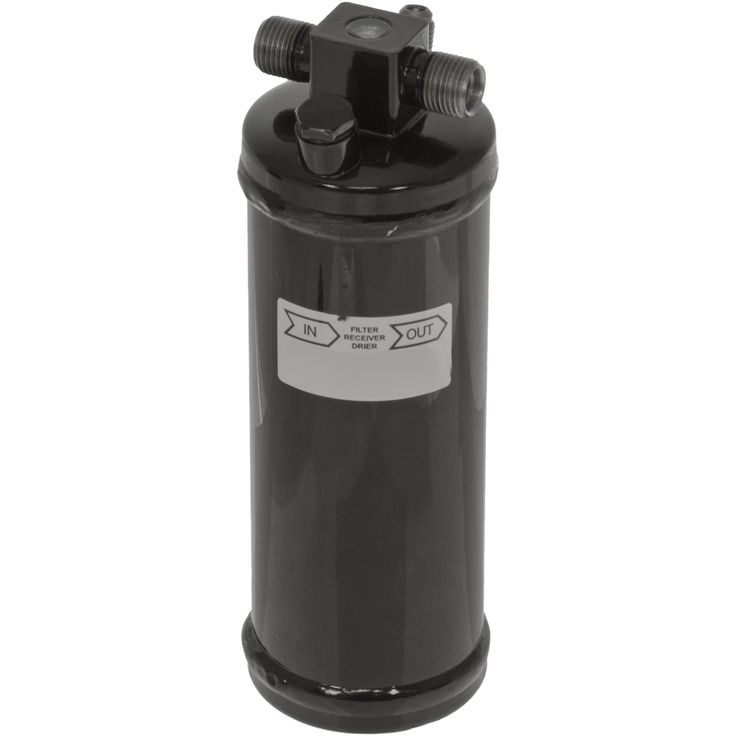
Automotive filter drier quality testing checklist
| Control | Main question | Evidence |
|---|---|---|
| Application | Are ports, mounting, volume, and system role correct? | Fitment record and drawing |
| Canister and joints | Are materials, forming, welds, and brazes controlled? | Specifications and process records |
| Desiccant | Is type, quantity, condition, and containment controlled? | Approved source and lot records |
| Internal parts | Are filters, screens, tubes, bags, and springs correct? | BOM and assembly controls |
| Integrity | Does the unit meet leak and pressure requirements? | Defined tests and results |
| Performance | Are moisture control and flow restriction acceptable? | Model-specific validation |
| Cleanliness | Are particles, residue, and open exposure controlled? | Cleaning and packaging plan |
| Traceability | Can finished units be linked to critical lots? | Backward and forward trace |
1. Confirm accumulator or receiver-drier function
The component's location and role depend on system architecture. Define whether the project uses an accumulator, receiver drier, integrated condenser drier, replaceable cartridge, or another arrangement. Provide OE references, vehicle, year, engine, market, refrigerant, ports, mounting, and system layout.
ZUA lists automotive accumulators and filter driers on its product category page. Final compatibility must be approved at part and vehicle level.
2. Control drawings and critical interfaces
Review canister diameter and length, port size, position and orientation, sealing features, mounting brackets, tubes, service fittings, pressure devices, sensor interfaces, and surrounding clearance. Define datums that protect installation and hose alignment.
Initial samples should receive a full dimensional layout and mating check. Production controls should include appropriate gauges, fixtures, frequency, calibration, and reaction plans.
3. Verify canister materials and forming
Ask for controlled material specifications, wall requirements, forming process, surface condition, approved sources, incoming inspection, and lot identification. Appearance cannot verify alloy, thickness, temper, coating, or strength.
Review thinning, cracks, folds, porosity, distortion, and sealing surfaces after forming. Material or source changes may require integrity, corrosion, and durability review.
4. Audit welds, brazes, and closures
Examine preparation, cleaning, fixture loading, controlled parameters, equipment status, operator qualification, inspection, and repair rules for welded, brazed, crimped, or otherwise closed joints. Confirm how internal parts and desiccant are protected during heat or closure operations.
Automotive filter drier quality testing should connect joint-process controls to leak, pressure, section, or other approved validation evidence. A process name alone is not proof of joint quality.
5. Control desiccant type and exposure
Define the approved desiccant specification, supplier, quantity, particle form, packaging, storage, shelf life, drying or conditioning, handling, open exposure limit, and lot traceability. Moisture absorbed before final sealing reduces useful capacity.
Review how operators identify material, open packages, control remaining stock, prevent mix-ups, and respond when exposure limits are exceeded. Substitution requires engineering approval.
6. Verify desiccant containment
The design may use bags, cartridges, screens, retainers, springs, tubes, or other parts to contain desiccant and control refrigerant flow. Confirm correct material, mesh or filtering features, assembly orientation, fastening, clearance, and resistance to damage.
Validate that particles or fragments cannot migrate under the required vibration, flow, pressure cycling, and temperature conditions. Post-test teardown should inspect containment.
7. Review internal filters and flow paths
Check tube dimensions, screens, filters, baffles, inlet and outlet orientation, weld beads, adhesives where permitted, and any feature that can restrict flow. Assembly error prevention should distinguish similar parts and orientations.
Use visual aids, fixtures, sensors, weight checks, or other suitable controls to confirm hidden content. If the final assembly prevents direct inspection, process controls become especially important.
8. Define leak and pressure-integrity testing
The plan should state test stage, method, medium, pressure or vacuum, temperature, stabilization, duration where relevant, acceptance criterion, equipment, fixture, frequency, and failed-part response. Separate routine production checks from proof, burst, fatigue, or design-validation tests.
Equipment verification, master samples, fixture leakage, calibration, alarms, data retention, and re-test rules should be auditable. Trace each result to the part or production lot.
9. Evaluate moisture-control performance
Where required, validation should identify desiccant sample, conditioning, test medium, temperature, exposure, measurement method, capacity or endpoint criterion, and retained performance. Test design depends on refrigerant system requirements and approved specifications.
Automotive filter drier quality testing for moisture performance must use the quoted material and production-representative containment. A supplier certificate for another desiccant grade is not direct evidence.
10. Check flow restriction and pressure drop
Internal tubes, filters, screens, desiccant arrangement, and manufacturing variation can affect restriction. Ask for flow or pressure-drop evidence under defined medium, temperature, flow, direction, instrumentation, and acceptance criteria.
Connect component data to system performance when the buyer owns HVAC validation. A unit can remain leak-tight but still create unacceptable restriction.
11. Protect internal cleanliness
Review cutting, forming, deburring, welding or brazing residue, cleaning, drying, component handling, assembly environment, open exposure, rework, capping, storage, and packaging. Define particle, residue, or moisture requirements when specified.
Ports should be capped promptly after final verification. Opening a finished unit is usually not a routine rework and may compromise desiccant and cleanliness.
12. Validate vibration, thermal, and pressure durability
Use application-based conditions for vibration, thermal cycling, pressure cycling, corrosion, bracket loads, and flow exposure. Record sample revision, mounting, sequence, conditions, cycles, interruptions, acceptance, and post-test inspection.
After durability, repeat relevant leak, restriction, dimensional, and containment checks. Inspect joints, brackets, internal tubes, filters, desiccant containment, and evidence of particle migration.
13. Approve packaging and shelf handling
Packaging must protect ports, caps, brackets, threads, sealing surfaces, and canister finish while limiting moisture exposure. Approve bags or barrier materials where required, caps, cartons, dividers, labels, pallet pattern, and storage instructions.
Lot identity, production date, handling, and private-label information should remain readable. Define how long sealed finished goods may be stored and how damaged packaging is handled.
14. Test traceability and supplier responsibility
Select a finished unit and trace its desiccant lot, canister material, critical internal parts, joint process, production date, inspections, integrity result, and packaging. Perform a forward trace from a desiccant or material lot to finished and shipped units.
The IATF 16949 overview gives quality-system context. ZUA lists driers within its broader HVAC supply portfolio while identifying compressors as its core manufacturing focus, so buyers should confirm the responsible production and test route for each drier project.
Analyze returned driers without opening them too early
Preserve caps, packaging, labels, installation evidence, refrigerant-circuit history, contamination, and external condition. Photograph ports and damage, confirm the complaint, and complete non-destructive leak, dimensional, or restriction checks before cutting the canister. Opening the unit too soon can release desiccant, disturb debris, and erase the original flow path.
When teardown is justified, document cut location, internal orientation, desiccant condition, bag or cartridge integrity, filters, tubes, joints, particles, moisture-related observations, and corrosion. Compare with an approved reference and production records. This failure-analysis discipline strengthens automotive filter drier quality testing and helps distinguish product, installation, storage, contamination, and system causes.
Control rejected and reworked material
Driers with failed integrity, excessive exposure, damaged caps, uncertain desiccant, or internal contamination require controlled disposition. Rework should be permitted only when an approved method can restore and verify the full product condition. Original failures, actions, re-tests, and final disposition must remain traceable.
Keep evidence.
Frequently asked questions
What is the difference between an accumulator and receiver drier?
Their position and system function differ by HVAC architecture. Buyers should follow the exact vehicle and refrigerant-circuit design.
Is leak testing enough to approve a filter drier?
No. Materials, joints, desiccant, containment, filters, restriction, cleanliness, durability, packaging, and traceability also matter.
Why must desiccant exposure be controlled?
Desiccant can absorb moisture before installation, reducing the useful capacity available to the refrigerant circuit.
How can hidden internal parts be verified?
Use controlled BOMs, error prevention, weight or process checks, sample teardown, validation, and traceable assembly records.
What should a pressure-drop report include?
Identify sample, flow direction, medium, temperature, flow points, instrumentation, method, criteria, data, and result.
Should drier packaging be moisture resistant?
Packaging requirements depend on the product and specification, but it must preserve caps, seals, cleanliness, and desiccant condition through storage and transport.
Does ZUA manufacture every drier it supplies?
ZUA's stated core manufacturing focus is compressors, while driers are part of its wider HVAC portfolio. Confirm the responsible production and quality site.
How can buyers request filter-drier samples?
Send OE references, vehicle and system data, ports, forecast, validation, packaging, and document requirements through the ZUA contact page.
Build automotive filter drier quality testing around moisture and integrity
A complete automotive filter drier quality testing plan links application, materials, joints, desiccant, internal parts, integrity, moisture capacity, restriction, cleanliness, durability, packaging, traceability, and change control. That evidence protects the full refrigerant circuit rather than only the canister exterior.