A private label AC expansion valve program needs one frozen identity across the physical valve, internal calibration, markings, seals and hardware, application record, unit box, master carton, barcode, and after-sales trace. Branding is not complete when artwork is approved; it is complete when every layer describes the same controlled product.
This ZUA Auto Parts resource helps distributors organize the evidence needed before quotation; confirm the exact application, interfaces, tests, and supplied scope for every requested part.
This guide is for aftermarket brands, importers, and distributors preparing a private-label TXV range. It uses an identity-freeze workflow that prevents a visually correct package from hiding the wrong valve, calibration, kit, or fitment claim.
Create the identity stack before artwork
| Layer | Controlled identity | Approval owner |
|---|---|---|
| Valve | Body, ports, internal architecture, calibration | Engineering and quality |
| Kit | Seals, fasteners, instructions, quantity | Product and service |
| Application | Vehicle qualifiers, references, exclusions | Catalog and engineering |
| Marking | Brand, code, lot, orientation | Quality and brand |
| Unit pack | Label, barcode, language, claims | Brand and compliance |
| Master pack | SKU, quantity, lot, handling | Warehouse and logistics |
| Digital record | ERP, PIM, website, customer file | Data owner |
Give the approved combination a revision. Any layer that changes must point back to the same product decision.
Freeze the valve before designing its label
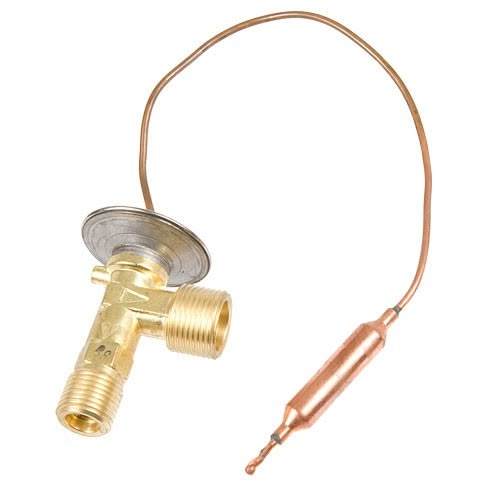
Identify body, port layout, sealing form, fasteners, equalization arrangement, screen, power element, spring and diaphragm design, sensing configuration, materials, and calibration. Record the refrigerant, evaporator, compressor-control context, and operating requirements.
A private label AC expansion valve cannot be approved from an exterior sample alone. Two bodies may look identical while their internal response differs.
Define which claims the brand can support
List proposed fitment, OE replacement, material, performance, refrigerant, quality-system, origin, warranty, environmental, and service claims. For each claim, identify the evidence, owner, market, language, expiry or review condition, and exact approved wording.
Remove unsupported phrases such as universal fit, OE quality, factory direct, or guaranteed performance when the program cannot substantiate them. Commercial copy must not outrun the technical file.
Build the application record from evidence
Capture make, model, year or production boundary, engine, HVAC option, refrigerant, OE reference, port and mounting details, and exclusions. Record whether coverage comes from drawing comparison, verified sample, vehicle installation, supplier application data, or another approved source.
Keep inferred interchanges unpublished until validated. A copied cross-reference can multiply across sales channels faster than the physical product.
Make markings readable after handling
Decide what belongs on the valve: brand, internal part number, orientation, refrigerant or application identifier where justified, lot or date trace, and required compliance data. Confirm location, contrast, permanence, surface preparation, and legibility without damaging functional surfaces.
Do not place labels over ports, sealing faces, screens, fastener seats, or sensing features. Test marking durability against normal packing and installation handling.
Reconcile the kit contents line by line
List each seal, bolt, washer, adapter, cap, instruction, and quantity. Identify which items are included, transferred from the vehicle, or sourced separately. Match materials and dimensions to the approved application. Loose pieces should be retained so they cannot damage the valve or disappear.
For a private label AC expansion valve, a correct valve with the wrong seal is still a failed kit. Inspect the complete packed unit.
Use artwork as a controlled technical document
Give unit-box and label files numbers, revisions, owners, and approvals. Lock brand assets, product name, part number, barcode data, quantity, vehicle references, warnings, languages, recycling marks, origin statement, contact route, and restricted claims. Define print tolerances and acceptable color variation only where they matter.
Compare the printed production pack with the approved digital proof. Screenshots and email attachments should not become uncontrolled masters.
Prove every barcode resolves to the right item
Scan unit, inner, and master labels through the buyer’s receiving, storage, picking, and shipping systems. Confirm symbology, check digit, data mapping, quiet zones, contrast, curvature, placement, and duplicate prevention. Reconcile barcode, text part number, ERP SKU, and physical valve.
Test labels after route conditioning and abrasion. A perfect scan at the printer does not prove warehouse readability.
Design packaging around small precision interfaces
Protect ports, seals, threads, screen, sensing elements, and machined faces from impact, moisture, dust, and loose kit items. Prevent the valve from moving inside the box. Define bag, tray, caps, inserts, carton, closure, label position, and packing instruction.
Validate the production-intent pack across the real distribution route. After testing, inspect physical damage, cleanliness, markings, accessories, and label scan.
Connect product validation to the branded revision
Keep drawings, material evidence, leakage, pressure integrity, cleanliness, flow and response testing, durability, system validation, and vehicle checks required by the program. Each report should identify the actual valve revision and conditions. Do not attach a related-family report without a technical rationale.
ZUA lists valves on its expansion devices and valves page. Buyers should confirm the responsible production route and who owns calibration, validation, artwork, packaging, and change approval.
Approve a golden sample that includes the box
The golden sample should include production-intent valve, markings, kit, caps, bag or tray, unit box, labels, barcode, master carton, and documents. Photograph every side and critical detail. Store sample identity and retention conditions.
Do not use a hand-marked engineering sample as the sole commercial reference. The private label AC expansion valve approval must represent the item a warehouse will receive.
Run a first-production identity audit
At launch, randomly select packed units and trace backward from barcode to valve lot and forward from lot to shipments. Compare product, kit, artwork, application file, and system record. Scan through normal operations and inspect language and destination variants.
Use a controlled stop and correction process for any mismatch. Reprinting one label is not enough if incorrect data has already reached customer files or inventory.
Protect identity through change control
Review changes to internal valve parts, calibration, body, ports, seals, materials, supplier, site, cleaning, test method, marking, kit, artwork, barcode, language, application, packaging, or logistics route. Identify affected stock and effective lot. Decide which tests and approvals must repeat.
The IATF 16949 overview provides automotive quality-system context. The brand agreement should define notification timing, approval authority, record retention, and stock disposition.
Investigate claims by identity layer
A wrong-part complaint may come from catalogue coverage, barcode mapping, picking, mixed packing, label swap, product substitution, or actual valve fitment. Preserve box, labels, kit, valve marking, vehicle data, lot, order record, and installation evidence.
Code the confirmed failure layer and correct all affected channels. Replacing the unit without fixing the digital record can repeat the same claim.
Separate market variants without splitting technical truth
A brand may need different languages, legal marks, contact details, barcodes, warranty text, carton quantities, or customer references by country. Create market variants from the same approved technical master. Define which fields may change locally and which require engineering or quality approval. The valve, calibration, application limits, kit, and trace code should not drift because artwork is managed by separate sales teams.
Use a matrix linking market, language, unit-box revision, label revision, barcode, master carton, effective shipment, and approved product revision. Test that warehouse users cannot apply one market label to another market’s stock. When regulations or commercial claims change, quarantine obsolete printed material and identify the replacement.
The private label AC expansion valve program needs controlled translation review. Product names, warnings, installation terms, refrigerant references, and exclusions should preserve the technical meaning rather than follow literal wording. A correct translation also needs enough space and contrast on the production pack.
Approve a physical print proof for each market after digital approval. Check folding, label overlap, barcode placement, small text, color contrast, and whether opening the box destroys information needed for returns. Give obsolete artwork a blocked status in the ordering system.
Customer-specific variants need the same discipline. Record who owns extra labels, when they are applied, how unused labels are counted, and how the packed quantity is verified before the shipment leaves.
Frequently asked questions
Is private labelling only a packaging change?
No. The branded identity must remain connected to the approved valve, calibration, kit, application, evidence, and traceability.
Can visually similar expansion valves share one SKU?
Only when internal response, interfaces, application, and validation demonstrate approved interchangeability.
What belongs in a golden sample?
Include the production-intent valve, marking, kit, caps, primary pack, unit box, labels, barcode, master pack, and approved documents.
Who should approve artwork?
Brand, product, quality, catalog, compliance, warehouse, and logistics owners should approve the fields they control.
Why test barcodes in the warehouse system?
A printed code can be readable yet resolve to the wrong SKU or fail after handling and route exposure.
How should a wrong-part claim be investigated?
Preserve vehicle data, valve, kit, box, labels, barcode, lot, order, picking, and application records to locate the failed identity layer.
Does ZUA offer expansion valves?
ZUA lists expansion devices and valves in its portfolio. Buyers should verify the responsible production route and private-label scope.
How can buyers start a private-label valve project?
Send target references, markets, artwork needs, kit contents, forecast, application data, and validation requirements through the ZUA contact page.
Freeze the private label AC expansion valve identity
A controlled private label AC expansion valve program makes one approved product identity visible in the valve, calibration, kit, application record, markings, artwork, barcode, packaging, warehouse system, and claim process. That reconciliation protects the brand more effectively than attractive packaging alone.