

A vehicle electric coolant pump supplier is usually shortlisted on price per unit, and that is where the trouble starts. On a hybrid or battery-electric platform the pump is not a simple circulation device; it is a commanded actuator sitting inside a thermal loop. It answers to a controller. It runs a duty cycle. And it has to keep working through conditions that never make it onto the datasheet - a loop that is three-quarters full, a first fill that pushed swarf all the way round the circuit, a cold start where the coolant is closer to gel than liquid.
This page is for the people who sign off on a pump and then have to live with it: platform integrators, thermal-system assemblers, distributors bolting electric drivetrain parts onto an existing range, workshops that suddenly have hybrids sitting on the lift. The sequence below is the one ZUA runs when a pump enquiry lands. Order matters here more than most buyers expect, and skipping a step usually costs more later than it saves now.
What a vehicle electric coolant pump supplier is really being asked to deliver
The pump is a small part of the answer. What the loop owner really needs is repeatable flow at a stated head, at a stated voltage, across a stated temperature window, for a stated number of hours, with a control response the rest of the system can rely on. Housing, connector, label, packing - all of it exists to protect those five numbers and nothing else.
Two pumps can share a footprint and behave nothing alike. A wet-rotor unit with a low-power controller, a dry-rotor unit with its own seal and a heavier current draw - on a bench they might both deliver 20 litres per minute. Put them on the loop they were actually specified for, run a thousand thermal cycles, and only one is still hitting that figure. The datasheet will not tell you which.
Who this brief suits, and when a mechanical pump is the better answer
An electric pump earns its place in three situations. The loop has to run independently of engine speed. Flow has to be modulated rather than simply switched. Or the system has to keep cooling after the vehicle has already stopped. Battery packs, inverters, on-board chargers and hybrid transmissions all land in that group.
There are also cases where an electric pump is simply the wrong purchase. A vehicle that already runs a closed, OEM-controlled auxiliary loop will not accept a generic unit, however good its flow curve looks. Nor does a low-cost universal pump belong anywhere near a high-voltage pack loop, where isolation, dielectric strength and diagnostics are part of the specification. Saying so early is part of the job. A supplier who tells you the electric pump is the wrong call has probably saved you a warranty claim, and that is worth more than the order.
Where the pump sits in a hybrid or EV thermal loop
Where the pump is installed changes the work it has to do, even when the part number stays the same. A battery cooling plate loop wants steady, moderate flow held inside a tight temperature band. A motor and inverter loop runs hotter and tolerates more pressure. A cabin loop drags in a heater core or chiller and a much wider spread of viscosity and temperature.
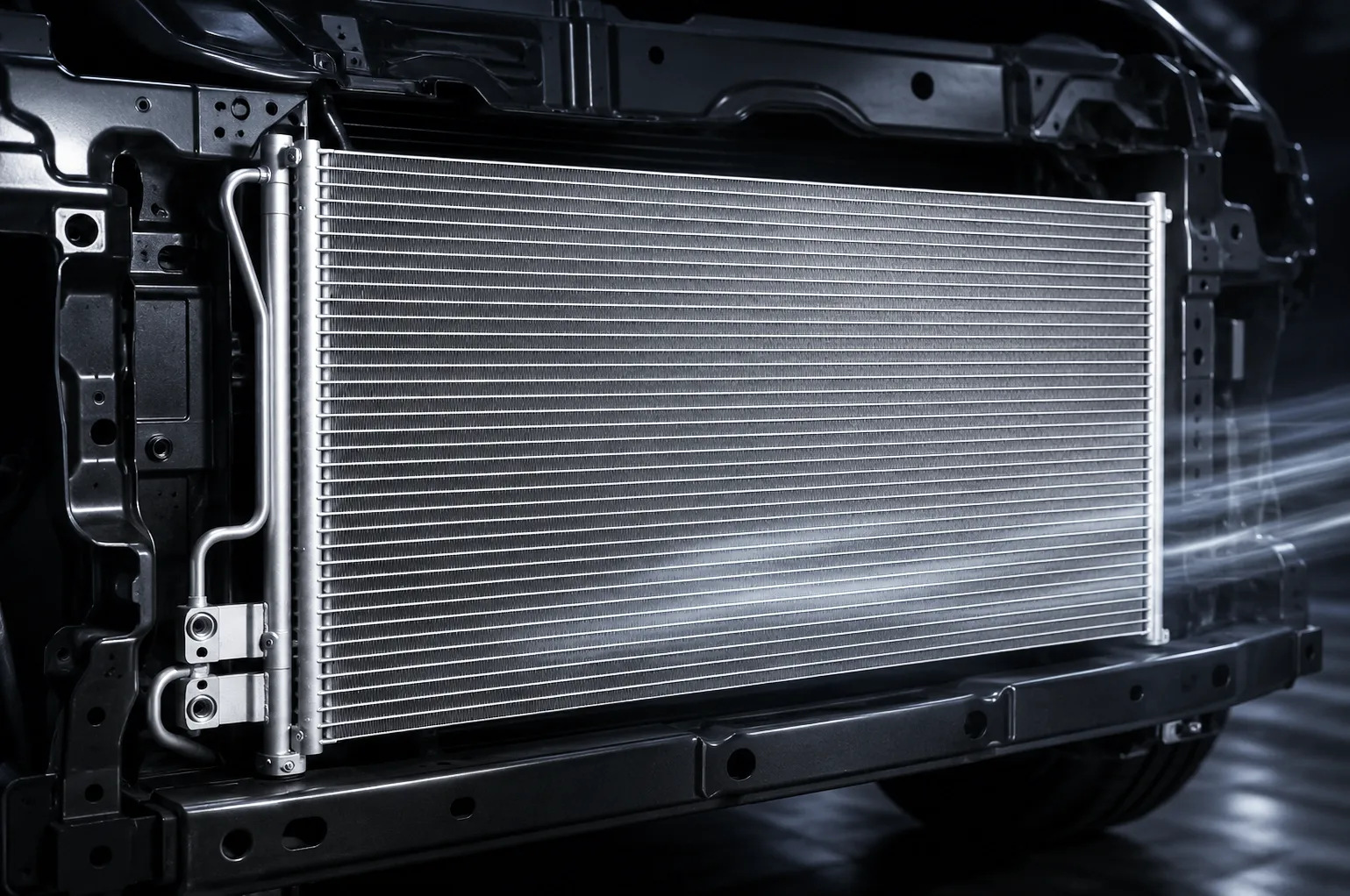
Three details decide how hard the pump will work. First, the system restriction it pushes against. Second, where the expansion tank and any de-gassing point sit. Third, whether a check valve or changeover valve is downstream of the pump. Get those wrong and it cavitates long before it wears out - a failure that reads like a manufacturing defect and is not one. Show the supplier the whole loop, not a single flow figure.
Interface fields that must be frozen before sampling
Sample before the interface is frozen and you have wasted a round of tooling. Below is what ZUA asks for on an OEM electric coolant pump enquiry, with a note on why each field moves the part.
| Field | What to state | Why it decides the part |
| System voltage | 12 V, 24 V, 48 V or high-voltage DC | Sets motor winding, controller topology and insulation requirements |
| Control interface | PWM, LIN or CAN, with command range | Determines the electronics, diagnostics and fail-safe behaviour |
| Duty point | Flow at a stated head, not a single flow figure | A curve, not a point, decides whether the impeller matches the loop |
| Coolant | Glycol concentration and coolant chemistry | Drives seal, bearing and impeller material selection |
| Temperature window | Continuous and peak coolant and ambient values | Sizes clearances, thermal protection and connector grade |
| Ingress protection | Required IP code for the installed position | Sets sealing method, potting and vent design |
| Mounting envelope | Orientation, bracket points, service access | Affects drainage, air-lock risk and bracket tooling |
| Service life | Hours, cycles and expected vehicle duty | Separates a low-cost unit from a validated one |
Wet rotor or dry rotor: the choice changes the whole enclosure
Wet-rotor designs let the coolant lubricate and cool the rotor, which takes the shaft seal out of the leak equation. The trade-off is that coolant quality stops being a chemistry topic and becomes a mechanical input: abrasive contamination goes straight to work on the bearing surfaces. Dry-rotor designs put the motor in a sealed, dry chamber instead. Power density goes up, the electronics stay cleaner, and a wear item appears in the bill of materials.
There is no default winner. Wet rotors handle long, steady flow well as long as the coolant stays clean. Dry rotors cope better with short bursts of high pressure inside tight packaging. Whichever route the supplier picks, the reasoning should be visible in the drawing package. If it only exists in a sales call, keep asking.
Sealing, impeller balance and connector workmanship you can see on a sample
Cut a sample in half. It will tell you more than any datasheet does. Look at the weld line on the housing and the flash around the volute. Check whether the impeller carries machining marks from a balanced part or tool marks from something pulled straight out of the mould. Then put the connector under magnification: a properly crimped terminal, a seated grommet and clean potting are all visible if you look for them.
Now the small things. Can you read the label, and does it carry a traceable code? Are the hose spigots free of the sharp edges that slice a clamp? Will the bracket take a light twist by hand without folding? Every one of those details decides whether the pump survives a field install and a second service visit, and every one of them can be checked before money changes hands.
Test evidence: what a bench run should prove
A serious vehicle electric coolant pump supplier hands over bench data, not adjectives. The core report should carry a flow-against-head curve at rated voltage, current draw measured at several duty points, dry-run and blocked-rotor behaviour, and control response across the full command range. High-voltage units need dielectric strength and insulation resistance in the same document.
Environmental evidence carries the same weight. Automotive electronics are normally qualified against the ISO 16750 family of environmental conditions, ingress protection is graded through ISO 20653, and EMC behaviour on a vehicle platform is usually checked against CISPR 25 limits. Production discipline sits in a separate layer. A factory holding IATF 16949 certification is expected to run documented change control, measurement system analysis and end-of-line testing with recorded results.
Ask for the end-of-line test record alongside the development test report. One proves the design can work. The other proves that the unit in the carton does.
Tooling, samples and the lead time nobody mentions
This is where a vehicle electric coolant pump supplier's honesty gets tested, because lead time has far less to do with the factory calendar than with how much of the part already exists. A pump built on an existing tool with a fresh label and connector moves quickly. A new impeller, new volute geometry or a new controller needs tooling first, then a development cycle, then durability and thermal cycling before anything is released.
Buyers who plan a launch backwards from a trade show date usually end up compressing the one phase that cannot be compressed. Book the validation window first, then build the commercial date around it. The reverse order is how launches slip.
Three sourcing routes side by side
Nearly every electric water pump automotive enquiry lands on one of three routes, and each carries its own flavour of risk. Which one fits depends on how much of the specification you actually control.
| Route | Typical use | What you control | Where it goes wrong |
| Re-labelled finished pump | Fast aftermarket entry, low volume | Label, packing, price | No control of the curve, the controller or the change history |
| Private label on an existing tool | Distributor range building | Branding, connector, packaging, fitment list | Fitment data drifts unless the identity of the base part is frozen |
| Development to a defined duty cycle | Hybrid or EV platform work | Hydraulics, electronics, validation, traceability | Longer front end; needs a partner that can hold the interface |
Cost drivers that outlive the quotation
Unit price is the smallest part of the total. Magnet grade, the brushless controller and its power stage, seal material, potting, balancing, and how long the end-of-line test runs - every one of those moves cost and reliability in the same direction. A vehicle electric coolant pump supplier that shortens test time to win a comparison has not removed that cost. It has moved it into the warranty period.
Two more numbers belong in the comparison, and neither will show up on a quotation. The first is change control: what happens when a sub-supplier quietly swaps a bearing or a seal? The second is spare-part continuity, which decides whether the same pump can still be bought when a fleet needs replacements three years out. Both are cheap to ask about now, and expensive to discover late.
OEM and ODM: how the brief changes shape
On an OEM electric coolant pump programme the buyer owns the specification and the supplier owns the evidence - design records, validation plan, process capability, traceability, a capacity commitment. On an ODM programme more of the engineering sits with the supplier, and the buyer's job narrows to verifying the fitment list, the label, the packaging and the release of the base part identity.
Projects stall when the two get mixed. A buyer who wants OEM discipline on an ODM timeline - or ODM paperwork on an OEM programme - will spend more time in meetings than in development. ZUA builds engine cooling and air-conditioning ranges from Guangzhou, and the work is deliberately split along these two tracks so that expectations are settled before sampling.
One sign tells you a vehicle electric coolant pump supplier is organised for that split, and it costs nothing to check: they ask for the loop data before they quote a price.
Send the loop, not the part number
The fastest route to a usable answer is to describe the system rather than the part number. Send a loop sketch, the coolant type, the duty point, the voltage, the control interface, the installation envelope, ambient conditions and an annual volume. That is enough for an engineering team to say whether you are looking at a catalogue match, a private-label build or a development project.
ZUA works through that list before quoting, and the same information sits behind the engine cooling range as much as the wider automotive parts catalogue. Buyers who want the background on the other components in the same loop can read the coolant-pump boundary notes, the water pump sourcing guide and the radiator fan control measurement guide before the first call.
Anyone who wants to check the factory behind the pump can review the company profile and production footprint, and certificate claims can be verified independently through databases such as Certipedia. When the loop data is ready, send it through the ZUA contact page and the reply will come back as a specification discussion rather than a price list.
Questions buyers ask about vehicle electric coolant pumps
How do I compare flow data from two suppliers?
Ask for the curve. A flow figure taken at one head is close to useless on its own, since the same pump can look strong at one duty point and feeble at the next. Compare curves at matching voltage, coolant and temperature, then check current draw at the duty point you will actually run.
Can a 12 V pump be used in a high-voltage battery loop?
It may physically fit, but the specification is a different animal. High-voltage pack loops bring isolation, dielectric strength and diagnostic requirements that a general-purpose 12 V unit was never designed around. Use a pump developed for that environment and keep the low-voltage unit on low-voltage duties.
What does an IP6K9K rating actually cover?
It combines a dust rating with protection against high-pressure, high-temperature water jets, which is why it appears on under-hood components. The rating belongs to the installed assembly, including the connector and the seal, so it should be verified in the mounting position rather than on a bare pump.
Why do electric coolant pumps fail early in service?
Most early failures are system failures wearing a manufacturing-defect costume. Air locks around the expansion tank, contamination left over from a first fill, a restriction nobody sized for, a control signal pushing the pump past its intended range - any one of those will kill a good unit. The pump's own records are how you tell the two apart.
Should the connector, seal and bracket be quoted with the pump?
Yes, and they belong in the same line of the quotation. They are part of the interface, not accessories. A pump that turns up without its mating connector cannot be tested on the bench, and a bracket that was never validated in the vehicle turns a component delivery into a fitting problem on the assembly line.
How long should a durability test run?
Long enough to cover the thermal and duty cycles the vehicle will actually see, plus margin. On a programme with a long service expectation that usually works out to thousands of hours of combined cycling rather than a single continuous run, with vibration, thermal shock and dry-run events alongside it, all documented against the original plan.
Which coolant should be specified?
State the chemistry, not just the colour. Modern organic acid and phosphate-free coolants behave differently against seals, bearings and aluminium housings, and a change of coolant supplier is a change of specification. Include the glycol concentration range and the water quality used to dilute it.
What is a realistic MOQ and lead time?
It comes down to how much of the part already exists. A private-label build on an existing tool usually needs a modest first order and a short production window. Add a new impeller or controller and you have bought tooling and validation time, which is measured in months.
Does ZUA supply electric coolant pumps and engine cooling parts?
ZUA covers cooling fan assemblies, water pumps, electric coolant pumps and the rest of the engine coolant range, alongside the air-conditioning line the company was built on. Capacity, tooling and validation get discussed against a specific duty cycle, not in general terms.
What should be in the first enquiry?
A loop description, the coolant type, the duty point with head, voltage, control interface, temperature and ambient window, mounting envelope, required IP grade, annual volume and target service life. Give an engineering team those fields and the reply can be specific. Leave them out and all you will get back is a catalogue reference.
Price only becomes a fair comparison once the duty cycle, the interface and the evidence are on the table. Buyers who nail those three things first tend to change supplier far less often - which is a better measure of a good vehicle electric coolant pump supplier decision than any quote sheet.