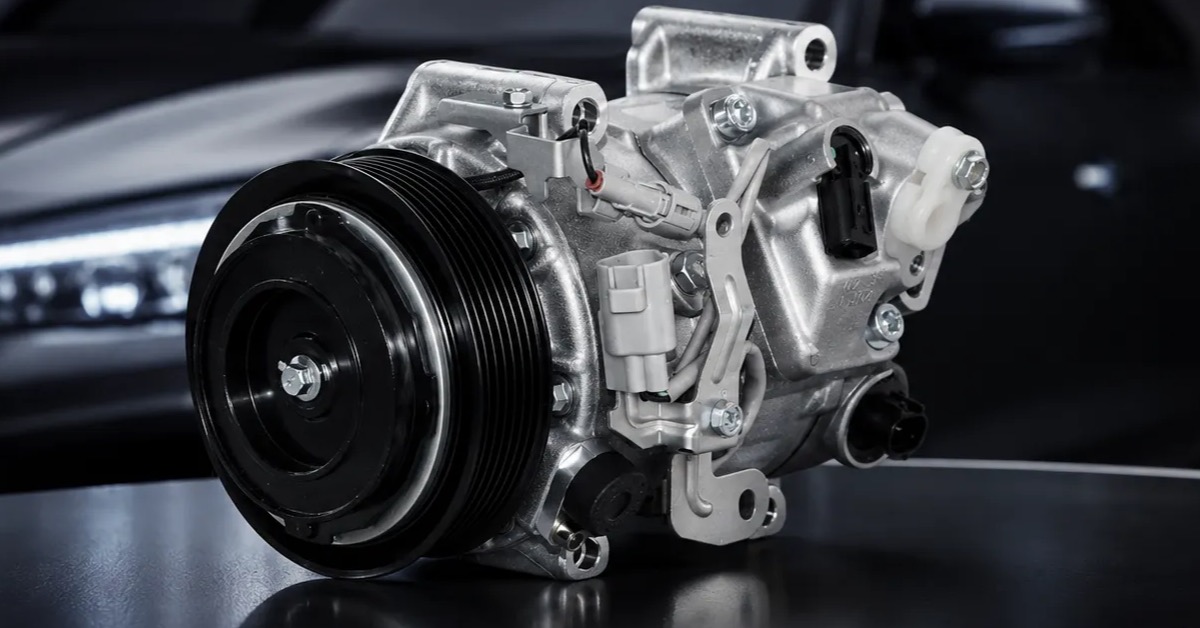
AC compressor clutch coil testing is most useful when it checks the coil, harness, control voltage, air gap, pulley condition, and thermal state as one evidence chain. Measuring resistance at an unplugged connector can identify an open circuit, but it cannot prove that the vehicle supplies the right voltage or that the clutch engages after heat soak. A good test therefore moves from identity to circuit, then to mechanical engagement and repeatability.
This ZUA Auto Parts resource helps distributors organize the evidence needed before quotation; confirm the exact application, interfaces, tests, and supplied scope for every requested part.
This workflow is intended for distributors, workshops, and suppliers reviewing replacement compressors or warranty complaints. It is a diagnostic record, not a substitute for the vehicle maker's service procedure.
Confirm the clutch configuration first
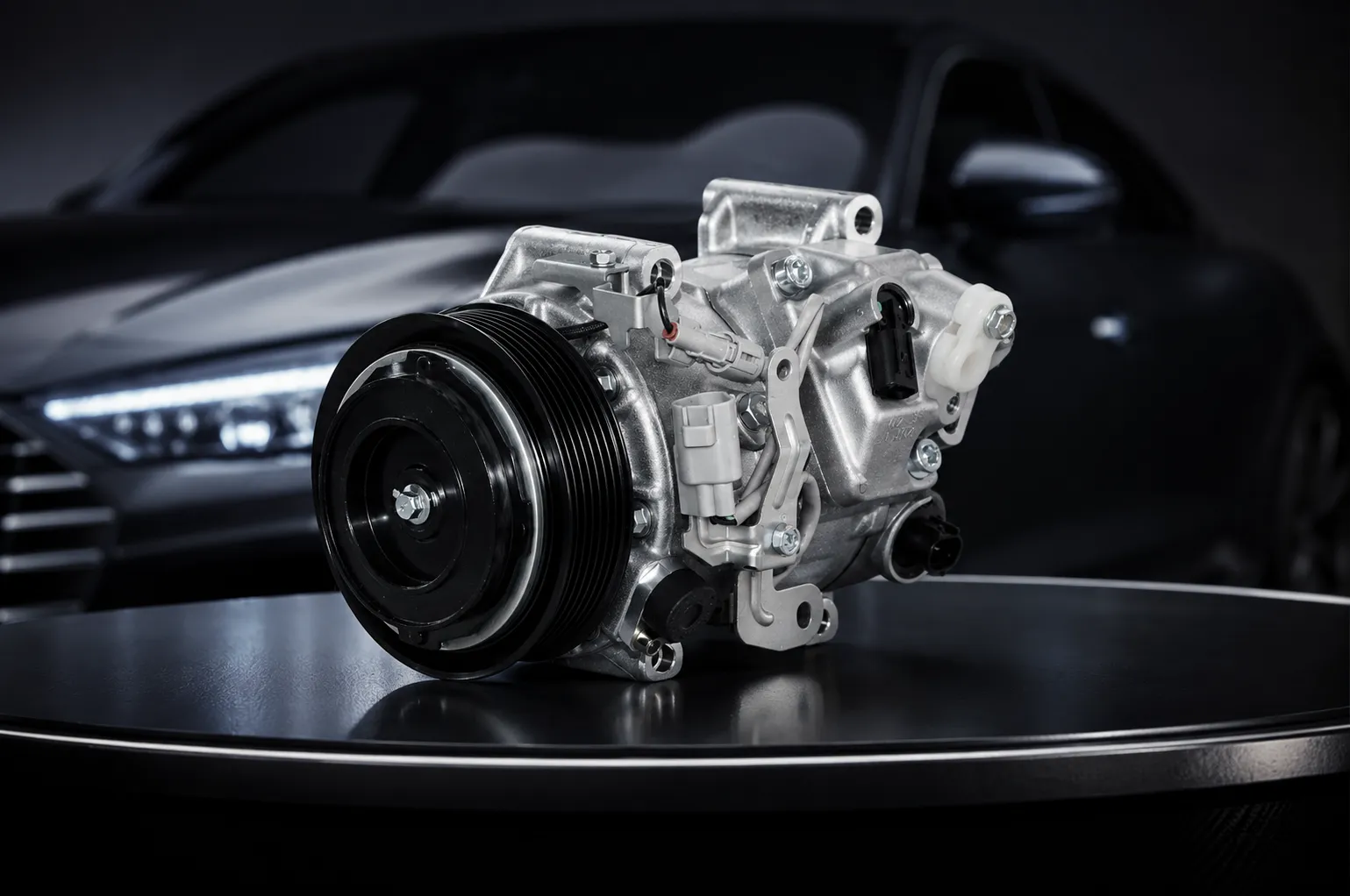
Record compressor part number, clutch type, connector, pulley, coil, hub, air-gap setting, and whether the quoted item is a complete compressor or a serviceable clutch component. Different compressor families can use similar-looking coils with different resistance, mounting, connector, or control requirements.
Photograph the label and connector before testing. Link the measurement sheet to the exact SKU and revision. If the compressor is part of a vehicle-specific package, include the application and control strategy.
Use AC compressor clutch coil testing as an evidence chain
For AC compressor clutch coil testing, connect each result to the same compressor identity and test condition. A warranty reviewer should be able to see when the part was tested, at what temperature, with which connector, and under which command. Add a short conclusion such as “coil open cold,” “voltage missing at command,” or “engagement fails hot with gap increasing,” then list the evidence that supports it.
The phrase AC compressor clutch coil testing covers more than an ohmmeter check. It includes circuit isolation, insulation, supply voltage, current, mechanical gap, pulley condition, and thermal repeatability. Keeping those layers together makes it easier to decide whether the next action is a harness repair, clutch inspection, compressor replacement, or system diagnosis.
Follow the test order from passive to active
- Inspect the connector, terminals, harness routing, fuse, relay or module, and ground.
- Measure coil resistance at a recorded temperature with the circuit isolated.
- Check insulation to the compressor body using the approved method and limits.
- Measure control voltage and current during an engagement command.
- Inspect air gap, hub face, pulley bearing, and belt alignment.
- Repeat the active test after thermal soak and record engagement consistency.
The order matters because an active test on a damaged harness can create a misleading part conclusion. Use the vehicle procedure for safe isolation and back-probing.
Read resistance with temperature attached
Copper resistance changes with temperature, so write down ambient and coil temperature with every reading. Compare the result with the supplier or vehicle specification for the exact coil, not a generic clutch value. An open circuit, unstable reading, or unexpected short is a reason to stop and investigate; it is not a basis for inventing a replacement value.
Use the same meter leads and connection method across samples. If the connector has an internal diode or suppression component, identify it before interpreting polarity or continuity. Keep the raw reading, unit, temperature, and instrument identifier in the record.
Pair voltage with current during engagement
| Finding | Possible direction | Evidence to collect next |
|---|---|---|
| No voltage at command | Control, fuse, relay, harness, pressure logic | Command state, fuse, continuity, module data |
| Voltage present, no current | Open coil, terminal contact, internal break | Resistance, connector tension, body insulation |
| High current, weak engagement | Shorted coil, wrong coil, poor ground, gap | Temperature, current trace, air gap, part identity |
| Normal cold, fails hot | Thermal winding change, gap growth, harness fault | Heat-soak repeat and mechanical inspection |
These are investigative directions, not automatic diagnoses. Current should be measured with the compressor and control state defined. A low-voltage supply can reduce magnetic force even when the coil's cold resistance looks normal.
Measure air gap and mechanical condition
The magnetic clutch needs a controlled air gap to pull the hub into engagement without dragging continuously. Measure the gap at the specified points and check for variation around the circumference. Inspect the hub face, pulley bearing, shims, circlip, and belt alignment. A correct electrical result cannot overcome a mechanically excessive gap or a damaged bearing.
Record whether the compressor was hot or cold and whether the belt load or system pressure was present. If the clutch engages on a bench but slips or cycles incorrectly in the vehicle, include pressure, voltage, temperature, and control commands in the next test.
Do not sand or clean the hub face before the first photograph. Surface discoloration, transfer marks, shim position, and belt dust can show whether the clutch was slipping, dragging, or never receiving a full command. Preserve that condition, then perform the approved inspection and record any cleaning or adjustment as a separate step in the report.
Test the harness as part of the claim
Check terminal fit, corrosion, insulation damage, strain near the compressor, and ground path. A harness that passes a static continuity check may still fail under vibration, heat, or current. Wiggle testing and a loaded voltage-drop check can reveal a weak connection, provided they are performed using the approved procedure.
Keep the vehicle's pressure switch, control module, engine speed, and protection logic in the record. Many systems intentionally disengage the clutch, so a no-engagement symptom is not proof of coil failure.
Use a thermal repeat to expose intermittent faults
Repeat resistance, voltage, current, and air-gap observations after the compressor reaches the relevant operating temperature. Note time, ambient, engine state, refrigerant pressure, and command request. A coil that opens only when hot or a gap that increases with thermal expansion can escape a room-temperature inspection.
Do not claim a universal thermal limit without a documented specification. Describe the test condition and result for the actual part and application.
When a claim involves repeated AC compressor clutch coil testing, retain the original readings rather than replacing them with a pass or fail label. Trend cold and hot resistance, voltage, current, and gap across samples. A trend can reveal an application or installation pattern even when every single reading is close to its expected range.
For distributor training, show one completed report with the measurement conditions and one deliberately incomplete report. The contrast teaches technicians why a bare resistance value is weak evidence and why the command state, temperature, air gap, and part identity must travel with the result. It also gives the warranty team a consistent format for requests to ZUA.
Make the warranty packet measurable
A useful claim contains part and vehicle identity, installation date, symptom, photographs, cold and hot resistance, command voltage, current, air gap, fuse and harness findings, pressure readings, and the test equipment used. Preserve the label and connector, and do not discard a failed part before the supplier agrees on return evidence.
The SAE J639 reference provides vehicle refrigerant-cycle safety context, but it does not define a clutch coil value or settle a warranty claim. Use the exact product and customer acceptance requirements.
Use ZUA's compressor range for traceable inquiries
ZUA's compressor category covers automotive A/C compressor applications. For a clutch-related inquiry, confirm whether the requested replacement is a complete compressor, a compressor with clutch, or another configuration; then verify coil, connector, pulley, and control details for the exact SKU.
Send the old-part label, clutch photographs, cold and hot readings, voltage and current data, air-gap measurement, vehicle details, and sample or warranty requirement through the ZUA contact page. The broader product range and company information provide additional supplier context.
Frequently asked questions
Does a resistance reading prove a clutch coil is good?
No. Confirm temperature, insulation, control voltage, current, air gap, and hot repeatability as well.
Why record coil temperature?
Winding resistance changes with temperature, and some intermittent faults appear only after heat soak.
What does voltage with no current suggest?
Possible causes include an open coil, poor terminal contact, or an internal break; verify with isolated resistance and connector checks.
Why can a normal coil fail to engage?
Low supply voltage, excessive air gap, poor ground, control logic, pressure protection, or mechanical damage may be involved.
Should a clutch be tested on the bench?
A controlled bench test can isolate the component, but vehicle command, pressure, harness, and thermal behavior still need review.
What air-gap data belongs in a claim?
Record the measurement points, condition, tool, temperature, and the specification or acceptance rule used.
Can a pressure switch cause a false coil complaint?
Yes. The control system may intentionally remove the clutch command when pressure or another protection input is out of range.
What photos are most useful?
Capture the label, connector, terminals, pulley, hub face, mounting, wiring, and any heat or contamination marks.
When should a complete compressor be replaced?
Follow the vehicle and service requirement after separating clutch, compressor, contamination, oil, and circuit conditions.
Where can buyers request ZUA compressor evidence?
Use the ZUA contact page with the part identity, vehicle, readings, photographs, sample status, and warranty question.
Let the evidence assign responsibility
AC compressor clutch coil testing becomes decision-ready when passive resistance, active current, air gap, harness condition, temperature, and control logic are recorded against one part identity. That evidence helps a buyer avoid unnecessary returns and gives ZUA a fair, technically useful path to review a compressor sample or claim.