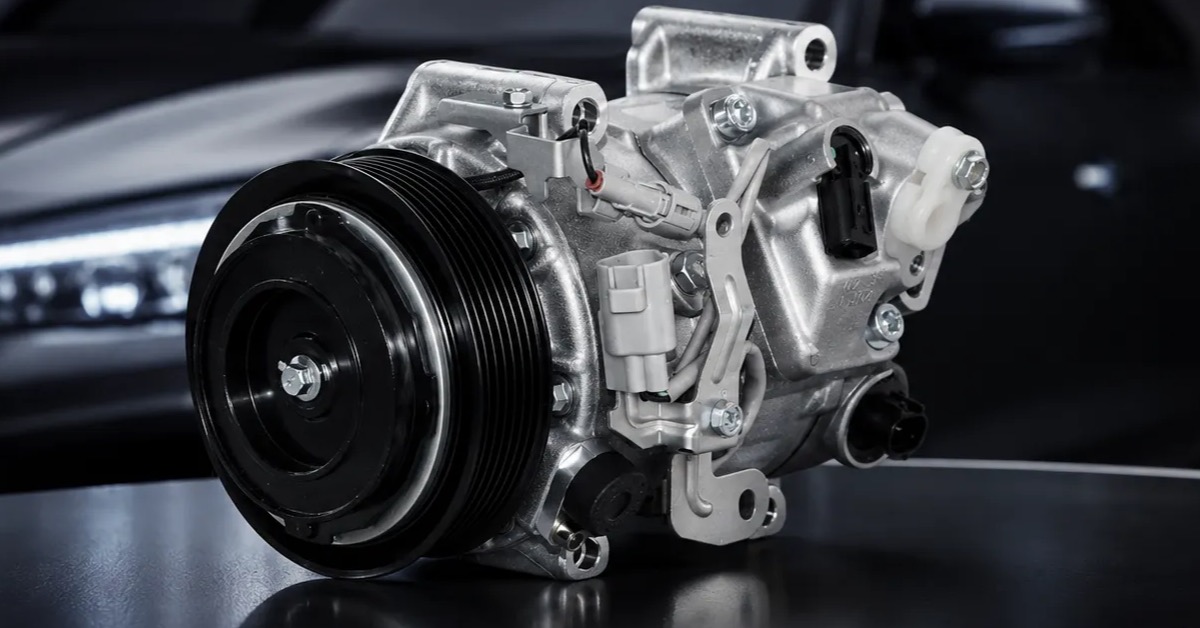
AC compressor helium leak testing is used to detect and quantify very small leak paths in a controlled compressor or test assembly. For buyers, the important question is not whether a supplier owns a helium detector. It is whether the method, fixture, sample preparation, calibration, acceptance criterion, traceability, and failed-part response are appropriate for the exact compressor and production stage.
ZUA Auto Parts uses this buyer-focused framework to turn the topic into a clearer product inquiry, while application, construction, and evidence must still be confirmed for each SKU.
This guide is for importers, distributors, private-label brands, service networks, and OEM/OES teams approving automotive A/C compressors. It explains how to review helium leak evidence without inventing one universal limit, because the design requirement and customer specification must define acceptance.
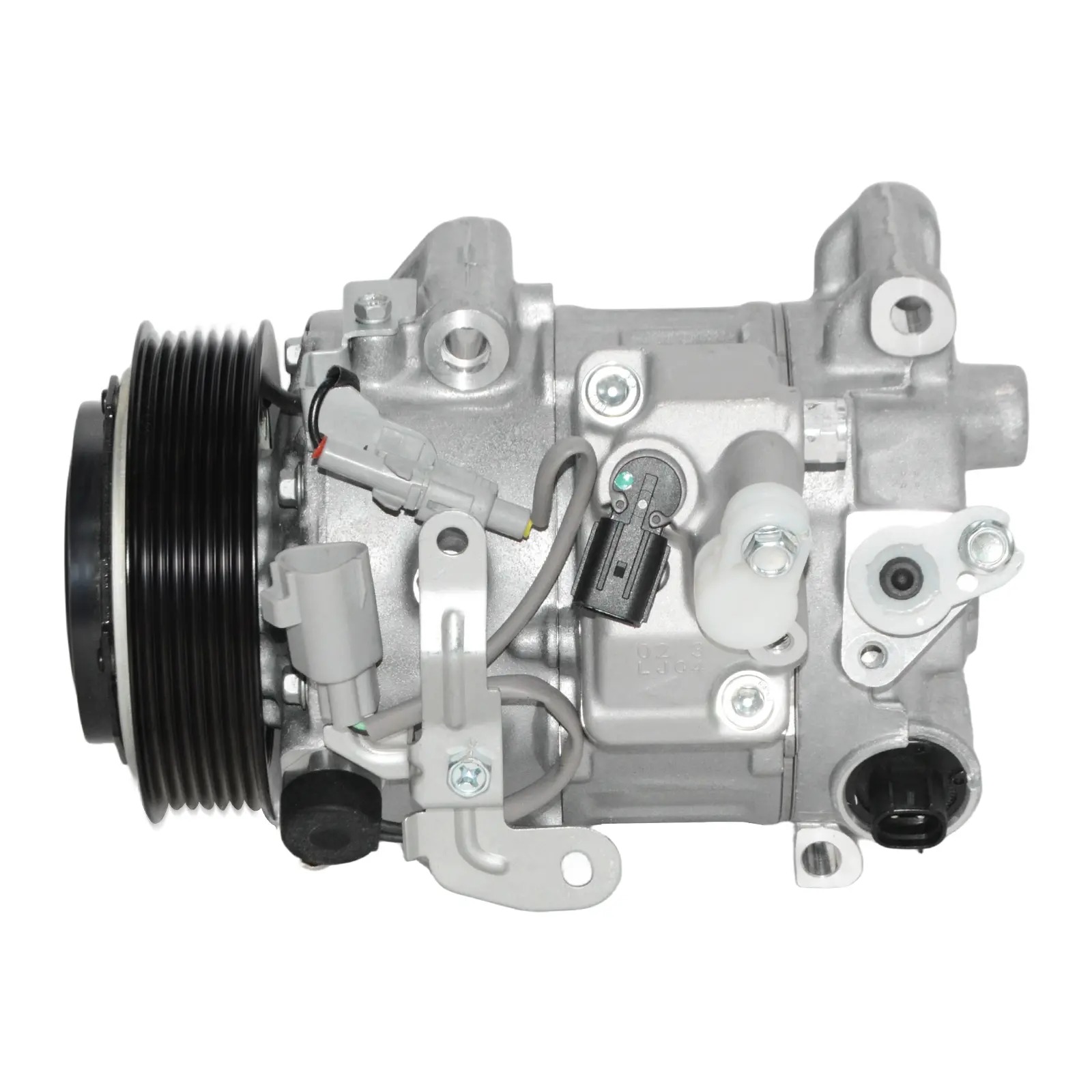
AC compressor helium leak testing: buyer checklist
| Review area | Buyer question | Evidence |
|---|---|---|
| Test purpose | Which external or internal leak risk is being checked? | Controlled requirement and method |
| Test stage | Is the unit tested before or after all sealing operations? | Process flow and control plan |
| Fixture | Are ports, shaft, valves, and interfaces sealed correctly? | Fixture drawing and verification |
| Calibration | Can the detector and system be trusted? | Calibration, reference leak, and checks |
| Conditions | Are pressure, concentration, time, and background controlled? | Test procedure and equipment settings |
| Acceptance | What result passes, fails, or requires review? | Approved criterion and units |
| Traceability | Can each result be linked to a compressor? | Serial or lot record |
| Failure response | How are leaks confirmed, contained, and corrected? | Isolation and corrective-action records |
1. Define what leakage the method must detect
List the potential paths: housing joints, shaft seal, plugs, ports, control valve interfaces, service fittings, casting porosity, fasteners, gaskets, O-rings, and any model-specific connection. Clarify whether the test evaluates the complete compressor, a subassembly, or a temporarily sealed unit.
Helium can support sensitive leak detection, but it does not eliminate the need to understand the design. A fixture that masks a production seal or bypasses a final plug cannot approve that interface.
2. Identify the exact compressor revision
Record the part number, platform, housing and seal revision, control type, valve, clutch or pulley configuration, sample lot, production date, line, and test stage. ZUA lists BVC, BFC, TM, BV5, and BV6 platform families on its compressor page, but the buyer must verify the quoted model and revision.
If the detector result belongs to a similar housing or an engineering sample, state that limitation. One platform report should not be transferred to every cross-reference without an engineering basis.
3. Choose a method that matches the purpose
Helium methods may use a vacuum chamber, sniffer approach, accumulation, pressure-decay correlation, or another controlled arrangement. Each has different sensitivity, cycle time, background behavior, fixture requirements, and suitability for production or laboratory use.
The supplier should explain the test principle in practical terms: where helium is applied, which volume is evacuated or monitored, how the part is isolated, how the signal is converted, and what can create a false pass or false fail.
4. Control sample preparation
Preparation can influence results. Define cleaning, drying, oil quantity, port condition, seals, caps, temperature stabilization, evacuation, pressurization, and time between assembly and test. Record any temporary plugs or adapters and confirm that they do not damage sealing surfaces.
For AC compressor helium leak testing, residual helium from earlier tests can raise background, while trapped air or moisture can affect stabilization. The work instruction should define how units enter and leave the test station.
5. Verify fixtures and sealing interfaces
Review fixture drawings, materials, seals, port adapters, clamping, shaft treatment, valve interfaces, maintenance, and model changeover. Confirm that the fixture seals only the intended test boundaries and does not compress a weak joint into passing.
Use fixture-leak checks, reference parts, or other approved methods to distinguish equipment and adapter leakage from product leakage. Worn fixture seals should trigger maintenance and review of affected results.
6. Review detector calibration and system checks
Ask for detector identification, range, calibration status, reference leak information, daily or shift checks, zeroing, background monitoring, alarm verification, maintenance, and response when a system check fails. Calibration evidence should be current and connected to the test unit in use.
The IATF 16949 overview describes the automotive quality-management context for consistent processes. In practice, buyers should verify that measurement equipment, records, and reaction plans support the target compressor.
7. Define pressure, concentration, and timing
The procedure should state helium concentration or tracer-gas composition, applied pressure or vacuum, stabilization, test time, evacuation, background threshold, purge, and environmental conditions where relevant. Units and conversion rules must be clear.
Do not compare results from different conditions as if they were equivalent. A faster cycle or lower tracer concentration may change sensitivity, and an engineering correlation should support any alternative production method.
8. Set acceptance from the product requirement
The acceptable leak rate should come from the approved specification, design analysis, customer requirement, and system performance needs. The report should state the limit, units, temperature or reference condition where applicable, rounding, and treatment of borderline readings.
AC compressor helium leak testing should not use an undocumented “factory standard.” Buyers need the controlled source and approval history for the criterion.
9. Connect laboratory validation to production controls
A sensitive laboratory method may validate design or correlate a faster production check. The control plan should define which method applies to every unit, which is sampled, how correlation is maintained, and what changes trigger re-correlation.
ZUA states that its compressor production includes helium leak detection and full-performance testing. Buyers should observe the target line, confirm test stage and frequency, and review actual model-specific records instead of relying on an equipment photograph.
10. Preserve result traceability
Each record should identify compressor part number, serial or lot, production date, line or station, equipment, program or recipe, result, unit, limit, disposition, operator or automatic system, and re-test history. Data retention should match the buyer agreement and risk.
Recipe access matters. Confirm who can change limits and parameters, how versions are approved, and whether the system prevents a wrong model from using the wrong program.
11. Handle failed and re-tested units
Failed units should be physically or electronically isolated. Confirm the result, inspect the fixture, locate the leak where appropriate, preserve evidence, identify affected material, and follow approved repair or scrap rules. Any repair should be traceable and followed by the required full test sequence.
Repeated testing until a part passes can hide instability. The record should retain original failures, rework, re-test, and final disposition.
12. Investigate false passes and false failures
Potential causes include fixture leakage, blocked passages, insufficient pressurization, excessive background, detector drift, residual helium, damaged adapters, wrong recipes, temperature changes, contamination, and operator handling. Use a structured analysis rather than immediately blaming the product.
A confirmed product leak should lead to mechanism identification, containment, root cause, corrective action, and verification. Review whether the cause could affect earlier lots or other models.
13. Audit change control
Require review for housing, seal, plug, valve, casting source, machining, cleaning, assembly, lubricant, fixture, detector, tracer concentration, test pressure, cycle time, software, production site, or acceptance changes. The buyer agreement should define notification and reapproval.
After a relevant change, repeat appropriate validation and confirm that the production station still detects the intended leak paths.
Confirm method correlation before changing cycle time
Production teams may propose faster evacuation, shorter stabilization, a different tracer concentration, new fixtures, or an alternative test method to increase capacity. Before approval, compare representative good, borderline, and known-leak samples under both conditions. Define the statistical and engineering basis, repeatability, false-pass risk, false-failure risk, maintenance implications, and ongoing correlation checks.
This review keeps AC compressor helium leak testing connected to the original product requirement. A faster station is valuable only when it preserves detection capability and the approved test boundary. Record the change, validation, program version, effective lot, and buyer approval where required.
Frequently asked questions
Why is helium used for compressor leak testing?
Helium can support sensitive, controlled detection of small leak paths, but method suitability depends on the product, fixture, equipment, conditions, and requirement.
Does every compressor need a helium leak test?
The approved control plan defines the production method and frequency. Buyers should verify what is applied to the target model.
Is helium testing the same as pressure decay?
No. The principles, sensitivity, equipment, conditions, and cycle times differ, although a supplier may establish an approved correlation.
What should a helium leak report contain?
Include sample identity, method, fixture, detector, program, conditions, limit, units, result, date, disposition, and re-test history.
Can fixture leakage cause a false failure?
Yes. Fixtures and adapters require routine verification, maintenance, and controls that separate system leakage from product leakage.
Should failed units be tested again?
Re-testing may be part of a controlled confirmation or repair process, but the original failure and all actions must remain traceable.
Does ZUA use helium leak detection?
ZUA states that helium leak detection is included in its compressor production controls. Model-specific method and records should be reviewed during qualification.
How can buyers request leak-test evidence?
Send compressor references, application data, required limits, forecast, and validation needs through the ZUA contact page.
Make AC compressor helium leak testing auditable
A reliable AC compressor helium leak testing system connects leak paths, sample identity, preparation, fixtures, calibrated equipment, controlled conditions, approved limits, production records, failed-part response, and change management. That evidence lets buyers assess real containment capability rather than a machine name on an audit checklist.