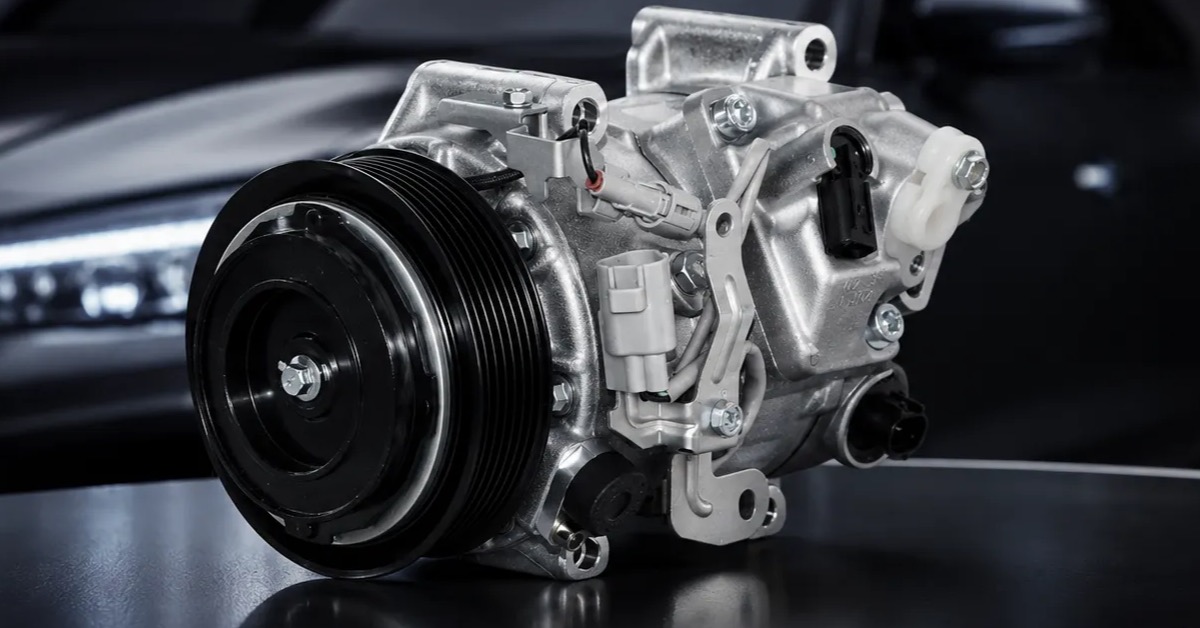
AC compressor noise and vibration testing should determine whether a defined compressor and installation produce acceptable mechanical, aerodynamic, electromagnetic, and control-related behavior across the operating conditions required by the vehicle application. A short listening check cannot replace a controlled setup, repeatable measurements, agreed criteria, and engineering analysis.
This ZUA Auto Parts resource helps distributors organize the evidence needed before quotation; confirm the exact application, interfaces, tests, and supplied scope for every requested part.
This buyer guide is for importers, distributors, private-label brands, service networks, and OEM/OES teams comparing automotive A/C compressors. It focuses on evidence and limitations rather than universal decibel or vibration limits, because the customer specification, vehicle, mounting, operating point, and measurement method define acceptance.
AC compressor noise and vibration testing checklist
| Area | What to control | Evidence |
|---|---|---|
| Objective | Component comparison, development, production, or complaint | Test request and requirement |
| Sample | Part, revision, lot, lubricant, control, and history | Traceable sample record |
| Mounting | Bracket, fasteners, isolation, belt, ports, and hoses | Fixture and installation record |
| Operating points | Speed, pressure, temperature, load, and control command | Controlled matrix |
| Instrumentation | Microphones, accelerometers, speed and pressure data | Calibration and setup map |
| Environment | Background noise, reflections, structure, and services | Room and baseline record |
| Analysis | Overall levels, spectra, orders, events, and trends | Raw data and processed plots |
| Disposition | Criteria, abnormal findings, teardown, and actions | Approved report |
1. State the test decision
Define whether the work supports design development, supplier comparison, sample approval, end-of-line screening, periodic audit, vehicle integration, or returned-part analysis. These purposes need different fixtures, data quality, sample quantities, and acceptance methods.
For a supplier comparison, test candidates under equivalent conditions. For a field complaint, preserve the returned unit's oil, damage, control valve, clutch, pulley, and installation evidence before any cleaning or disassembly.
2. Identify the compressor and system
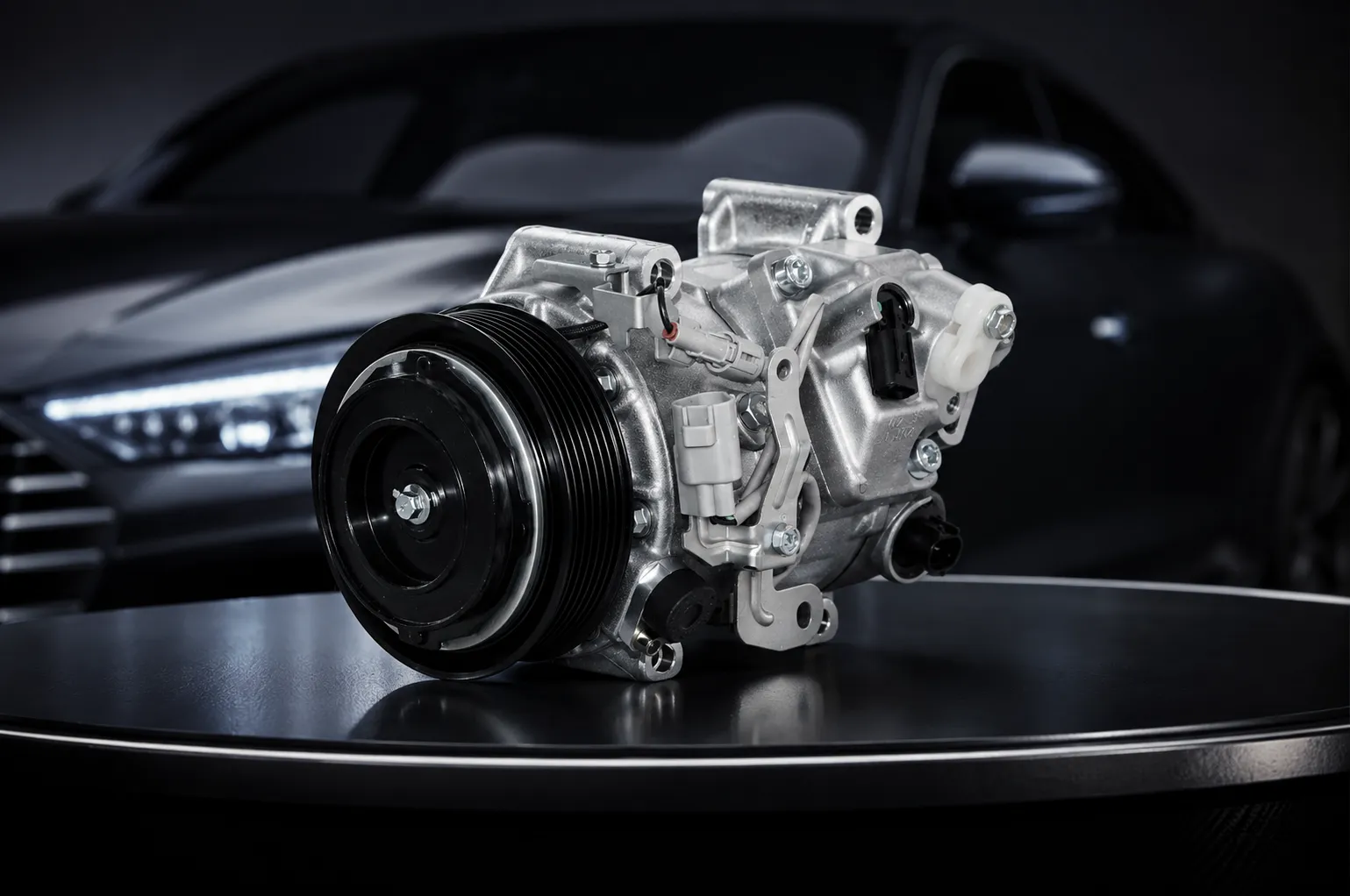
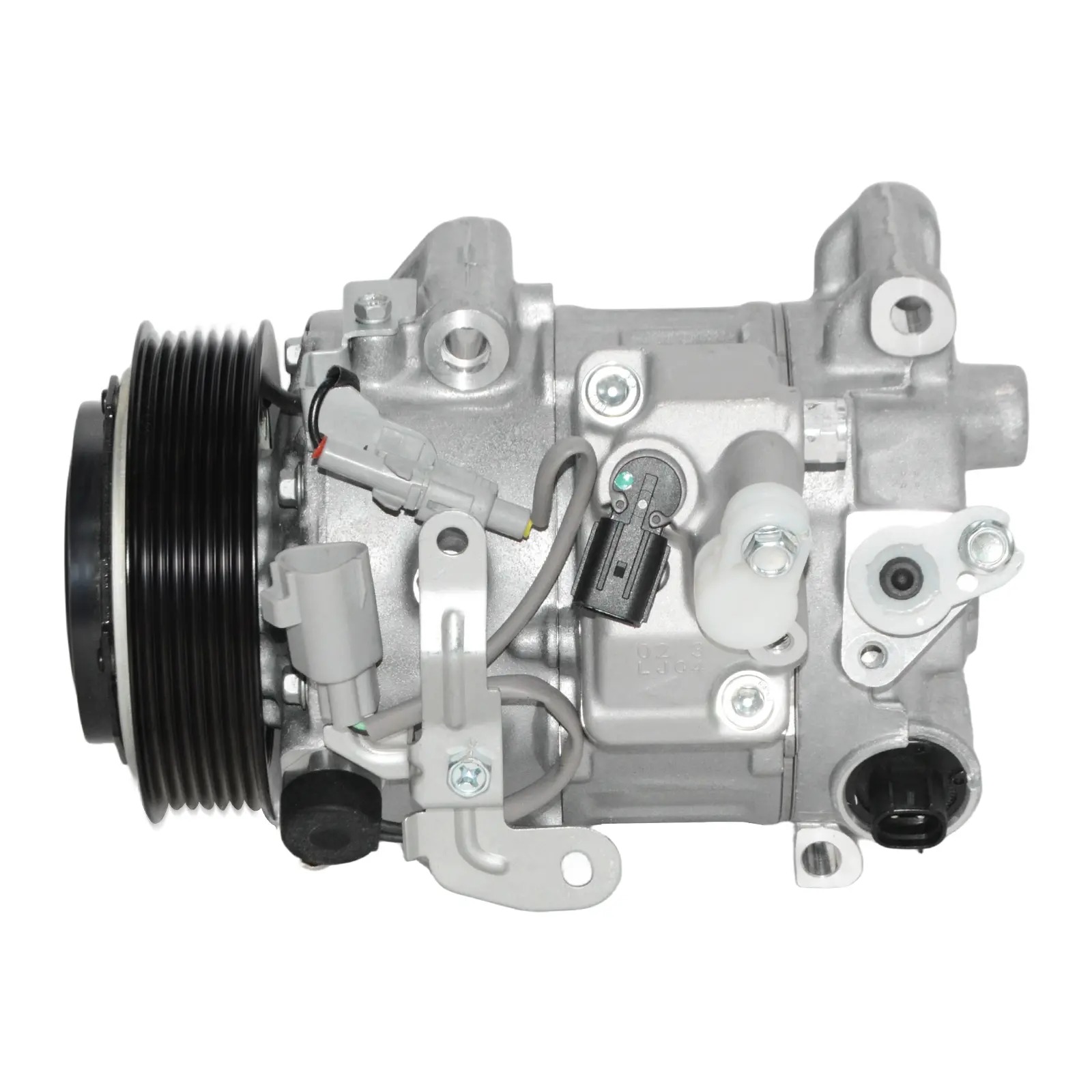
Record part number, platform, displacement, fixed or variable control, valve, clutch or pulley, refrigerant, oil type and quantity, sample lot, production route, and previous tests. Add the target vehicle, engine, bracket, belt, HVAC system, and control strategy.
ZUA presents BVC, BFC, TM, BV5, and BV6 families on its compressor category. Buyers should confirm the exact quoted revision because similar external geometry does not ensure the same internal excitation or control behavior.
3. Control mounting stiffness and interfaces
Mounting strongly affects measured vibration and radiated sound. Document bracket design, fixture stiffness, isolators, fasteners, torque, pulley alignment, belt type and tension, port adapters, hose support, and nearby structures. A rigid laboratory fixture may isolate compressor behavior but may not reproduce vehicle resonance.
Use the same installation for comparisons, and record any change. Loose fasteners, contact points, or stressed hoses can dominate a result.
4. Define representative operating points
The matrix should include required compressor speeds, suction and discharge conditions, temperatures, refrigerant flow, load, ambient state, airflow, clutch state, and variable-control commands. Define stabilization, ramps, hold time, start-stop events, and transitions.
AC compressor noise and vibration testing should not rely only on one steady point. Some issues appear during startup, control changes, low-speed operation, pressure transitions, or resonance crossings.
5. Record background and test-environment behavior
Measure background noise and vibration with the compressor off or under a defined baseline. Document room type, reflective surfaces, other equipment, cooling fans, pumps, piping, floor vibration, and environmental services. Confirm that background remains sufficiently below the feature being evaluated.
When a laboratory cannot isolate a source, report the limitation. Filtering an unwanted component without explanation can hide relevant behavior.
6. Place sensors repeatably
Document microphone position, orientation, distance, height, and reference point. For accelerometers, record axis, mounting method, mass, location, cable control, and coordinate system. Also capture compressor speed, pressures, temperatures, and control data needed to interpret events.
Sensor placement drawings and photographs help reproduce the setup. Calibration status and pre- or post-checks should be traceable to the instruments used.
7. Use overall levels and frequency analysis
Overall values are useful summaries but can hide the character of a problem. Review spectra, time histories, speed-related orders, tonal components, broadband behavior, modulation, transient events, and operating trends as required by the objective.
Analysis settings should state sample rate, frequency range, resolution, averaging, windows, weighting, filtering, and reference units. Two plots can look different because settings changed rather than because the compressor changed.
8. Separate compressor sources from system sources
Potential contributors include bearings, pistons or scroll elements, valves, gas pulsation, clutch, pulley, belt, motor control, internal contact, imbalance, oil distribution, refrigerant state, bracket resonance, hoses, fan airflow, and test equipment. Use controlled substitutions or additional measurements to isolate likely paths.
A louder vehicle result does not automatically prove a defective compressor. Likewise, a quiet bench result cannot rule out an interaction with a vehicle bracket or control strategy.
9. Compare samples statistically and technically
Test enough units to understand variation for the decision. Include different production lots or component sources where risk requires it. Compare not only averages but also outliers, repeatability, run-in effects, and changes after durability.
For AC compressor noise and vibration testing, retain sample identity and raw data so a reviewer can distinguish part variation from setup variation.
10. Define acceptance before seeing results
Criteria may include overall limits, tonal limits, comparison bands, forbidden events, subjective assessments under controlled panels, or vehicle-level requirements. The source, operating condition, units, averaging, and treatment of background must be explicit.
Do not move a limit after a candidate fails without a documented engineering review. Borderline results should follow an agreed repeat and disposition process.
11. Connect laboratory results to vehicle evaluation
Vehicle checks can reveal structure-borne transmission, bracket modes, hose coupling, control interactions, cabin perception, and operating states not reproduced on a component bench. Record vehicle configuration, installation, refrigerant charge, oil, ambient, controls, engine state, microphone locations, and road or stationary conditions.
Use component and vehicle results together. A component bench supports controlled comparisons; the vehicle confirms customer-relevant integration.
12. Inspect and tear down abnormal samples
Preserve oil, debris, leaks, markings, fastener condition, clutch, pulley, valve, and sample history. Repeat measurements where safe and justified, then inspect architecture-specific parts for wear, contact, damage, contamination, or assembly variation.
Link the physical mechanism to the measured frequency or event when possible. Replacing a noisy sample without analysis does not improve production control.
13. Audit production screening and change control
ZUA reports laboratory capability for performance, durability, vibration, noise, and after-sales analysis. Buyers should request the applicable procedure and data for the target model. If end-of-line screening is used, confirm fixture, operating point, sensors, limits, master parts, equipment checks, traceability, and failed-part response.
The IATF 16949 overview provides quality-system context. Product changes involving bearings, valves, internal parts, lubricant, pulley, clutch, machining, assembly, test programs, or site should trigger a documented NVH risk review.
Combine objective data with controlled subjective review
Some customer complaints concern sound character rather than only overall level. A controlled listening panel can support engineering when assessors use the same samples, operating sequence, environment, instructions, rating scale, and order. Blind or randomized comparisons can reduce brand and sequence bias. Record assessor training, repeatability, comments, and disagreement.
Subjective ratings should not replace measurements. Instead, link descriptions such as whine, rattle, knock, hiss, or roughness to time histories, spectra, orders, operating points, and physical inspection. This makes AC compressor noise and vibration testing more useful for root-cause work and supplier communication.
Verify measurement repeatability before ranking suppliers
Repeat the same sample after removal and reinstallation, and repeat the run on different days when the decision is important. Review variation from mounting, belt tension, refrigerant charge, oil distribution, ambient state, sensors, and operator setup. If measurement variation is close to the difference between candidates, the ranking is not yet reliable.
Document the repeatability study with the same care as the final comparison so later production investigations have a credible measurement baseline.
Frequently asked questions
Can buyers approve compressor noise by listening?
Listening can identify concerns, but approval should use controlled conditions, repeatable measurements, defined assessors where relevant, and agreed criteria.
Why does mounting affect compressor vibration?
Bracket stiffness, fasteners, isolation, alignment, hoses, and nearby structures change how forces are transmitted and resonances are excited.
What data should accompany an NVH result?
Include sample identity, setup, sensors, calibration, operating conditions, background, analysis settings, raw data, criteria, and disposition.
What is order analysis?
It relates vibration or noise features to rotational speed, helping distinguish components that track compressor or pulley rotation.
Should testing include startup and control changes?
Yes when required by the application, because transients can expose behavior not visible at steady operating points.
Can a bench test replace vehicle validation?
Not always. Vehicle structures, hoses, brackets, controls, and cabin perception can create additional interactions.
Does ZUA perform compressor noise and vibration analysis?
ZUA reports laboratory capability for noise, vibration, performance, durability, and after-sales analysis. Buyers should request model-specific evidence.
How can I submit an NVH requirement?
Send compressor references, vehicle data, operating conditions, test points, criteria, forecast, and complaint evidence through the ZUA contact page.
Use AC compressor noise and vibration testing to find causes
A strong AC compressor noise and vibration testing program connects a clear objective, traceable sample, controlled mounting, representative operation, calibrated measurements, transparent analysis, predefined acceptance, vehicle correlation, teardown, and change control. That structure produces evidence a sourcing team can act on.