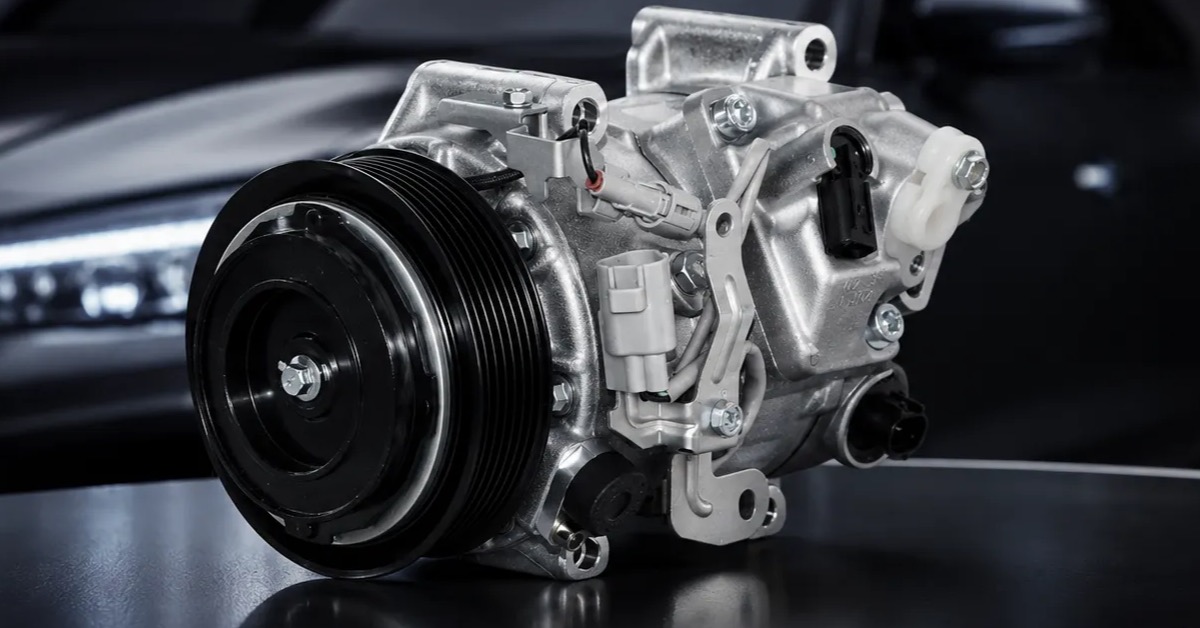
An AC compressor OEM vs aftermarket decision is not simply a choice between an original box and a lower price. Buyers need to compare application accuracy, design and change responsibility, process control, test evidence, traceability, packaging, technical support, warranty handling, and total program cost. A well-qualified aftermarket compressor can serve a replacement program, while an incorrectly matched unit can create installation, control, noise, leakage, or cooling problems regardless of label.
For buyers sourcing through ZUA Auto Parts, this framework connects the technical question to a controlled product inquiry; exact fitment and quoted specifications remain SKU-specific.
This guide helps importers, distributors, service networks, private-label brands, and procurement teams evaluate both routes without assuming that every OEM or aftermarket product has the same capability.
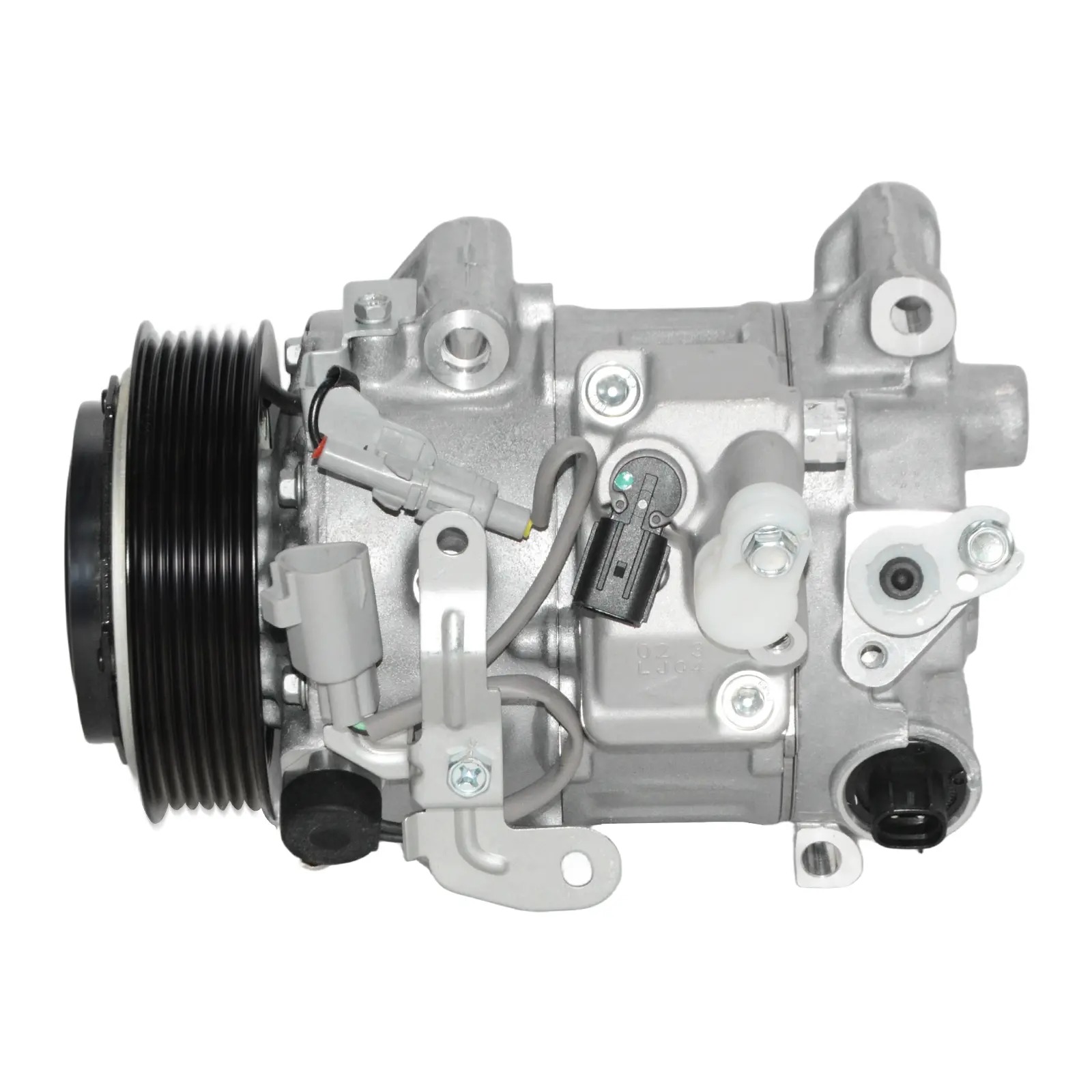
AC compressor OEM vs aftermarket: quick comparison
| Decision area | OEM channel | Aftermarket channel |
|---|---|---|
| Application basis | Original vehicle program and controlled service references | Cross-reference and replacement application data |
| Design authority | Defined by the vehicle or original system program | May be build-to-print, equivalent replacement, or supplier platform |
| Range strategy | Vehicle-program specific | Often covers multiple replacement applications and brands |
| Approval evidence | Program-specific requirements and release | Supplier evidence plus distributor or brand validation |
| Packaging | Original service packaging and labels | Supplier, neutral, or private-label packaging |
| Commercial model | Original channel terms | Part-specific MOQ, forecast, brand, and service terms |
These are typical sourcing differences, not a universal quality ranking. Each part number and supplier must be evaluated on evidence.
1. Define what OEM means in the quotation
OEM can describe several relationships: supply to a vehicle manufacturer, supply to an original system integrator, production to an original drawing, or simply an "OE-style" replacement claim. Ask the seller to define the term and provide the reference basis. Do not use packaging language as proof of design authority or factory origin.
For an aftermarket project, define whether the compressor is new, remanufactured, modified from an existing platform, or developed as an equivalent replacement. ZUA's public product information focuses on new automotive A/C compressor platforms and a broader parts supply portfolio; buyers should confirm the exact product condition in each quotation.
2. Compare application data before brand or price
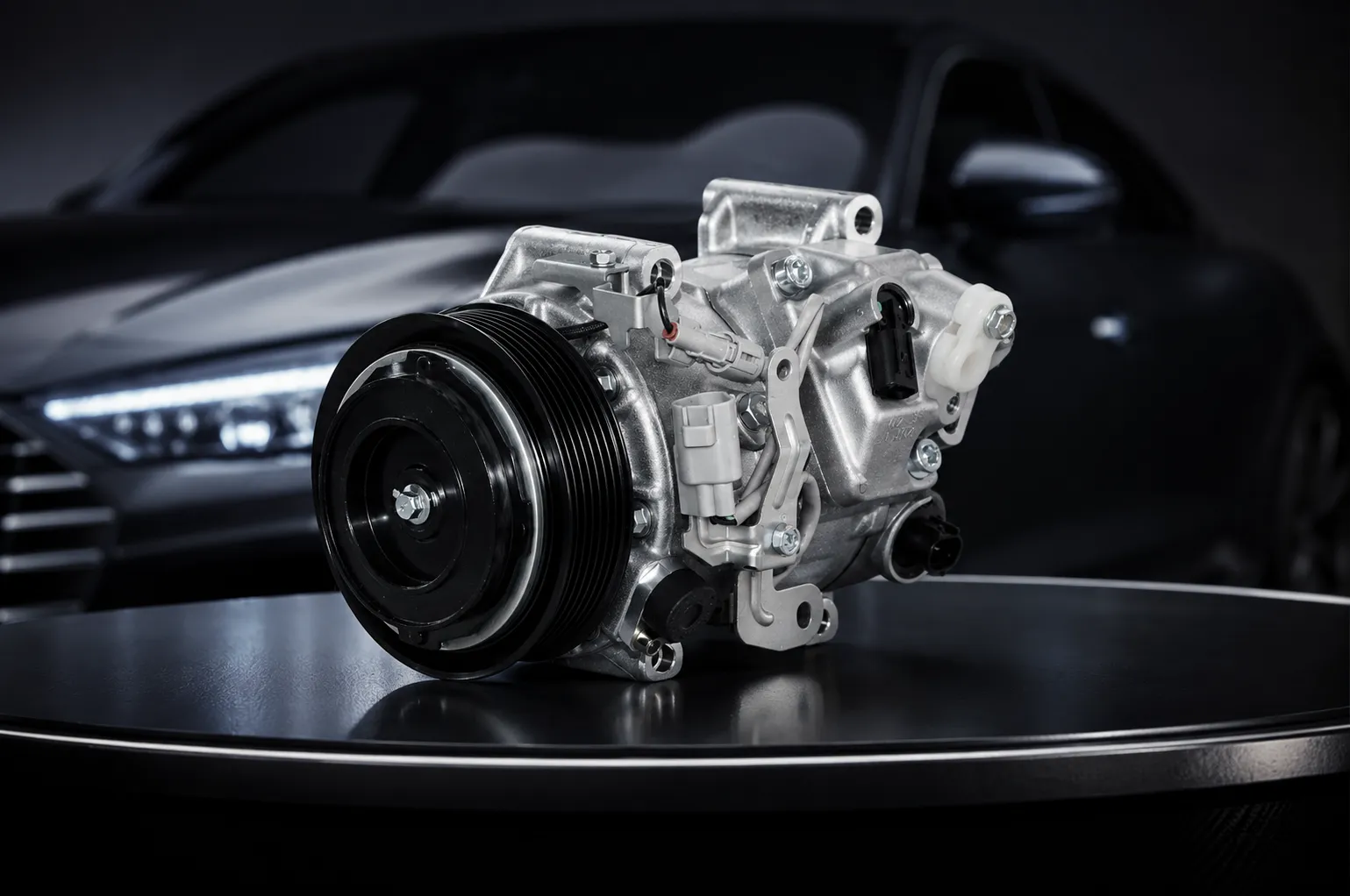
Both routes require correct vehicle matching. Provide OE and cross-reference numbers, make, model, year, engine, market, and HVAC variant. Confirm mounting pattern, pulley diameter, groove count, offset, rotation, suction and discharge ports, connector, pin definition, displacement, refrigerant, lubricant, and control type.
A fixed-displacement, internally controlled variable-displacement, and externally controlled variable-displacement compressor may look similar while requiring different system behavior. The ZUA compressor page lists BVC, BFC, TM, BV5, and BV6 platform families, but final compatibility must be approved at model level.
3. Review design responsibility and changes
In an OEM program, design inputs, validation, customer-specific requirements, and change approval are normally defined through the program. In the aftermarket, the buyer must confirm who owns the replacement specification, which characteristics are critical, and how the equivalence basis is controlled.
Ask which changes require notification: housing, internal components, control valve, clutch, pulley, connector, seals, lubricant, sub-supplier, machining, assembly, test program, or production site. An AC compressor OEM vs aftermarket comparison is incomplete if the aftermarket supplier can change critical parts without buyer review.
4. Verify the manufacturing and quality system
The IATF 16949 overview explains the automotive supply-chain purpose of the standard. Verify certificate scope, site, validity, and relation to the quoted product. Then audit incoming material, machining, cleaning, assembly, torque, error prevention, calibration, nonconforming control, traceability, and corrective action.
ZUA states that its compressor production includes automatic cleaning, helium leak detection, full-performance testing, Andon and Kanban management, and abnormal-product isolation. Buyers should request the control plan and records for the target part rather than transfer evidence from another platform.
5. Compare test evidence by part number
Useful evidence may include dimensional, leak, functional, performance, noise, vibration, durability, and other application-specific results. Distinguish design validation, periodic audit tests, and end-of-line production checks. Each report should identify the compressor, revision, conditions, equipment, acceptance criteria, date, and result.
OEM approval does not automatically apply to a visually similar service part, and a general aftermarket test report does not prove every cross-reference. Ask whether the tested sample matches the quoted revision and production process.
6. Approve installation and control compatibility
Sample approval should include more than a bench run. Inspect mounting, pulley alignment, belt clearance, ports, hoses, connector, wiring, refrigerant, lubricant, and surrounding components. For externally controlled variable compressors, verify the matched control valve, signal, and vehicle-side strategy.
Document the vehicle or test-system configuration, sample identity, installation notes, readings, abnormal noise, and post-test findings. If the buyer relies on workshops for validation, provide a standard record so feedback can be compared.
7. Evaluate packaging, identification, and range control
OEM service channels usually have established labels and part references. Aftermarket brands need equally disciplined range control. Packaging should protect the pulley, clutch, ports, connectors, and mounting features. Labels should identify the part number, application reference, batch, handling, and brand information as agreed.
Private-label artwork, barcodes, manuals, inserts, and country-of-origin statements require controlled approval. Confirm how similar compressor variants are separated in the warehouse and how an obsolete cross-reference is removed from catalogs and labels.
8. Compare warranty and return analysis
A warranty duration alone does not show support quality. Review eligibility, installation conditions, evidence required, freight responsibility, response time, returned-part handling, technical analysis, credit or replacement rules, and corrective action. Compressor returns may also involve system contamination, incorrect refrigerant or oil, charging errors, or another failed component.
A capable supplier should separate confirmed product failures from application and installation causes using evidence. The process should improve catalogs, instructions, process controls, and future purchasing decisions.
9. Calculate total program cost
An aftermarket unit with a lower purchase price can become expensive if application data are weak, variants are mixed, packaging is poor, or returns cannot be analyzed. An OEM-channel product can also be commercially unsuitable when availability, channel restrictions, or inventory costs conflict with the buyer's market.
Compare purchase price, sample and validation costs, packaging, freight, duties, inventory by variant, technical support, return rate, warranty handling, and lost customer time. Confirm MOQ, lead time, warranty, and private-label terms for each part number.
10. Use a weighted approval score
| Criterion | Suggested weight | Required evidence |
|---|---|---|
| Application accuracy | 25% | Controlled cross-reference and interface data |
| Quality and process | 20% | Certificate scope, audit, control plan |
| Testing and validation | 20% | Part-specific reports and sample results |
| Traceability and change control | 15% | Lot drill and notification rules |
| Packaging and range control | 10% | Approved packaging and catalog controls |
| Commercial and warranty support | 10% | Written terms and return-analysis process |
Run a controlled side-by-side sample comparison
When practical, compare candidates with the same reference data, installation, refrigerant, lubricant, charge, ambient condition, airflow, control command, and measurement method. Give every sample a unique identity and record its packaging condition before installation. Inspect mounting, ports, pulley alignment, connector, clutch or control behavior, leak integrity, pull-down response, steady-state operation, current or command data where applicable, noise, and post-test condition.
This comparison does not create a universal pass limit; the buyer's specification and application define acceptance. It does reveal whether an AC compressor OEM vs aftermarket claim is supported by repeatable evidence. If two units produce different results, investigate revision, oil quantity, control valve, test setup, vehicle condition, and system cleanliness before assigning cause.
Retain the approved sample, report, photos, label, packaging revision, and supplier deviation list. The AC compressor OEM vs aftermarket approval record should identify which characteristics were compared and which checks remain the buyer's responsibility. For a first production lot, repeat selected critical checks and confirm that the lot follows the approved process rather than a special sample route.
Record rejected samples as carefully as accepted ones. Their failure evidence can expose weak cross-references, unstable processes, or unsuitable commercial assumptions before a larger inventory commitment.
Frequently asked questions
Is an OEM compressor always better than an aftermarket compressor?
No universal conclusion is valid. Compare the exact part, application, process, evidence, support, and total cost.
Can an aftermarket compressor replace an OEM unit directly?
Only after confirming the full application, mounting, pulley, ports, connector, control type, refrigerant, oil, and validation requirements.
What is the biggest aftermarket compressor risk?
Incorrect or weak cross-reference data is a major risk because visual similarity does not prove mechanical, electrical, or control compatibility.
What test records should buyers request?
Request model-specific dimensional, leak, functional, performance, and applicable validation evidence with clear conditions and traceability.
How should private-label compressor packaging be approved?
Approve protection, labels, barcodes, artwork, application references, batch identity, and instructions using a controlled revision.
Does ZUA support aftermarket and OEM/OES programs?
ZUA presents OEM/OES, aftermarket, wholesale, distribution, and private-label cooperation as target services. Project terms require technical and commercial review.
What information is needed for a quote?
Send OE references, vehicle and engine data, control type, pulley, ports, connector, refrigerant, lubricant, forecast, packaging, and validation needs.
Where can I contact ZUA?
Submit the application package through the ZUA contact page for model-specific review.
Make the AC compressor OEM vs aftermarket decision with evidence
The correct AC compressor OEM vs aftermarket route depends on the buyer's application, market, validation responsibility, support needs, and total cost. Compare controlled data and real records, approve a traceable sample, and keep change control in the supply agreement.