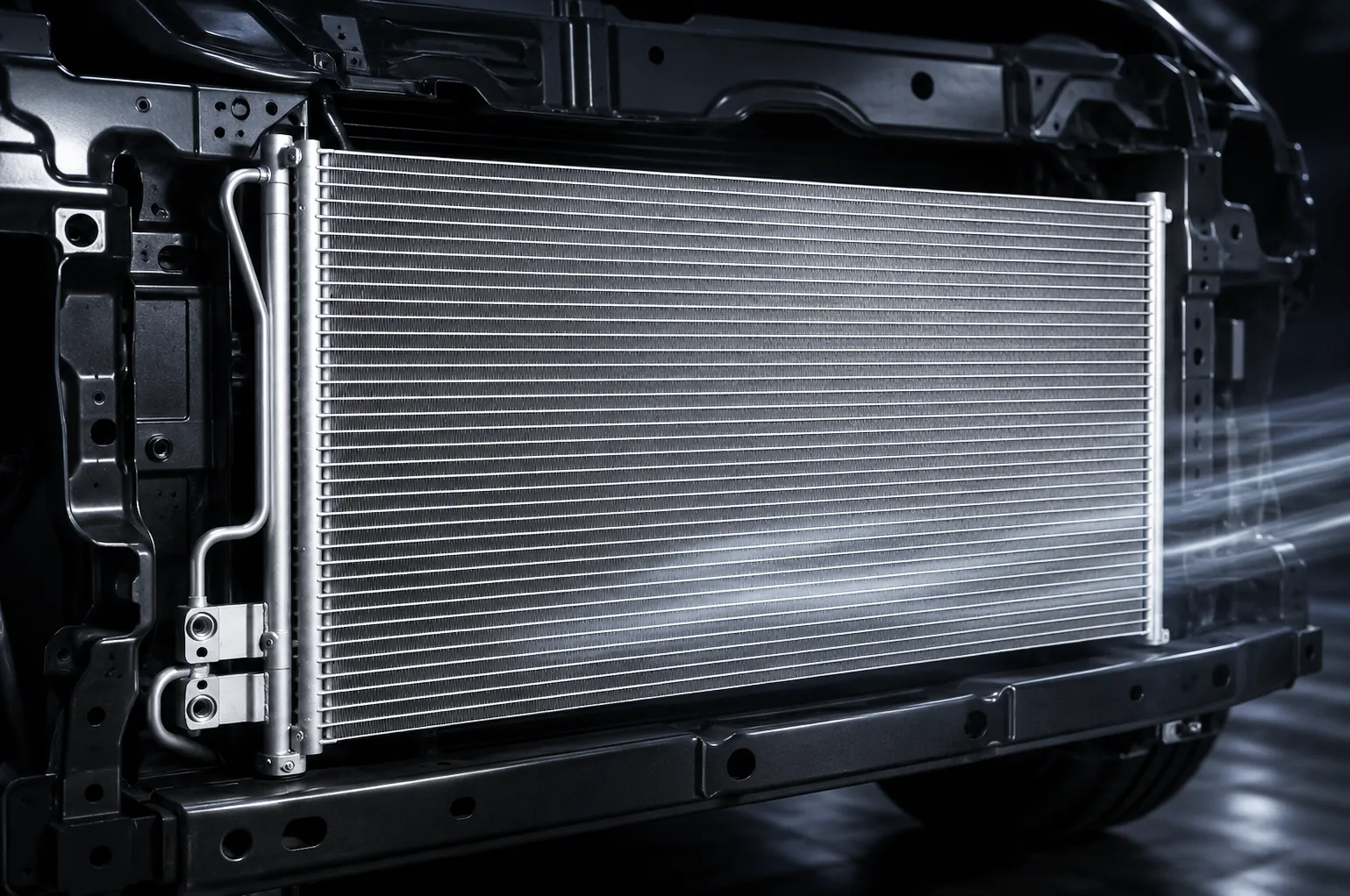
AC condenser quality testing should confirm that the correct heat exchanger can be produced repeatedly, survive the required environment, and arrive without damaged fins, ports, or brackets. A final leak check is important, but it cannot replace application review, material control, brazing discipline, dimensional inspection, cleanliness, performance validation, corrosion evaluation, packaging, and traceability.
ZUA Auto Parts uses this buyer-focused framework to turn the topic into a clearer product inquiry, while application, construction, and evidence must still be confirmed for each SKU.
This guide helps importers, distributors, private-label brands, service networks, and OEM teams build a model-specific condenser approval plan without inventing universal limits. Test conditions and acceptance criteria must come from the product design and customer specification.
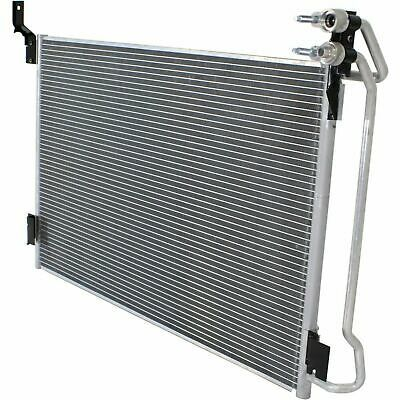
AC condenser quality testing checklist
| Control | Purpose | Evidence |
|---|---|---|
| Application review | Confirm the correct vehicle and system variant | Approved application record |
| Material verification | Control tubes, fins, headers, brackets, and fittings | Specification and incoming records |
| Dimensional inspection | Protect fit, sealing, airflow, and hose alignment | Critical-dimension report |
| Brazing or joining control | Maintain joint integrity and core geometry | Process parameters and inspection |
| Pressure and leak test | Verify refrigerant-circuit integrity | Method, criteria, and traceable result |
| Cleanliness | Prevent system contamination | Cleaning, drying, and capping controls |
| Performance | Confirm heat transfer and pressure drop | Model-specific bench data |
| Durability | Assess corrosion, vibration, and thermal risk | Validation plan and report |
| Packaging | Prevent logistics damage and contamination | Approved pack and transport review |
1. Start with application and interface approval
Provide the OE or cross-reference number, vehicle, year, engine, market, refrigerant, and relevant cooling-system variant. Confirm core width, height, thickness, port type and position, brackets, receiver-drier integration where applicable, fan or shroud relationships, and clearances to surrounding components.
Photos and overall dimensions can support a review but do not prove compatibility. The supplier should control a drawing and application record that identify critical interfaces and revision status.
2. Verify materials and incoming components
The condenser may include tubes, fins, headers, manifolds, brackets, fittings, drier components, plugs, and protective features. Ask the supplier to identify material specifications, approved sources, incoming checks, storage, lot control, and handling. Appearance cannot establish alloy, temper, wall thickness, coating, or internal passage design.
If the core or joining process is outsourced, determine who owns the process specification, final inspection, test records, and change approval. Supplier transparency is more valuable than a broad statement that everything is made in-house.
3. Control dimensions before assembly
Key dimensions can affect installation, hose alignment, seal compression, airflow, fan clearance, and vibration. The drawing should define datums, core envelope, port position and orientation, mounting features, bracket geometry, and any attached component interface.
Review gauges, measurement methods, inspection frequency, calibration, fixture verification, and reaction plans. For first samples, request a full dimensional layout and fit check. For production, confirm how the control plan maintains confidence between layouts.
4. Audit brazing and joint quality
The joining route depends on condenser construction. Buyers should review preparation, cleaning, fixture loading, controlled parameters, equipment maintenance, operator qualification, distortion control, visual inspection, and the response to incomplete joints or blocked passages.
A process name is not test evidence. Ask for batch records and criteria tied to the target model. If repair is permitted, define the acceptable method, quantity, reinspection, identification, and limits.
5. Define pressure and leak verification
AC condenser quality testing needs a documented integrity check. The plan should specify test stage, method, medium, conditions, duration where relevant, acceptance criterion, equipment, fixture, frequency, and failed-part response. Review how the equipment is checked and how fixture leaks or alarms are handled.
Determine which check is applied to every unit and which tests are sampled during validation or periodic audits. A traceable result should identify the part number, revision, lot, date, equipment, and disposition.
6. Protect internal cleanliness
The condenser is part of a closed refrigerant circuit. Audit cleaning, drying, port exposure time, protective caps, storage, rework handling, and packaging. Define particle, residue, or moisture requirements when the customer specification requires them.
Caps should protect sealing surfaces and remain secure during transport. A clean core can still be contaminated if open ports are left exposed between testing and packing.
7. Review heat-transfer and pressure-drop performance
Performance depends on core geometry, refrigerant distribution, airflow, temperatures, mass flow, and the complete system. The test report should state the sample, conditions, instrumentation, measurements, correction methods if used, and acceptance criteria.
Do not use a report from a different core size as direct proof. Component data should connect to HVAC or vehicle-level validation when the buyer owns system performance.
8. Validate corrosion resistance
Condenser location exposes the core to moisture, debris, road contaminants, and environmental cycling. A risk-based validation plan may address material and surface protection, joints, brackets, fittings, and the target market environment. The plan must define the method, samples, duration or cycles, acceptance criteria, and post-test inspection.
ZUA reports ISO 14001 environmental management certification. The official ISO 14001 overview describes a systematic framework for environmental responsibilities. This management-system evidence is useful, but it does not replace product-specific corrosion results.
9. Evaluate vibration, thermal cycling, and mechanical durability
Vehicle vibration, hose loads, brackets, pressure cycling, and thermal changes can affect joints and interfaces. Select tests based on the application and customer requirements. Record setup, mounting, samples, conditions, cycles, interruptions, failures, and post-test inspection.
When brackets, materials, joints, fittings, or sub-suppliers change, engineering should evaluate whether the existing validation remains applicable.
10. Approve packaging as part of quality
Fine fins and protruding fittings can be damaged long before installation. Packaging should control movement, stacking, crushing, moisture, contamination, and contact with ports or sealing surfaces. Approve individual protection, dividers, carton strength, pallet pattern, labels, and handling instructions.
Use transport trials or inspection after a representative shipment when risk justifies it. Packaging artwork and barcodes should be revision-controlled like the product.
11. Verify traceability and change control
Select a finished condenser and trace it to production date, line or process, inspection results, and relevant material or component lots. Then perform a forward trace from a selected lot. Review how nonconforming parts are isolated and how affected shipments would be contained.
Define notification rules for materials, suppliers, core construction, brackets, fittings, process parameters, test methods, production site, and packaging. Without change control, an approved sample cannot protect future orders.
Sample approval sequence
- Freeze the application, drawing, material, and validation requirements.
- Confirm sample identity and deviations.
- Review dimensions, workmanship, cleanliness, caps, and packaging.
- Review pressure, leak, performance, and required durability evidence.
- Complete vehicle fit or system validation as assigned.
- Approve the product, process, packaging, and change rules in writing.
Build a test matrix that matches program risk
Organize the plan into design validation, production validation, end-of-line checks, periodic audits, and change-triggered requalification. For each item, name the sample revision, quantity, test owner, laboratory, fixture, conditions, acceptance source, report format, and record-retention period. This makes AC condenser quality testing auditable and prevents a one-time development test from being mistaken for a routine production control.
Prioritize risks that can affect safety, refrigerant containment, fit, thermal performance, system cleanliness, and field durability. Link each risk to prevention, detection, and reaction controls. A high-risk joint may require process monitoring plus integrity testing; fragile fins and protruding ports may need packaging verification even when the condenser passes at the factory.
Define failure handling before the first test
The plan should state what happens after a failed sample or production check. Preserve the part, test setup, raw data, photos, and relevant process records. Confirm the failure, contain potentially affected lots, identify the mechanism, determine root cause, implement corrective action, and decide whether retesting or wider revalidation is required.
For outsourced cores or processes, responsibility must not stop at forwarding a supplier statement. The contracted supplier should coordinate evidence across the chain and explain the impact on delivered parts. This disciplined response turns AC condenser quality testing from a certificate exercise into a practical risk-control system.
Close every open action before release.
Frequently asked questions
Is leak testing enough to approve an AC condenser?
No. Application, dimensions, materials, joining, cleanliness, performance, durability, packaging, and traceability also matter.
Should every condenser receive a leak test?
The production control plan should define the method and frequency. Buyers should verify the plan and records for the target model.
How is condenser cooling performance tested?
Use agreed refrigerant and airflow conditions, instrumentation, measurements, and acceptance criteria tied to the target core.
Why are port position and bracket dimensions critical?
They affect installation, sealing, hose alignment, clearance, airflow, and vibration loads.
What should a corrosion report include?
It should identify the sample, method, conditions, duration or cycles, acceptance criteria, results, and post-test inspection.
How should damaged fins be handled?
Define workmanship limits, repair rules if permitted, reinspection, and packaging actions. Severe or uncontrolled damage should be isolated.
What information should be included in a condenser RFQ?
Include OE references, vehicle data, dimensions, ports, brackets, refrigerant, forecast, validation, packaging, and label requirements.
Where can buyers review ZUA condensers?
Visit the ZUA condenser category and send the target application through the contact page.
Use AC condenser quality testing as an approval system
The strongest AC condenser quality testing plan links the drawing, materials, process, tests, sample, packaging, and production records. That connection helps buyers approve the correct condenser and maintain the result across repeat orders.