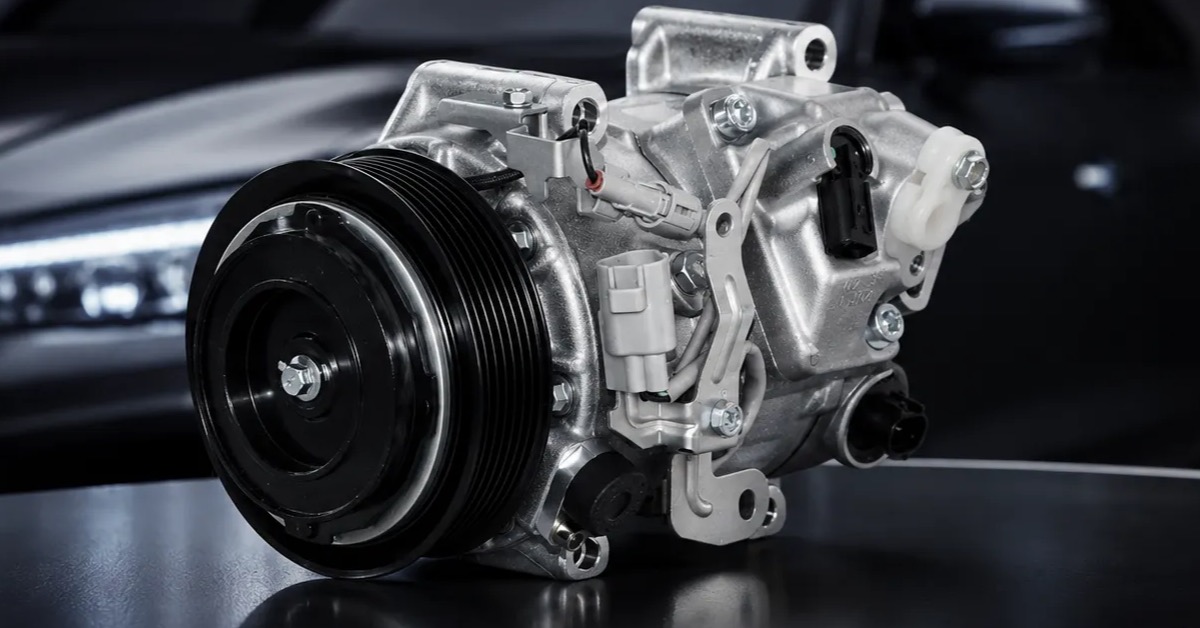
Automotive AC compressor quality control is a connected process, not a single end-of-line test. A compressor can pass a brief functional check and still present risk if its application data, critical dimensions, cleanliness, sealing, electrical interfaces, or change history are uncontrolled. Buyers therefore need to verify what is checked, when it is checked, how limits are defined, and whether the result is traceable to the shipped part.
ZUA Auto Parts uses this buyer-focused framework to turn the topic into a clearer product inquiry, while application, construction, and evidence must still be confirmed for each SKU.
This guide organizes ten controls that importers, distributors, OEM teams, and private-label brands can review before sample approval or bulk purchasing. It does not assign universal limits because acceptance criteria depend on compressor design, vehicle application, refrigerant system, and the customer's validated specification.
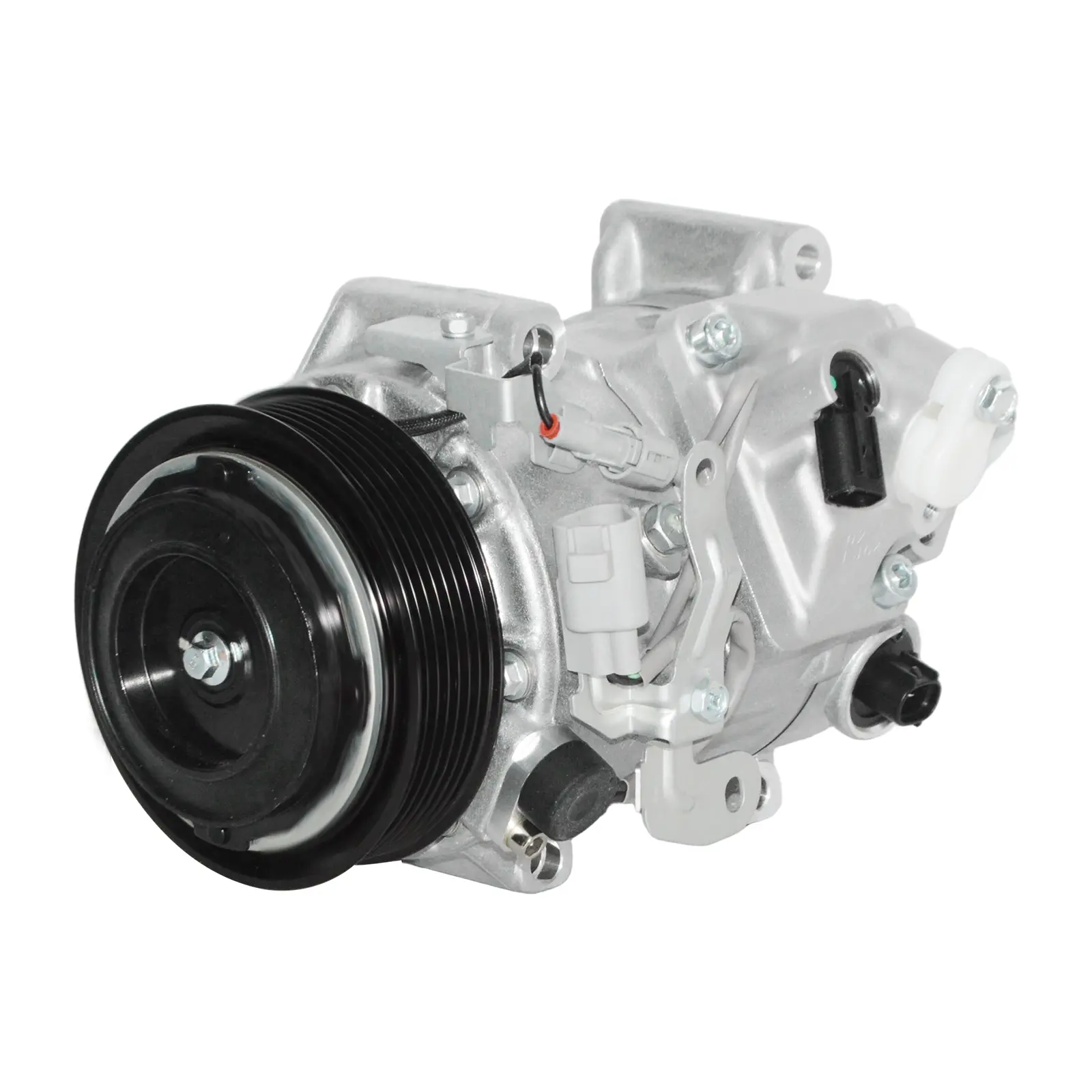
Automotive AC compressor quality control at a glance
| Control | Main risk addressed | Evidence buyers should request |
|---|---|---|
| 1. Application review | Wrong fit, drive, interface, or control type | Approved application record and drawing |
| 2. Incoming inspection | Uncontrolled critical components | Supplier approval and incoming records |
| 3. Dimensional control | Misalignment, poor sealing, assembly variation | Critical-characteristic inspection report |
| 4. Cleanliness control | Internal contamination and early wear | Cleaning process and reaction plan |
| 5. Assembly control | Incorrect parts, torque, seals, or oil | Work instructions and torque records |
| 6. Leak detection | Loss of refrigerant circuit integrity | Method, criteria, equipment, result |
| 7. Performance test | Insufficient or unstable operation | Model-specific test conditions and data |
| 8. Noise and vibration | NVH complaints and mechanical instability | Test setup, sample plan, result |
| 9. Durability validation | Failure over the intended duty cycle | Validation plan and completion report |
| 10. Traceability and analysis | Slow containment and repeated failures | Lot trace and corrective-action record |
1. Application and specification review
Quality begins before production. The supplier should confirm OE or cross-reference numbers, vehicle and engine version, mounting geometry, pulley parameters, refrigerant ports, connector and pin definition, displacement, direction of rotation, refrigerant, lubricant, and compressor control type. Variable-displacement and fixed-displacement units that appear similar may require different vehicle-side controls.
Ask for a signed or electronically approved application record. It should identify the drawing revision, critical characteristics, test plan, packaging, labels, and any agreed deviations. Without this baseline, later inspection data may be accurate but irrelevant to the required application.
2. Incoming material and component inspection
Automotive AC compressor quality control must extend to critical incoming parts. Depending on the design, these may include housings, shafts, bearings, valves, seals, pulleys, clutches, fasteners, sensors, control valves, and connectors. Review how sub-suppliers are approved, how specifications are communicated, and how lots are identified.
Incoming inspection should use risk-based plans and defined reaction rules. Ask what happens when a measurement fails: Is the lot isolated? Are already issued parts contained? Is the sub-supplier notified? Can the factory trace affected finished units?
3. Machining controls in automotive AC compressor quality control
Critical dimensions can influence mounting alignment, port fit, bearing position, sealing, rotation, and assembly. Buyers should ask the manufacturer to identify datums and key characteristics on a controlled drawing, then show how the line measures them. Calibration status, gauge suitability, inspection frequency, tool-life control, and out-of-spec reactions are more useful than a general equipment list.
For a new model, request a dimensional report for the approved sample. For repeat production, ask how the control plan maintains confidence between full dimensional layouts. If a feature is outsourced, verify how data are reviewed before the component reaches assembly.
4. Cleaning and contamination control
Internal cleanliness matters because the compressor circulates lubricant and operates inside a closed refrigerant system. Audit the cleaning stage, handling after cleaning, protection of open ports, storage time, work-area controls, and response to contamination. Protective caps help during storage and shipping but do not replace process cleanliness.
ZUA reports using automatic cleaning in its compressor production process. During qualification, ask for the model-specific cleanliness requirement, inspection or monitoring method, frequency, and records. The factory should also explain how reworked parts re-enter the clean process.
5. Assembly, torque, oil, and error prevention
Observe whether operators can select only the correct components and revision. Verify seal handling, lubricant identification and quantity control, torque-tool settings, fixture checks, clutch or pulley assembly controls, connector protection, and error-proofing. Work instructions should be accessible and match the actual operation.
For torque-controlled fasteners, request evidence that tools are calibrated and that abnormal results trigger containment. For multiple compressor families on one line, inspect changeover verification and the prevention of mixed parts. These details often reveal whether automotive AC compressor quality control is embedded in production or performed mainly at final inspection.
6. Leak detection in automotive AC compressor quality control
A leak test should be evaluated as a complete control: test stage, preparation, equipment, fixture, reference standard, acceptance criterion, cycle, result storage, and failed-part response. Helium can support sensitive leak detection, but the method and limit must still be defined for the product and process.
ZUA states that it uses helium leak detectors and isolates abnormal products. Buyers should request a recent model-specific record and ask whether the check is applied to every assembled unit or to a defined sample. Confirm how false passes, fixture leaks, equipment alarms, and re-tested products are controlled.
7. Full-performance testing
Performance testing should confirm the characteristics agreed for the target compressor under defined conditions. The report needs more than a pass mark: it should identify the part number, revision, test conditions, equipment, date, result, and acceptance basis. Compare design-validation testing, periodic audit testing, and production end-of-line checks because they serve different purposes.
ZUA describes full-performance testing as part of its manufacturing system and lists dedicated performance-test capability. Ask which parameters are measured for your selected compressor platform and which data will accompany sample approval. Never transfer a result from one model to another without an engineering basis.
8. Noise and vibration evaluation
Noise and vibration can arise from rotating components, assembly variation, bearings, pulleys, clutches, valves, mounts, or the test setup. The supplier should define the operating condition, mounting, instrumentation, background control, sample frequency, and acceptance method. Subjective listening alone is difficult to repeat.
Request evidence from the target model or platform. If the vehicle application has a known NVH concern, provide the installation and duty information during the RFQ so the supplier can propose relevant validation. ZUA states that its laboratory includes noise and vibration testing, which buyers can include in the technical review.
9. Durability and environmental validation
Durability validation assesses design and process risk over a defined operating profile. The plan should state cycles or hours, speed and load conditions, thermal or pressure conditions where relevant, interruption rules, measurements, failure criteria, and post-test inspection. A statement such as "durability tested" is incomplete without this context.
Separate completed validation from planned validation. When an existing model is changed, ask engineering to explain whether the change requires partial or full revalidation. For electrical or exposed components, the project may also require environmental checks defined by the customer or vehicle application.
10. Close the automotive AC compressor quality control loop
The factory should identify and isolate nonconforming material, record disposition authority, control rework, and prevent accidental release. Select a finished compressor and perform a traceability drill to its production data and critical component lots. Then review how field returns are received, analyzed, classified, and translated into corrective action.
The IATF automotive quality framework emphasizes customer orientation and common supply-chain methods. In practice, buyers should look for a closed loop: problem definition, containment, cause analysis, corrective action, effectiveness check, and controlled updates to process documents.
How to approve a compressor sample
- Freeze the application data, drawing revision, and critical requirements.
- Confirm the sample's part and lot identification.
- Review dimensional, leak, functional, and applicable validation records.
- Inspect packaging, port protection, labels, and documentation.
- Complete bench or vehicle validation appropriate to the buyer's program.
- Record the approved sample, deviations, and change-notification rules.
MOQ, sample timing, validation cost, and production lead time should be confirmed with the supplier for the exact part number and scope. They are commercial inputs to the approval plan, not quality characteristics that can be assumed.
Frequently asked questions
What is the most important automotive AC compressor quality control check?
No single check is sufficient. Correct application definition, critical process control, leak integrity, functional performance, and traceability work together.
Can a final performance test replace process inspection?
No. End-of-line testing may not detect every dimensional, cleanliness, material, or long-term durability risk. Process controls prevent defects rather than only screen finished units.
What should a helium leak report contain?
It should identify the product, test method, conditions, acceptance criterion, equipment, date, result, and traceable lot or serial reference.
Are noise and vibration tests required for every unit?
The control plan should define whether they are end-of-line, sampled, periodic, or validation tests. The buyer should verify the plan for the target model.
How is durability evidence reviewed?
Check the test plan, duty cycle, sample identity, failure criteria, interruptions, results, and post-test findings. Confirm that the tested design matches the quoted revision.
What documents should accompany sample approval?
Typical evidence includes an approved drawing, application record, dimensional report, material or component records as agreed, leak and performance data, validation results, and packaging specification.
How does ZUA describe its compressor quality capability?
ZUA reports automatic cleaning, helium leak detection, full-performance testing, Andon and Kanban management, abnormal-product isolation, and laboratory capability for performance, durability, vibration, noise, and after-sales analysis.
How can a buyer request model-specific evidence?
Send the OE reference, vehicle and engine data, compressor control type, ports, pulley, connector, refrigerant, lubricant, forecast, and required tests through the ZUA inquiry page.
Build the RFQ around verifiable quality evidence
Use this ten-point framework to compare suppliers on the same evidence. ZUA's compressor product range includes fixed, internally controlled variable, and externally controlled variable platforms. Start with the correct application, then ask the engineering and quality teams to define the control and validation route for that model.