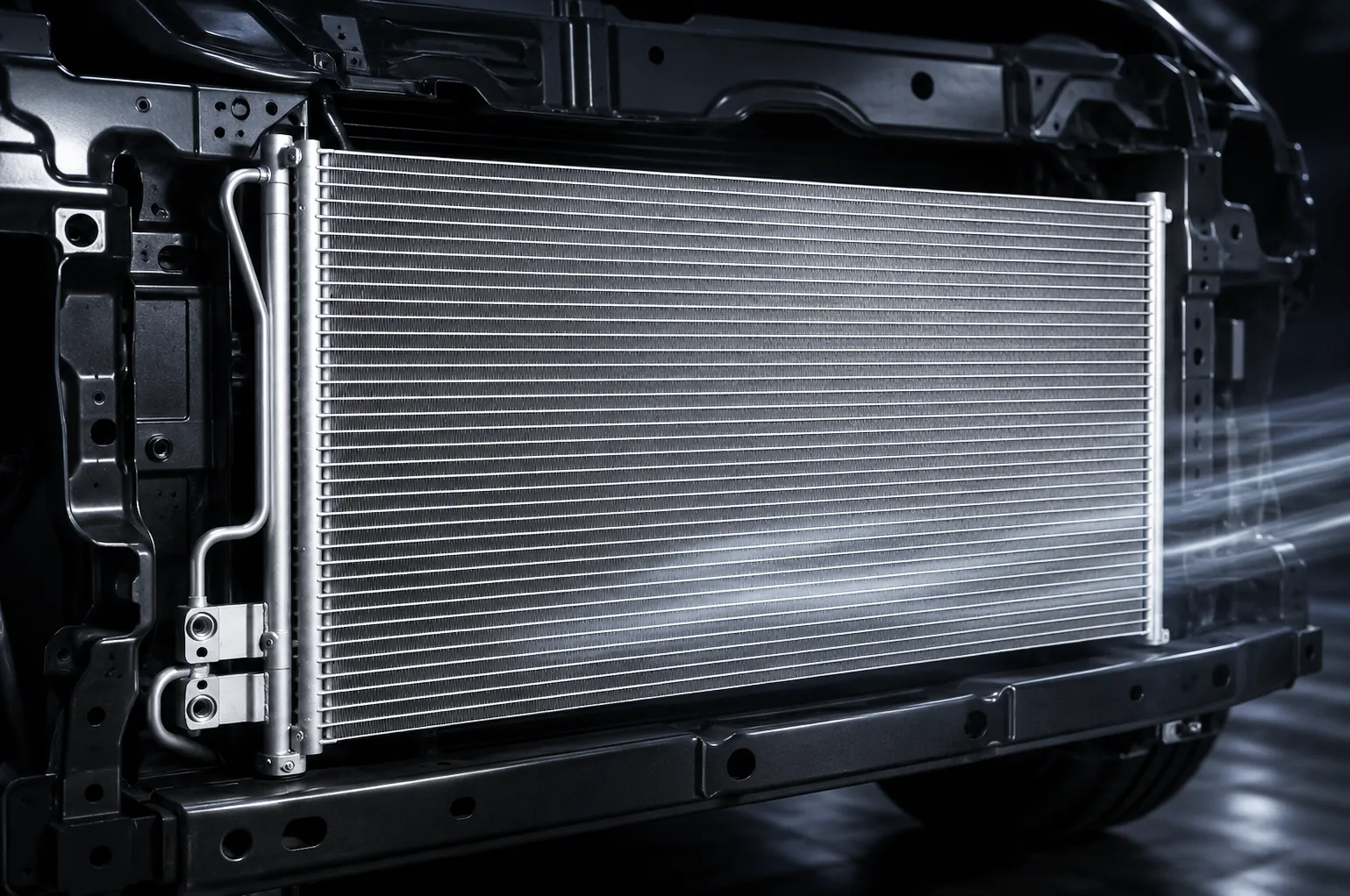
A car AC condenser catalog is useful only when its data can identify the installed component, not merely display a product photo. Buyers need vehicle coverage, OE and interchange references, refrigerant context, core dimensions, tube and fin construction, inlet and outlet geometry, mounting points, brackets, fan or shroud relationship, and packaging details. If those fields are missing, a visually similar condenser can still fail during installation or produce the wrong system behavior.
For a ZUA Auto Parts inquiry, use this framework to separate confirmed product data from buyer-owned validation and open questions before approving a sample or order.
The most reliable catalog is built as a controlled fitment record. Every description, drawing, image, and downloadable file should point to the same configuration. This approach helps distributors quote accurately, helps workshops avoid returns, and gives engineering teams a clean starting point for samples and validation.
Separate identification from marketing language
Begin with a neutral identity block: supplier part number, revision, OE reference, supersession, application range, production status, and whether the item is a bare condenser, condenser with drier, condenser with receiver, or condenser-and-fan module. Avoid labels such as “universal” unless the exact limits are documented.
Keep brand references clear. An OE number can support cross-reference, but it should not imply authorization or identical manufacturing responsibility. State what is confirmed, what is an interchange reference, and what must be checked against the vehicle.
The catalog field map
| Field group | Minimum data | Why it changes the decision |
|---|---|---|
| Vehicle | Make, model, year, engine, HVAC version, market | Separates look-alike applications |
| Core | Length, height, thickness, tube, fin, row, material | Controls package and heat rejection |
| Interfaces | Port type, position, angle, seal, thread, bracket | Determines assembly and leakage risk |
| System context | Refrigerant, drier or receiver arrangement, oil assumptions | Prevents incomplete circuit matching |
| Module scope | Fan, shroud, drier, sensor boss, fasteners | Defines what the buyer actually receives |
| Evidence | Drawings, sample status, tests, photos, revision | Shows whether the listing is controlled |
Make fitment searchable by more than one key
Use OE reference, vehicle selector, supplier part number, application attributes, and controlled aliases together. A single OE field is fragile because numbers can be superseded, formatted differently, or shared across configurations. Record engine code, compressor or fan arrangement, right- or left-hand-drive differences when relevant, and production break points.
Show the source and date of each fitment record. When a vehicle application remains uncertain, label it as verification required instead of placing it in the confirmed list. A careful “check before order” note is better than a catalog promise that generates avoidable returns.
Describe the core in a car AC condenser catalog as an engineered assembly
Core dimensions alone do not describe condenser behavior. Add tube profile, tube pitch, fin density or style, number of rows, header construction, material family, coating or surface treatment where confirmed, and whether the design uses a parallel-flow or another circuit arrangement. Do not invent values for a specific ZUA SKU; request the drawing or technical data for that unit.
Also record the receiver-drier or desiccant arrangement. A condenser that appears complete may require a separate drier, a transferable sensor, a service seal, or a specific cap. The catalog should make these dependencies visible before quotation.
Use port geometry as a hard fitment gate
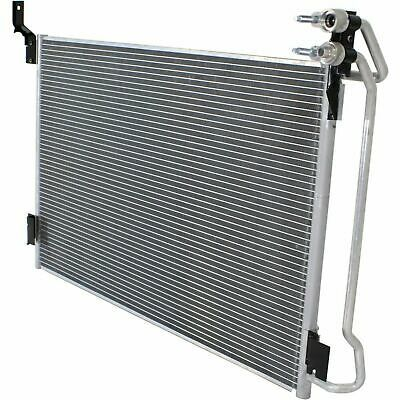
Photographs should show ports at a known orientation, but images cannot replace dimensions. Capture port center locations, axis direction, bead or flange type, thread, sealing face, groove, bracket datums, and protective cap. Include a drawing view that matches the vehicle installation direction.
For a car AC condenser catalog, port clocking and bracket location deserve their own fields. A few degrees of clocking or a small offset can create hose strain, interference with the radiator, or an installation that closes only after forcing the line.
Connect airflow claims to the installed stack
Condenser heat rejection depends on airflow, upstream restrictions, fan and shroud geometry, refrigerant condition, and vehicle speed. A catalog can state the tested configuration and conditions without turning one laboratory point into a universal vehicle claim.
List whether the condenser was tested alone, with a fan, with a shroud, or in a correlated stack. Record the test context, not just “high efficiency.” Buyers can then compare a bare replacement with a module-level offer fairly.
Check the condenser against a recognized application boundary
Use a customer drawing, vehicle test requirement, or agreed industry reference to define what the catalog data supports. The SAE J639 page provides context for motor-vehicle refrigerant vapor-compression-cycle safety; it does not certify a particular condenser or replace the buyer's fitment and performance criteria.
Record the reference used, its revision, the application assumptions, and any exclusions. A catalog should distinguish a safety or system reference from a product test result. This protects distributors from turning a general standard into an unsupported performance claim and gives engineering teams a clear reason to request additional evidence.
Give images a measurement job
Use a consistent image set: front face, rear face, port close-ups, bracket side, labels, drier area, cap condition, and a scale or datum when practical. Name files with the controlled part number and revision. Alt text should describe the image and its subject, such as “car AC condenser catalog port and bracket reference,” rather than repeating a sales slogan.
When a drawing, 3D file, or fitment sheet exists, link it to the same product record. Do not let an old image survive a bracket, port, or drier change.
Turn a catalog request into an RFQ packet
Ask suppliers to return the part number, application, OE references, drawing revision, core data, port and bracket data, module scope, refrigerant context, sample availability, test ownership, packaging, marking, forecast assumptions, and open questions in one response. This makes comparison possible across suppliers.
A car AC condenser catalog should help a buyer prepare the RFQ rather than force the buyer to rebuild the product identity from photographs. Include the requested evidence level: cross-reference only, sample fitment, bench performance, vehicle correlation, or production release.
Keep packaging and receiving evidence in the record
Condenser fins, ports, brackets, and drier connections can be damaged before installation. Record carton dimensions, supports, cap type, fin clearance, labels, mixed-SKU controls, and unpacking orientation. Add receiving photographs and a short damage classification for bent fins, crushed corners, missing caps, wrong labels, and port contamination.
Do not collapse different condenser variants into one page
Separate pages or clearly separated variants are warranted when a condenser changes port position, drier arrangement, bracket, core depth, fan interface, refrigerant scope, or vehicle break point. Combining them under one “fits all” description may increase short-term page count while reducing the usefulness of the catalog and creating search and service confusion. Use canonical product relationships and supersession notes when variants are genuinely related.
For each variant, keep the same field order so buyers can compare without hunting through different templates. Show the changed fields first, link to the appropriate drawing or image, and explain whether the replacement is a direct supersession, an alternative requiring verification, or a separate application. This gives a car AC condenser catalog a stable information architecture that can scale as new OE references and markets are added.
Link the catalog to ZUA product evidence
ZUA presents automotive condensers within its climate-control portfolio. Buyers can review the condenser category, compare the broader product range, and read company capability information. Exact fitment, construction, testing, and included components should be confirmed for each quoted part.
Send the vehicle, OE reference, catalog gap, port photographs, required drawing fields, sample quantity, forecast, and delivery market through the ZUA contact page. A complete request gives the technical and commercial teams the same definition of the item.
Frequently asked questions
Is an OE number enough to list a condenser?
No. Confirm vehicle break points, core, ports, brackets, drier arrangement, and module scope before treating the application as approved.
What does a condenser catalog photo fail to show?
It may not show scale, port clocking, sealing faces, bracket datums, drier contents, or included hardware.
Should a condenser with a receiver be a separate listing?
Usually yes, when the delivered assembly, service procedure, or fitment differs from a bare condenser.
Which core dimensions matter most?
Record length, height, thickness, tube and fin construction, rows, headers, and the installed clearance envelope.
How should uncertain fitment be shown?
Mark it verification required and identify the missing vehicle or technical data instead of presenting it as confirmed.
Can one airflow result describe every vehicle?
No. Airflow depends on the fan, shroud, upstream stack, vehicle speed, and test conditions.
What should an RFQ request from a catalog supplier?
Request identity, fitment, drawings, interfaces, scope, samples, tests, packaging, marking, and open deviations.
Why track catalog revision dates?
Revision dates show whether images, dimensions, fitment, and included parts match the current configuration.
How can distributors reduce condenser returns?
Use multiple fitment keys, clear scope statements, port and bracket data, and a pre-order verification path.
Where can buyers request ZUA condenser data?
Use the ZUA contact page with OE number, vehicle details, photographs, required fields, samples, and forecast.
Make the catalog a controlled fitment tool
A car AC condenser catalog earns trust when every listing connects identity, vehicle application, geometry, system context, images, evidence, packaging, and revision control. That structure helps buyers find the right part faster and gives ZUA a clearer path from product inquiry to qualified sample and repeat order.