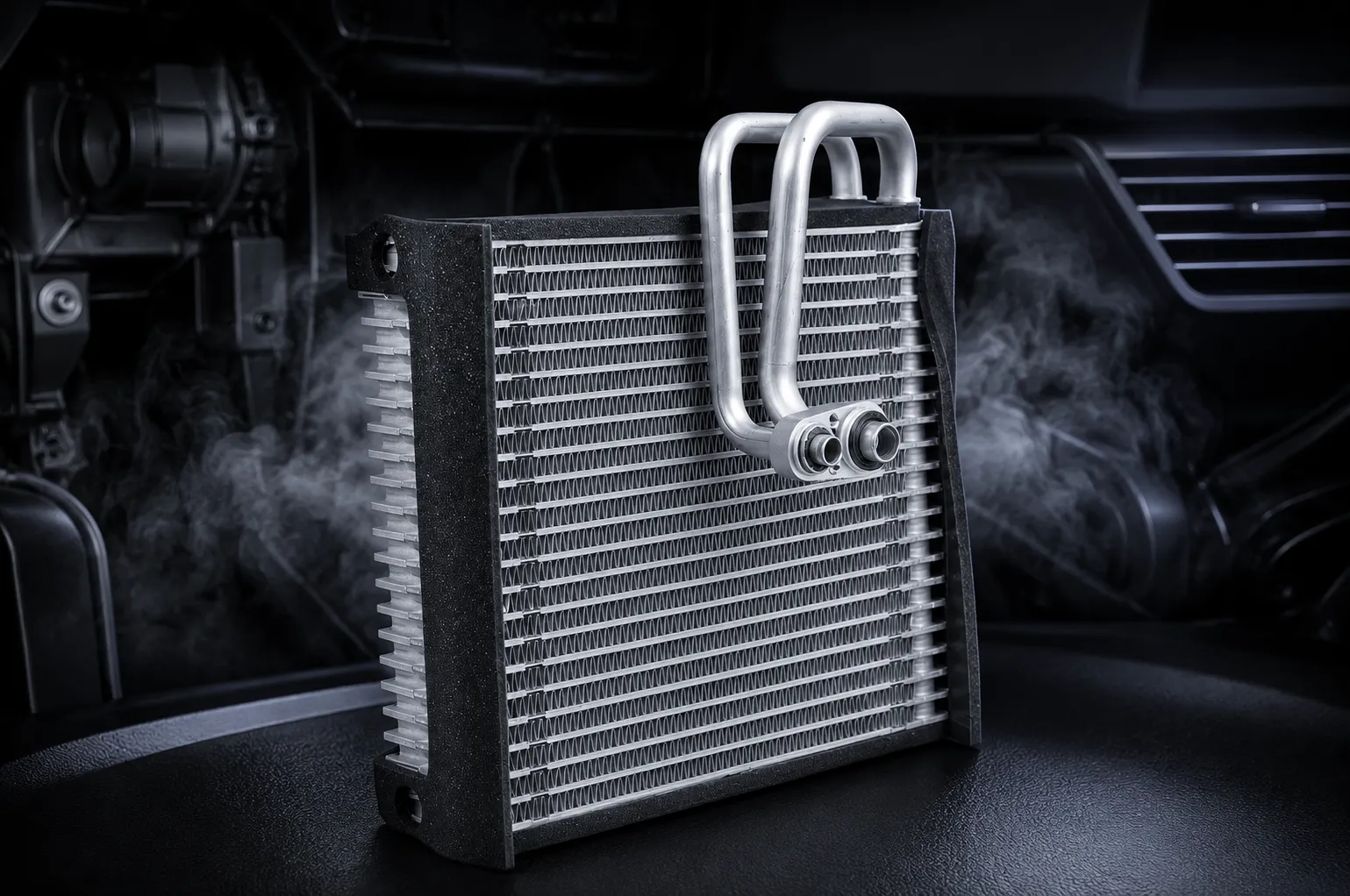
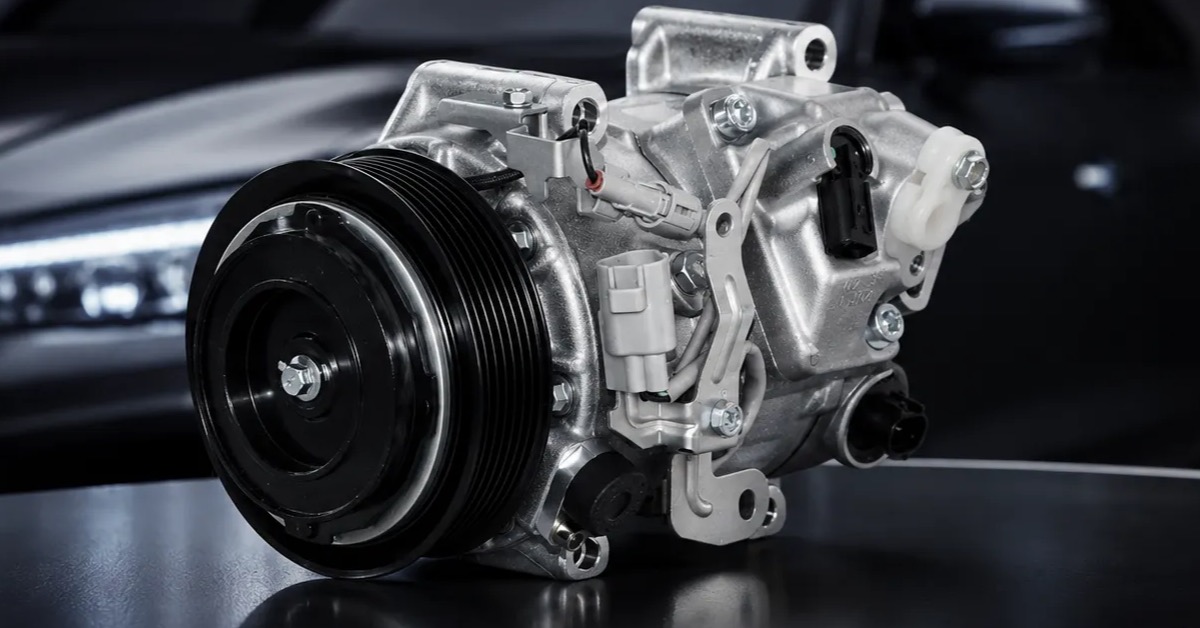
An OEM automotive AC evaporator must be approved as part of the HVAC module and refrigerant system. Core dimensions alone do not control fitment or cabin performance. Airflow distribution, fin geometry, refrigerant circuit, pressure drop, mounting, case sealing, sensor position, condensate drainage, frost behavior, cleanliness, leakage, corrosion, noise, and service access all influence the final result.
For buyers sourcing through ZUA Auto Parts, this framework connects the technical question to a controlled product inquiry; exact fitment and quoted specifications remain SKU-specific.
This guide is for OEM project teams, importers, distributors, and private-label buyers preparing an evaporator drawing, sample, validation plan, or second-source program. Acceptance limits should come from the vehicle, HVAC module, refrigerant system, and customer specification rather than a universal online number.
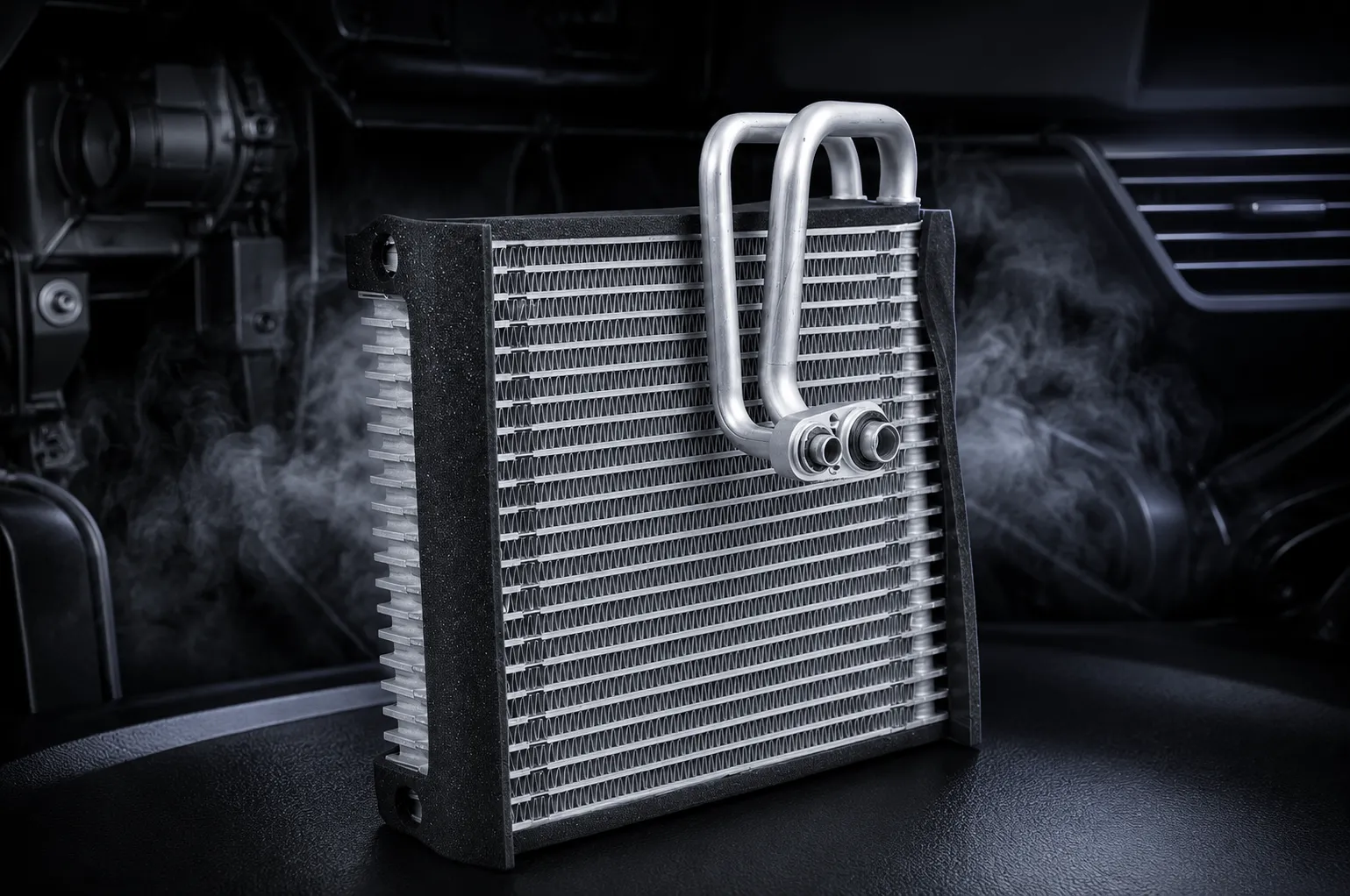
Define the evaporator boundary
State whether the supply is a bare core, core with tubes, valve interface, sensor, seals, insulation, case, drain, or complete subassembly. Identify which party owns the HVAC housing, expansion device, blower, sensor, control software, and refrigerant charging conditions.
Boundary clarity prevents an interface problem from being hidden between suppliers. The drawing and responsibility matrix should show every included part, reused vehicle part, assembly operation, test, and approval owner.
Build an interface-control record
| Interface | Control data | Failure prevented |
|---|---|---|
| HVAC case | Envelope, mounts, seals, foam, clips | Leakage, rattle, assembly force |
| Air side | Face area, fins, bypass, blower condition | Uneven cooling and excess pressure drop |
| Refrigerant | Ports, tubes, valve, circuit, seals | Leak, restriction, poor distribution |
| Condensate | Pan, drain path, vehicle angle | Water carryover and odor |
| Sensor | Location, retention, contact, wiring | Incorrect frost protection |
| Service | Access, tools, seals, replacement steps | Damage and repeat repair |
Control package and assembly variation
Use a three-dimensional envelope or controlled drawing to define tanks, tubes, bends, brackets, sensor pockets, foam, and connector clearances. Review tolerance stack with the HVAC case and neighboring components. A nominally correct core can create high assembly force when several dimensions shift in the same direction.
For an OEM automotive AC evaporator, inspect production-intent parts in production-intent housings. Hand-adjusted samples should be recorded as deviations and should not silently become the fitment standard.
Measure air-side performance in the module
Evaluate airflow distribution and air-side pressure drop with the intended blower, case, filter, doors, seals, and downstream ducts. A free core test is useful for development, but it may not show bypass, recirculation, local restriction, or maldistribution inside the HVAC module.
Map velocity or temperature across the face when uneven loading is a risk. Preserve blower voltage or command, door position, inlet condition, filter condition, and case revision with the result.
Verify refrigerant-side heat transfer
Define refrigerant, oil, mass flow, inlet state, outlet condition, pressure, superheat or applicable control condition, air inlet temperature, humidity, airflow, and stabilization method. Compare cooling capacity and pressure drop at the operating points that matter to the vehicle.
Do not approve a design from one headline capacity value. Low load, high humidity, transient pull-down, idle, and boundary conditions may expose distribution or control weaknesses that a nominal point hides.
Evaluate frost and control interaction
Frost depends on surface temperature, humidity, airflow, refrigerant distribution, sensor position, expansion control, compressor behavior, and software logic. Test the complete control loop where possible. Record the onset, location, growth, control response, recovery, and any residual blockage.
An OEM automotive AC evaporator should not be blamed for every icing complaint. A misplaced sensor, restricted filter, incorrect charge, valve behavior, or control calibration may create the same symptom. Validation should preserve system data.
Design condensate drainage for vehicle attitudes
Confirm drain-pan slopes, local pockets, foam edges, tube paths, case joints, drain outlet, vehicle pitch and roll, blower effect, and shutdown behavior. Test water distribution across the face rather than pouring water into one convenient corner.
Look for carryover, dripping into ducts, retained water, wet insulation, and slow drainage after operation. Drainage evidence should include the installed orientation and HVAC case revision.
Manage cleanliness from production to installation
Define internal and external cleanliness, approved cleaning process, drying, port protection, cap retention, packaging, storage, handling, and installation opening time. Internal debris can affect the expansion device or compressor, while external contamination can create odor or airflow concerns.
Establish a reaction for missing caps, damaged packaging, wet cartons, visible residue, or excessive storage exposure. Do not clean and release a questionable part without an approved method and inspection.
Verify leak integrity and joint quality
Identify materials, tube and header construction, brazed or welded joints, port design, test media, test stage, detection method, equipment controls, acceptance source, and reaction plan. Connect production leak records to part number, revision, date, line, and lot.
Review sample cut sections or destructive evidence when joint formation is a critical risk. A summary “leak test passed” does not explain whether the tested configuration represents the released evaporator.
Plan corrosion and environmental validation
Select condensate exposure, chemical exposure, thermal cycling, pressure cycling, vibration, and corrosion tests based on the vehicle environment and customer requirement. Include coatings, dissimilar-metal interfaces, foam contact, drains, and retained contaminants in the review.
Inspect the part after testing for leaks, blocked fins, coating change, joint damage, tube degradation, odor, and performance shift. Post-test function matters more than appearance alone.
Assess noise, vibration, and water sounds
Investigate refrigerant flow noise, case contact, tube vibration, blower-induced whistle, water movement, foam squeak, and drain gurgle. Use the intended HVAC housing, mounts, refrigerant condition, blower state, and vehicle structure when possible.
Record the operating state that creates the sound. A bench observation without control, flow, or mounting data is difficult to reproduce and may lead to the wrong corrective action.
Use a gated sample and change process
Freeze drawing revision, bill of materials, tooling, process route, supplier sources, inspection plan, packaging, and validation status at sample approval. Keep deviations open with owners and closure evidence. Separate appearance approval from engineering and performance approval.
For an OEM automotive AC evaporator, changes to fins, tubes, headers, joints, coating, foam, ports, sensors, production site, process, or packaging should trigger a documented impact review. Define notification and revalidation responsibilities before production.
Clarify ZUA's product and production route
ZUA provides an automotive evaporator category within its current product range and presents compressors as its core manufacturing focus. Buyers should confirm who manufactures or supplies the quoted evaporator and who owns design approval, validation, traceability, change control, and claims.
Review the broader ZUA product portfolio and its company capability information. The IATF 16949 overview provides quality-system context; part-specific evidence is still required.
Send a useful evaporator RFQ
Provide vehicle and HVAC application, drawing or sample, package interfaces, refrigerant, valve, airflow, cooling requirements, pressure-drop expectations, frost and drainage conditions, cleanliness, validation, packaging, forecast, market, and change requirements. Identify which data is approved and which remains a target.
Use the ZUA contact page to request a model-specific review rather than relying on a visual match or an unverified OE cross-reference.
Plan service replacement compatibility
Engineering approval should include the service path. Check whether the evaporator can be installed with normal workshop tools, whether ports and tubes remain protected during HVAC case assembly, which seals must be replaced, how sensor and foam positions are verified, and whether the drain path can be inspected after installation.
Compare the replacement procedure with the reference part and vehicle manual. If the new design changes tube flexibility, bracket access, seal compression, or case closing force, document the instruction and validate that technicians can complete the work without bending a tube, trapping foam, contaminating an open port, or damaging the sensor.
For an OEM automotive AC evaporator, capture service feedback during pilot use. Installation time, repeated questions, damaged parts, water complaints, and wrong-application returns can expose interface information that was missing from the engineering file.
Feed those observations back into the drawing, packing method, catalog qualifiers, service instruction, and next sample review instead of leaving them only in claim emails.
Frequently asked questions
Can an evaporator be approved by core dimensions alone?
No. Case fit, airflow, refrigerant circuit, pressure drop, drainage, sensor position, cleanliness, leakage, and control interaction also matter.
Why should the HVAC case be included in testing?
The case determines sealing, bypass, airflow distribution, mounting, sensor position, drainage, and contact conditions.
What causes evaporator frost?
Humidity, airflow, surface temperature, refrigerant distribution, sensor placement, valve behavior, compressor control, and software can interact.
How should condensate drainage be checked?
Test representative water distribution, blower states, shutdown, vehicle pitch and roll, drain routing, and retained water.
Why are port caps important?
They protect internal cleanliness and help control exposure during storage, transport, and installation.
What changes should trigger an impact review?
Review changes to core geometry, materials, fins, tubes, joints, coating, foam, ports, sensors, processes, sources, site, and packaging.
Does ZUA list automotive evaporators?
Yes. ZUA maintains an evaporator category, while buyers should confirm the responsible production and validation route for the quoted program.
What should buyers send with an evaporator inquiry?
Send application, interfaces, sample or drawing, thermal and pressure conditions, drainage, cleanliness, validation, forecast, packaging, and market needs.
Approve an OEM automotive AC evaporator as a system
A reliable OEM automotive AC evaporator program connects package interfaces, airflow, heat transfer, refrigerant pressure drop, frost control, condensate drainage, cleanliness, leak integrity, corrosion, NVH, sample status, and changes. That system-level evidence is more dependable than approving a core from dimensions or appearance alone.