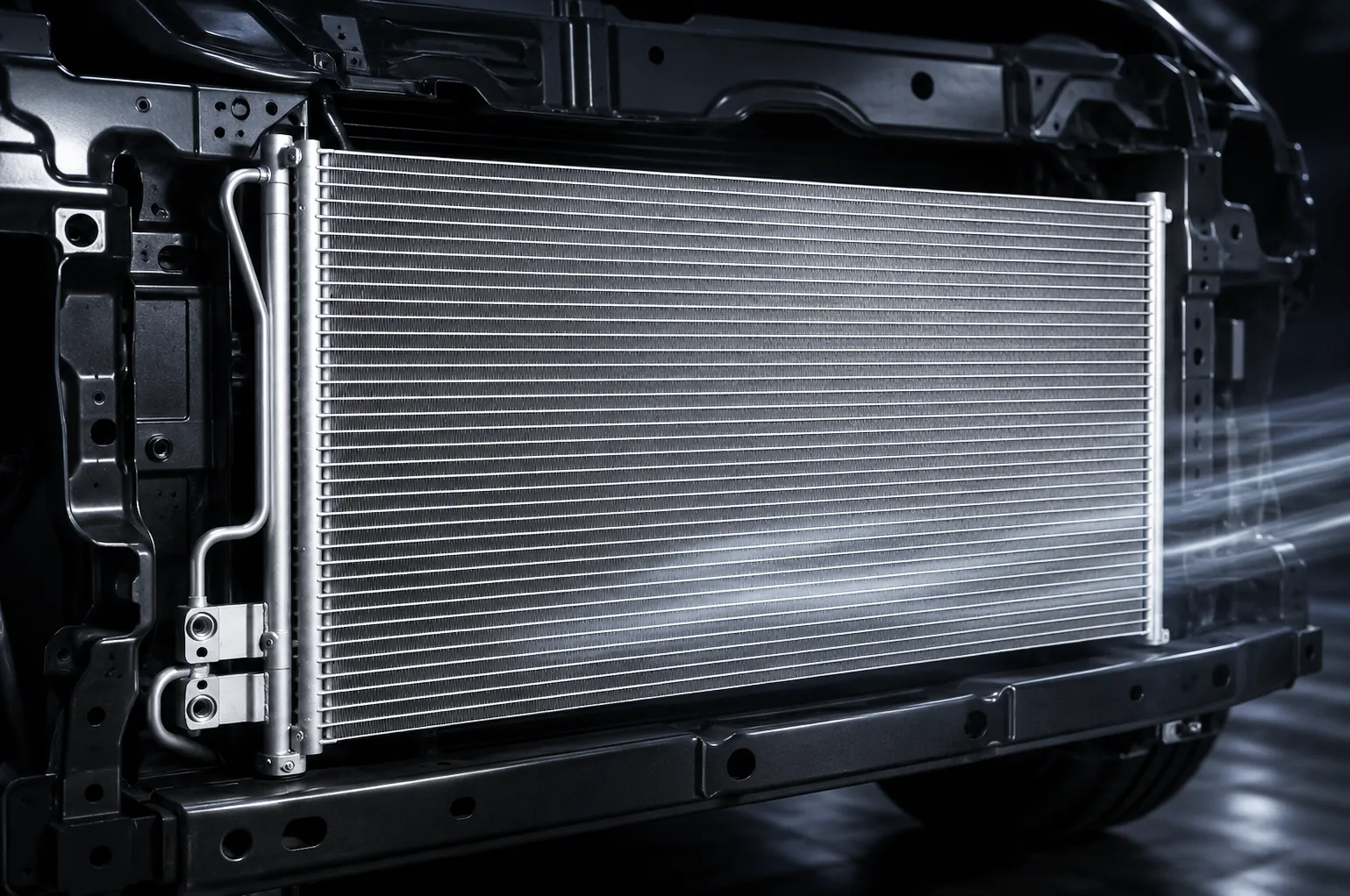
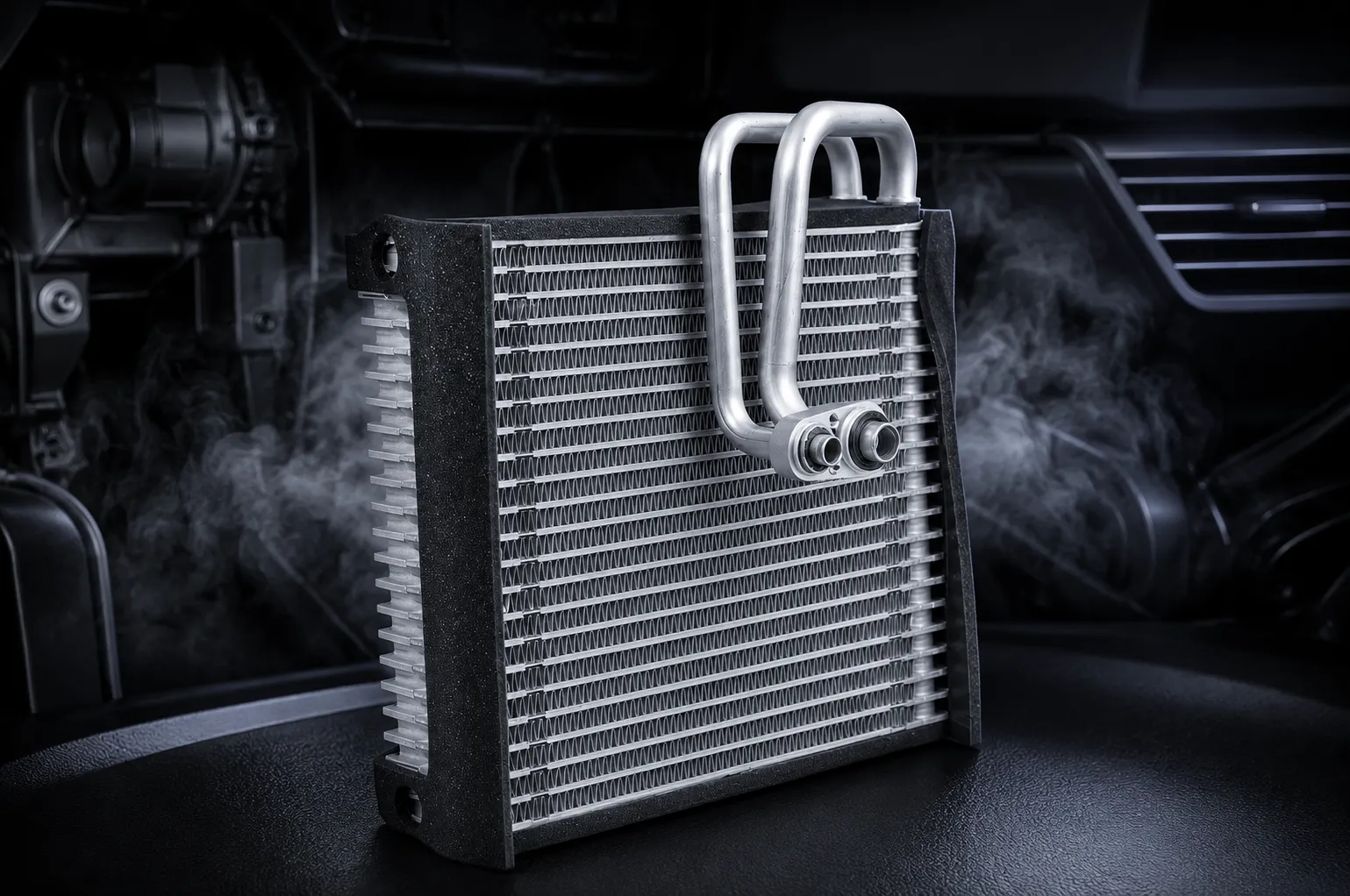
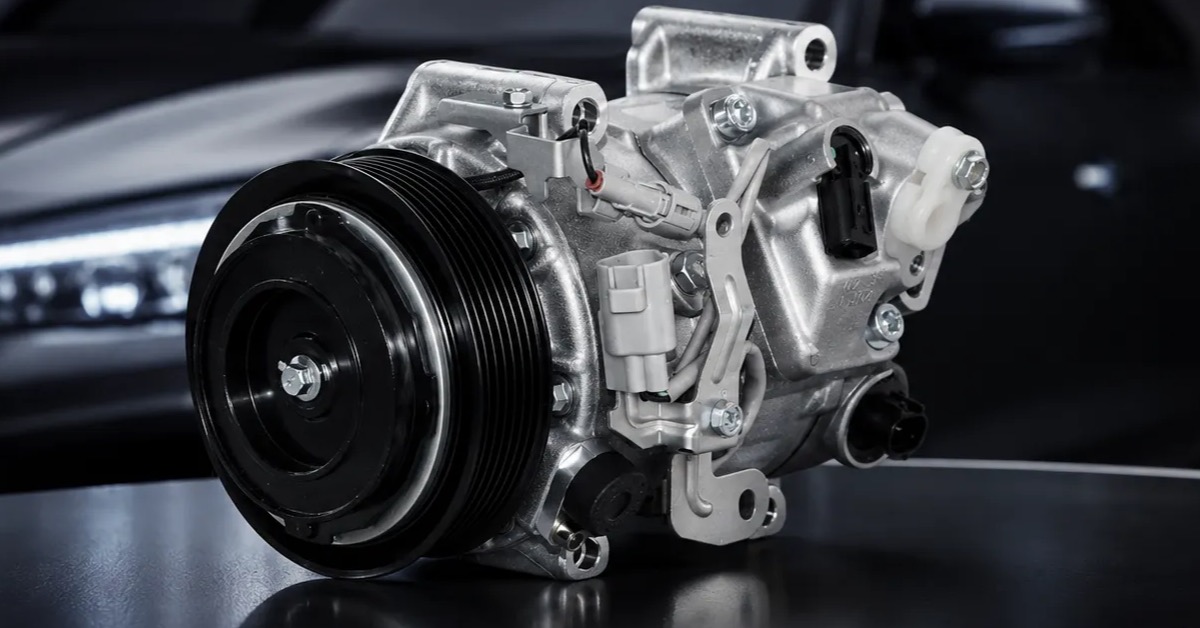
An aluminum automotive heater core is a compact heat exchanger with competing duties. It must transfer enough heat into cabin air, avoid excessive coolant pressure loss, avoid excessive air-side resistance, fit the HVAC case, survive vibration and thermal cycling, stay clean internally, resist corrosion in the specified coolant environment, and arrive without bent fins or damaged pipes. Optimizing only one number can damage another.
This ZUA Auto Parts resource helps distributors organize the evidence needed before quotation; confirm the exact application, interfaces, tests, and supplied scope for every requested part.
Buyers therefore need an engineering balance sheet rather than a photograph and overall dimensions. The balance sheet connects vehicle duty, core geometry, materials, process controls, performance curves, leakage evidence, installation interfaces, and distribution protection in one approval package.
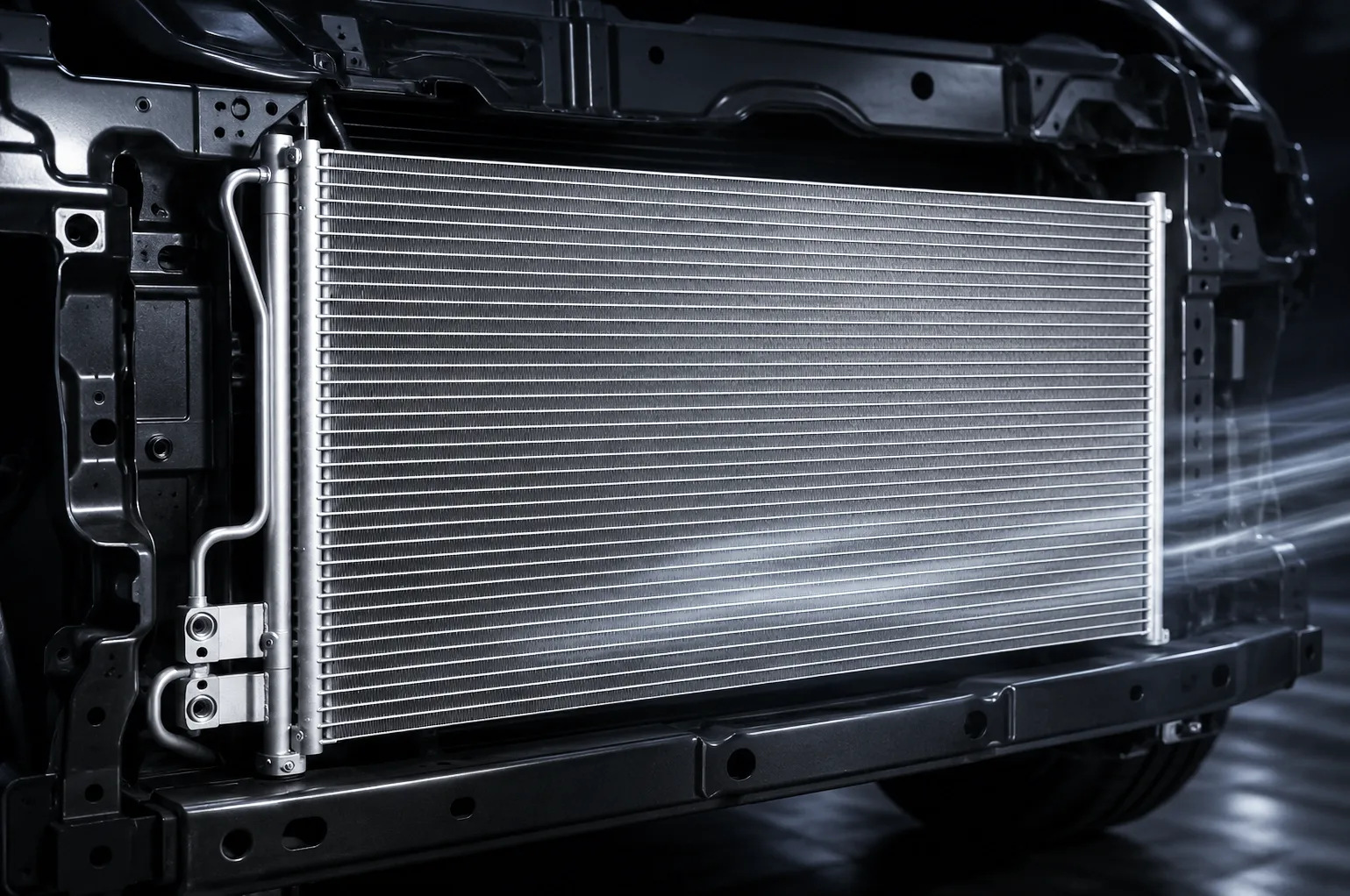
Define the thermal job before comparing cores
State coolant inlet temperature and flow, air inlet temperature and flow, target outlet conditions, warm-up expectations, allowable pressure losses, and the operating points that matter. Add low-flow and part-load conditions rather than testing only the highest input.
When an original reference is available, use it to establish interfaces and comparative behavior, but do not assume copying exterior dimensions reproduces internal performance. Tube count, hydraulic diameter, fin density, louver geometry, core depth, header design, and internal features can change the curve.
The heater-core balance sheet
| Design objective | Helpful change | Possible trade-off |
|---|---|---|
| More heat transfer | More effective surface or turbulence | Higher air or coolant pressure drop |
| Lower mass | Thinner material or smaller volume | Lower robustness or process margin |
| Lower air resistance | More open fin path | Reduced heat-transfer area |
| Lower coolant loss | Larger or less restrictive flow path | Packaging or distribution challenges |
| Better corrosion margin | Material and process controls | Cost and validation requirements |
| Higher fin protection | Stronger pack and handling control | More packaging material and volume |
Control the interfaces the HVAC case actually sees
Freeze core length, width, depth, pipe location and angle, pipe diameter, bead or flange features, mounting tabs, foam and seal locations, sensor or bracket features, drain clearance, and connector access. Use datums that can be measured consistently rather than dimensions taken from flexible fins.
For an aluminum automotive heater core, pipe orientation can be as important as the core face. A small angular or positional error may prevent case closure, load the pipe during installation, misalign the firewall seal, or create stress that appears later as leakage.
Read performance as two pressure-drop curves
Thermal output should be reviewed with coolant-side pressure loss and air-side resistance. A core that produces strong heat on a laboratory rig may be unsuitable if it disrupts coolant distribution or reduces blower airflow in the vehicle case. Plot results across agreed flow ranges and temperatures.
Record fluid properties, instrumentation, stabilization, test orientation, measurement uncertainty, and calculation method. If suppliers use different rigs, perform a correlation check with shared reference samples.
Model an aluminum automotive heater core as a linked trade-off system
Use a one-page trade-off review before selecting a sample. Put heat duty, coolant-side restriction, air-side restriction, package size, mass, fin robustness, tube geometry, coolant volume, brazing route, corrosion context, cost, and manufacturing controls in adjacent columns. For each proposed design change, identify which measures may improve and which may deteriorate.
This review prevents narrow optimization. More fin density can change air resistance and debris sensitivity; a different tube arrangement can alter flow distribution, pressure drop, mass, and joining risk; stronger shipping protection can add unpacking work or contact points if poorly designed. An aluminum automotive heater core should therefore be compared through agreed curves, dimensional evidence, material identity, process evidence, and distribution condition—not through a single claimed capacity value. Record trade-offs as accepted, rejected, or requiring a controlled test.
Trace material and brazing evidence
Document the material specification for tubes, fins, headers, plates, pipes, brackets, and any clad or filler system. Link incoming identity, forming controls, assembly fixtures, furnace recipe, atmosphere control, maintenance, and post-braze inspection to the production lot.
Do not treat a shiny braze joint as proof of soundness. Inspect for incomplete joints, erosion, distortion, blockage, contamination, and local damage using methods appropriate to the process and risk. Control rework and define when a part must be rejected instead of repaired.
Use leakage tests with a known purpose
Different tests answer different questions. A production leak test screens assembled parts under defined conditions. A pressure proof test evaluates structural response. A burst or destructive test can support design margin. Thermal cycling and vibration can reveal leakage that is not present before exposure.
Specify medium, pressure, dwell, fixture, temperature, detection method, calibration, acceptance threshold, retest rule, and record retention. For an aluminum automotive heater core, the production test should be connected to periodic verification and post-stress testing rather than presented as a standalone claim.
Make internal cleanliness measurable
Residue can circulate through the cooling system, affect valves or pumps, restrict passages, or contaminate coolant. Define preparation, extraction medium, agitation or flushing method, filter, particle-size reporting, mass or count limit, and handling after the test. Include process chemicals and braze residues in the risk review.
Cap pipes after the final accepted cleaning and drying step. Track cap condition through packing, storage, and installation. A clean part can be contaminated by poor handling after release.
Validate corrosion in the specified coolant context
Corrosion behavior depends on material combinations, coolant chemistry, concentration, water quality, contaminants, temperature, oxygen, electrical conditions, and neighboring components. The buyer should define the intended coolant family and vehicle requirements rather than requesting a generic “corrosion-proof” statement.
The current ISO 16750-4 overview describes climatic-load context for road-vehicle electrical and electronic equipment. A heater core is a thermal-fluid component, so its actual environmental and corrosion validation must come from the applicable customer specification and agreed test plan.
Test durability around real constraints
Consider thermal cycling, pressure cycling, vibration, mounting strain, pipe loads, installation torque where relevant, freeze risk, and vehicle-specific stress. Define the sample support and fluid condition because a freely supported laboratory core can respond differently from one clamped inside an HVAC case.
Inspect dimensions, leakage, joints, fins, pipes, brackets, and performance after exposure. Link every sample to its build lot, material lot, furnace run, and test sequence.
Protect the fin pack from the distribution route
Fins are functional surfaces, not decoration. Bent areas can restrict airflow and create uneven performance. Packaging should locate headers or strong frame features, protect pipes and brackets, maintain clearance around the core face, and prevent unit-to-unit contact.
After route simulation or a representative shipping trial, inspect carton condition, pipe geometry, mounting datums, fin damage, cap retention, cleanliness, and leakage. An aluminum automotive heater core should be approved in its final saleable pack, not only as an unpacked laboratory sample.
Turn sample approval into configuration control
The sample record should identify drawing revision, materials, core geometry, supplier and site, furnace route, fixtures, leakage method, performance curves, cleanliness, durability sequence, markings, and packaging. Keep a retained sample or controlled visual record.
Require review for changes to material, tube or fin geometry, braze process, furnace, fixture, leak equipment, cleaning, pipe supplier, production site, label, cap, or packaging. State whether existing inventory can be mixed with the revised configuration.
Discuss heater-core sourcing with ZUA
ZUA lists heater cores among its broader vehicle climate-control components. Buyers should confirm the exact product, responsible production route, technical data, validation ownership, and change-control method before assigning manufacturing claims to a specific SKU.
Browse the HVAC component category, the complete ZUA product portfolio, and company capability information. Send drawings, OE references, thermal points, pressure-drop limits, cleanliness, tests, forecast, and packaging requirements through the contact page.
Frequently asked questions
Is overall size enough to cross-reference a heater core?
No. Pipe geometry, mounting datums, seals, core depth, internal flow path, pressure drops, and thermal performance also matter.
Why measure both coolant and air pressure drop?
The heater core interacts with the vehicle cooling circuit and the HVAC airflow path; excessive restriction on either side can reduce system performance.
Can more fins always improve heating?
No. More surface can increase heat transfer but may also increase air resistance, contamination sensitivity, mass, and manufacturing complexity.
What should a production leak record contain?
Identify part, lot, equipment, calibration, medium, pressure, dwell, threshold, result, operator or system, and retest disposition.
Why are pipe caps important?
They help protect internal cleanliness and pipe ends after cleaning, through storage, shipping, and installation handling.
How should braze-process changes be controlled?
Review material, furnace recipe, atmosphere, tooling, joint quality, leakage, performance, durability, and affected inventory before approval.
What packaging damage matters most?
Watch for bent fins, distorted pipes, damaged brackets, lost caps, contaminated ports, and carton loads transferred through the core face.
Should corrosion tests use any available coolant?
No. Test chemistry and conditions should reflect the intended coolant and customer requirements with documented boundaries.
What should buyers send with an RFQ?
Send drawings, OE and vehicle data, thermal duty, flow ranges, pressure-drop limits, materials, tests, forecast, marking, and packaging needs.
Does ZUA list heater cores?
ZUA lists heater cores within its climate-control range; buyers should confirm exact SKU capability and production responsibility.
Approve the balance, not one headline number
An aluminum automotive heater core is strongest when heat transfer, coolant loss, air resistance, fit, material, brazing, leakage, cleanliness, corrosion context, durability, and packaging are reviewed together. A controlled balance sheet makes supplier comparison clearer and prevents one impressive test point from hiding a weak system interface.