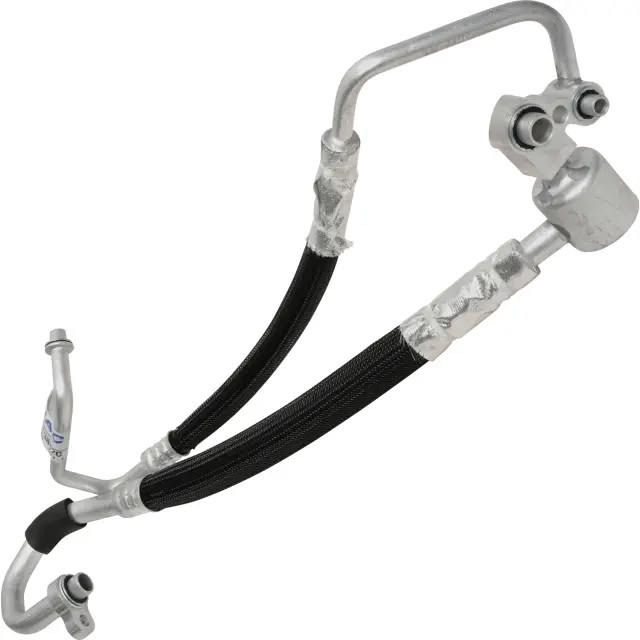
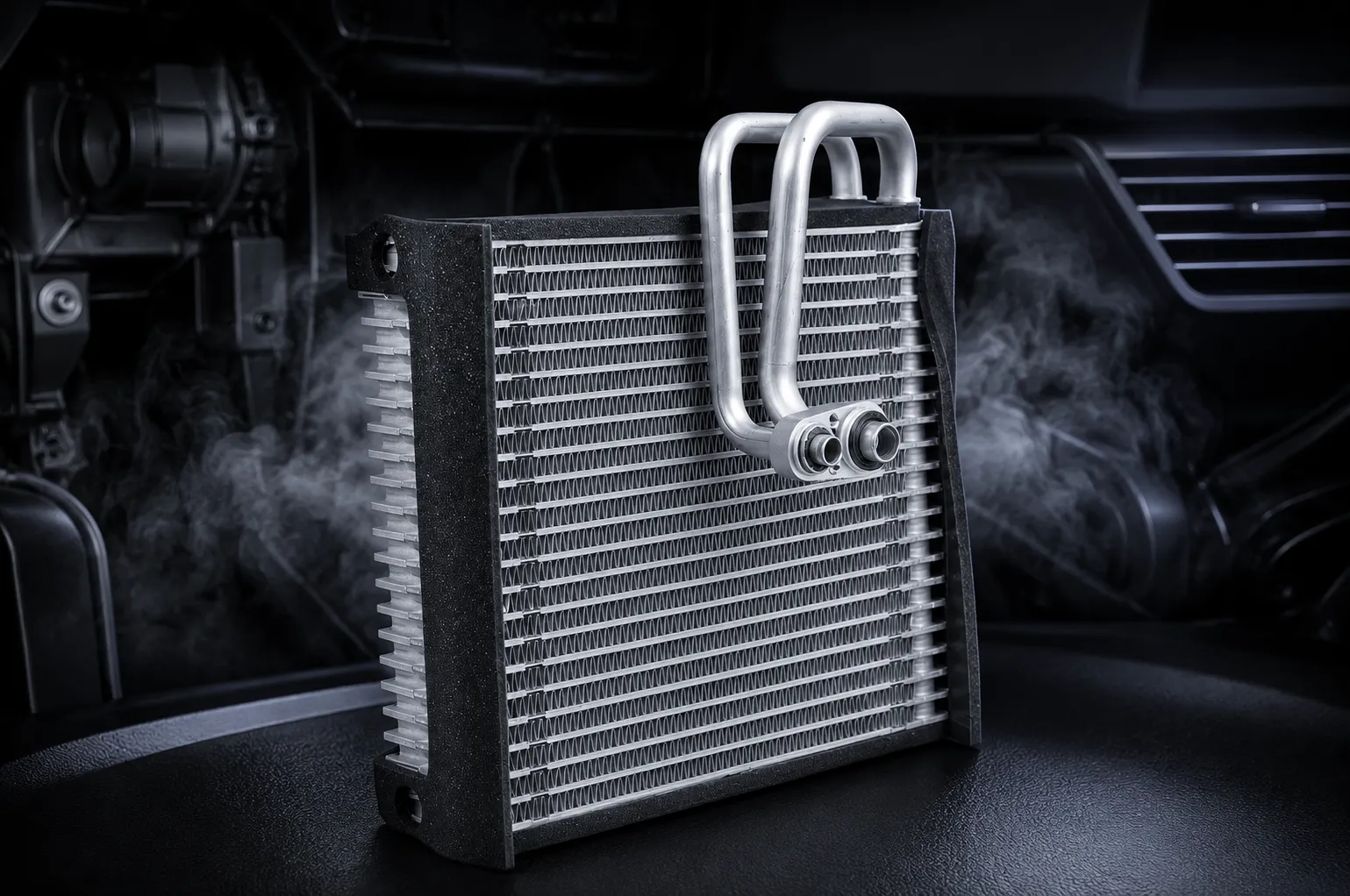
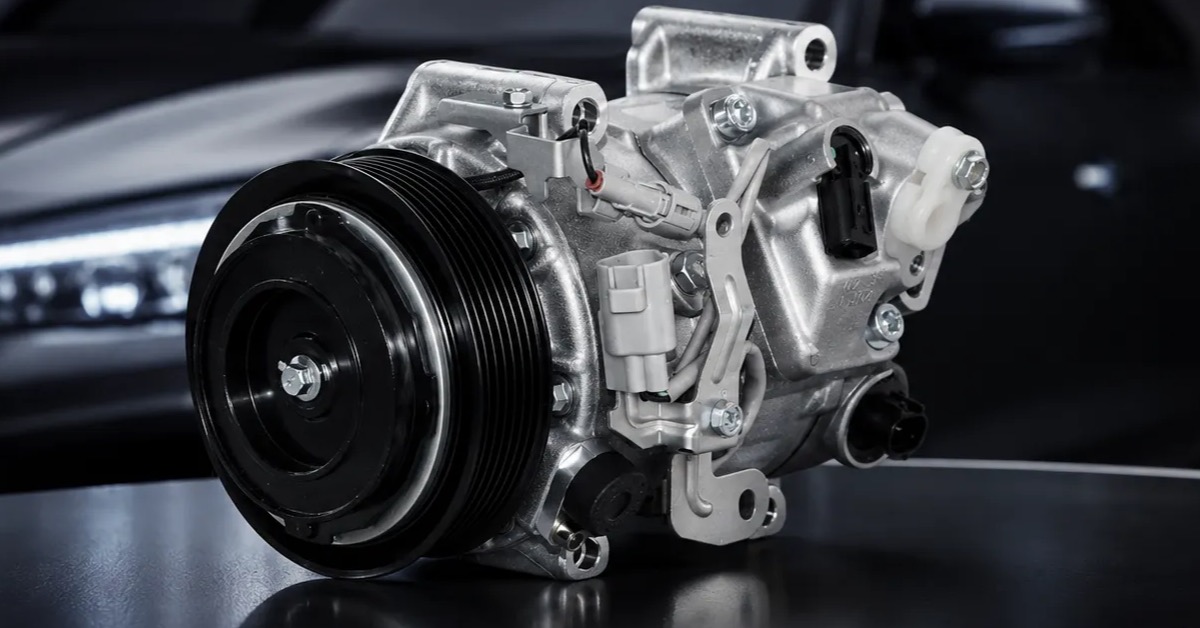
An automotive AC parts supplier audit checklist is useful only when it helps a buyer make a decision about a specific product and program. A generic tour of a factory can look impressive while leaving the most important questions unanswered: which legal entity will quote the part, who owns the design, how is the exact configuration controlled, what happens when a component changes, and how can a shipment be traced after it reaches a warehouse?
This guide turns an audit into an evidence trail. It is written for importers, distributors, private-label brands, service networks, and purchasing teams comparing suppliers of compressors, condensers, evaporators, expansion devices, hoses, driers, blower motors, fans, pumps, and related climate-control parts. The aim is not to award a score to a building. It is to decide whether a supplier can support the application, volume, documentation, and response discipline your program requires.
The checklist is deliberately risk-based. A compressor with a control valve, oil requirement, pulley, and model-specific test plan may need deeper technical review than a low-risk packaging accessory. Use the same gates for every supplier, then add product-specific questions instead of pretending one universal score proves interchangeability.
Start with the decision the audit must support
Write the decision before scheduling the visit. Are you qualifying a new source, adding a second source, approving a private-label program, investigating a complaint, or expanding an existing supplier into a new product family? Each decision changes the evidence threshold. A supplier that is acceptable for a catalog-only trial may not be ready for a safety-sensitive, high-volume launch.
Record the intended market, vehicle coverage, forecast range, launch timing, packaging and label requirements, target service level, expected validation, and after-sales route. Add the failure that would be most expensive: wrong fitment, field leakage, electrical mismatch, inconsistent airflow, moisture exposure, late corrective action, or an untraceable mixed shipment. The audit should spend time on that risk rather than collecting photographs of every department.
For ZUA, the current climate and mobile A/C parts range is a useful starting point for mapping the product family. Confirm the exact application and commercial scope with the supplier before treating a category page as a technical approval.
Gate one: confirm the supplier identity
Begin at the desk, not at the production line. Match the quotation, invoice entity, website, certificate, bank details, and proposed manufacturing site. A brand name may cover several legal entities or approved production routes. The buyer needs to know who signs the quality agreement, who owns a change notification, and who is responsible when a claim crosses a supplier boundary.
| Identity question | Evidence to request | Why it matters |
|---|---|---|
| Who will contract and invoice? | Legal name, address, registration and quotation | Links commercial responsibility to the right entity |
| Where is the part made? | Site address, process map and production route | Prevents an assumed factory from replacing the approved route |
| Who owns the design? | Drawing, approved specification and deviation authority | Clarifies who can change a critical feature |
| Who answers a field claim? | Escalation list and response process | Turns a complaint into a controlled action |
Do not treat a certificate logo or a polished presentation as proof of product capability. They can be useful context, but the audit record should identify the certificate holder, site, scope, validity, and exclusions. If a partner supplies a component or performs a process, name that boundary and define how the final supplier controls it.
Gate two: freeze the part identity before walking the line
Bring one application file into the audit room. It should show the customer reference, supplier reference, OE or cross-reference, vehicle and engine qualifiers, refrigerant, oil or fluid where relevant, control method, ports, mounting, connector, pulley or clutch, included seals, label, packaging, and revision. Attach a photograph, drawing, or sample record for every interface that can cause a return.
Ask the supplier to point to the same fields in its system. Can sales, engineering, production, inspection, warehouse, and customer service find the current revision without relying on a personal spreadsheet? If two records use different names for the same product, stop and reconcile them. A supplier audit cannot be meaningful when the buyer and factory are scoring different parts.
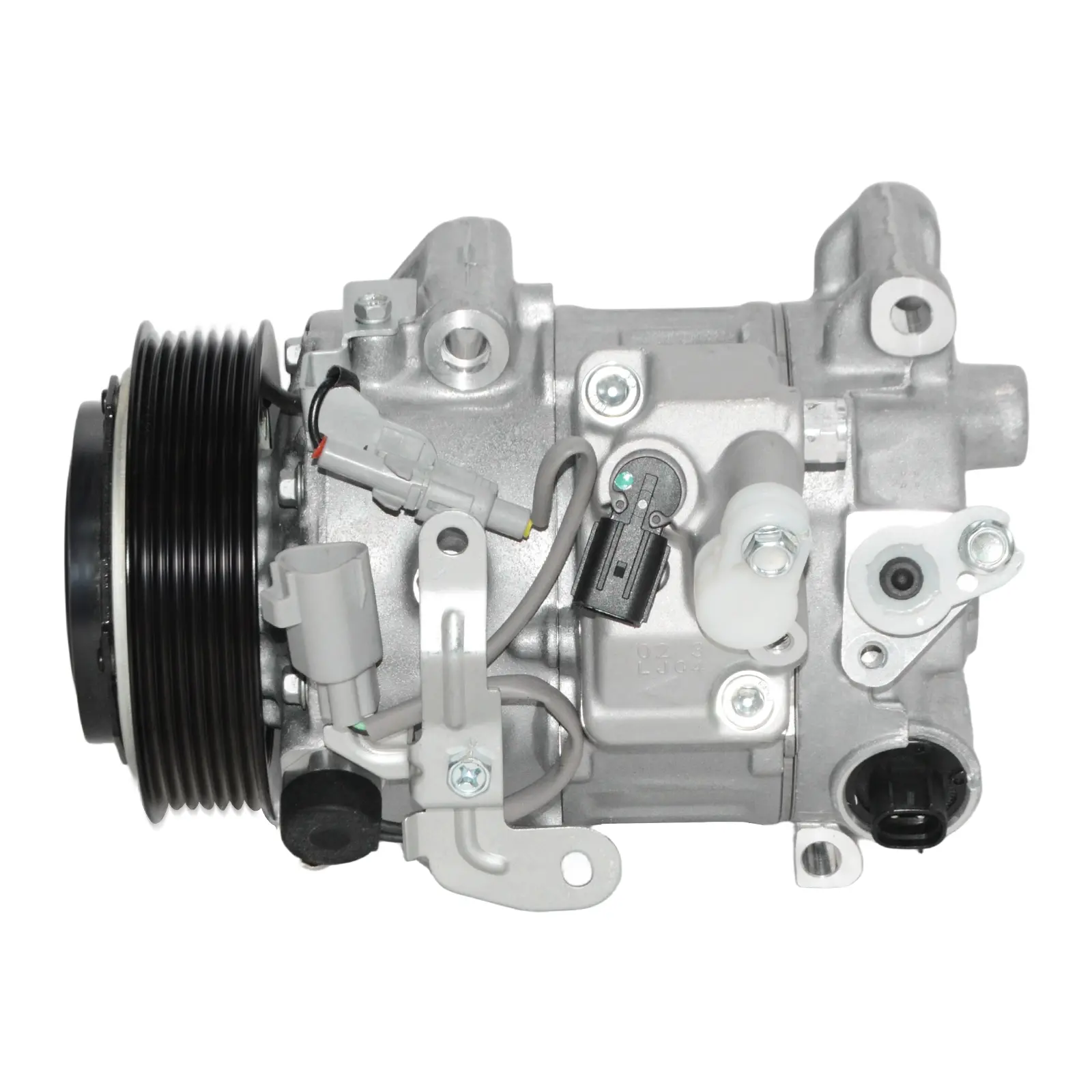
For compressor programs, buyers can review the ZUA compressor range while preparing the file. The audit question is then specific: which family and revision are being quoted, what control architecture applies, and what evidence belongs to that exact configuration?
Gate three: test whether the process can repeat the approved condition
On the line, follow one part from incoming material to finished pack. Ask where the critical characteristics are created, checked, recorded, and released. Look for work instructions at the station, approved tooling, fixture identification, gauge status, reaction plans, and controls for rework. A control that exists only in a quality manager's explanation is not yet a repeatable control.
Use the product risk to choose the questions. A compressor review may cover oil fill, pulley runout, clutch or control response, leak testing, rotation, performance, and port protection. A hose review may focus on tube, crimp, fitting orientation, pressure evidence, cleanliness, and cap control. A fan or pump review may need connector, polarity, airflow or flow conditions, noise, and controller compatibility. Record the method and acceptance source; do not write “passed” without a limit or reference.
Watch a real operator perform a normal task. Ask what happens when a gauge fails, a component lot is short, a label is wrong, or a measurement is outside the limit. The response should lead to identification, segregation, disposition, and approval. It should not depend on quietly adjusting a result or moving the unit to another table.
Gate four: inspect incoming control and supplier boundaries
Many field problems begin before final assembly. Review how the supplier approves bearings, valves, seals, motors, castings, electrical parts, refrigerant-contact materials, and packaging. The goal is not to demand one purchasing method; it is to see whether incoming risk is matched to the component's function.
Ask how a new source is approved, how a substitute is identified, and how old and new lots are separated. Check whether the incoming record links supplier, batch, quantity, inspection result, and disposition. If an external process such as coating, machining, winding, leak testing, or printing is used, include it in the audit route. A final inspection cannot recover missing traceability at a hidden subcontractor.
For an automotive AC parts supplier audit checklist, add a boundary column to every major process. The column should name the owner, evidence, escalation route, and approval needed before the boundary changes. That small addition prevents a buyer from approving a final assembler while assuming that an unnamed partner controls the critical feature.
Use the automotive AC parts supplier audit checklist in five passes
Rather than asking every supplier the same long list in one meeting, use the automotive AC parts supplier audit checklist in five passes: identity, product definition, process, evidence, and follow-up. The first pass confirms who is responsible. The second freezes the part. The third tests how the part is made. The fourth follows records from material to shipment. The fifth checks whether open actions are actually closed. This order keeps the audit focused and gives a new supplier a clear path to prepare.
Gate five: follow traceability from carton back to cause
Choose one finished carton and work backward. Can the warehouse identify the SKU, revision, quantity, lot or date, inspection status, and destination? Can quality connect that carton to component lots, operators or line, test equipment, and release records? The answer may use serial numbers, date codes, batch labels, or a defined production window, but it must be consistent enough to support containment.
Then test the reverse direction. Pick a component lot or a failed test record and ask which finished units, cartons, and customers may be affected. A traceability system that only works from product to supplier is incomplete. Buyers should also ask how records are protected from accidental edits and how long the agreed records remain available.
Review a sample shipping file before the visit ends. Packing list, carton label, pallet map, inspection report, and invoice should use compatible identifiers. Mixed-SKU loads need physical separation and a visible map. The receiving warehouse should not need to open every box to find out which compressor or hose is inside.
Gate six: make change control visible
A supplier may have a stable process today and still create risk tomorrow if change control is vague. Ask what counts as a change: material, seal, bearing, control valve, pulley, connector, fixture, test method, software, packaging, label, production site, subcontractor, or approved supplier. Ask who reviews the change, what risk analysis is required, when the buyer is notified, and how old stock is identified.
Request one closed example. The record should show the original condition, reason for change, affected part numbers, validation, approval, implementation date, and disposition of inventory. A blank procedure is less useful than a real case with names and dates. If the supplier says no changes have ever occurred, ask how the system would detect and control the first one.
ISO's quality management overview provides useful context for documented information, operations, performance evaluation, and improvement. It should not be treated as product-specific approval. The audit still needs evidence tied to the selected automotive A/C part and application.
Gate seven: score evidence, not confidence
A useful scorecard separates three states: verified, partially verified, and open. “Open” is not a failure by itself; it is a clear action. “Verified” should mean the auditor saw a current record or observed a controlled activity, not simply heard an answer that sounded reasonable.
| Area | Verified example | Open action example |
|---|---|---|
| Product identity | Current drawing and sample match the quoted revision | Connector detail missing from the release file |
| Process control | Work instruction, gauge status and reaction plan observed | Rework approval is not linked to the lot |
| Testing | Method, limit, result and equipment are recorded | Report says pass without operating condition |
| Traceability | Carton can be traced to material and release record | Subcontracted process has no batch link |
| Change control | Closed change example includes validation and notice | Notification timing is undefined |
| Corrective action | Owner, containment, root cause and effectiveness are shown | Due date exists but no effectiveness check |
Set decision rules before scoring. For example, a critical identity or traceability gap may block approval even when other sections score well. A minor document formatting issue may become a follow-up task. Make the rule fit the product, market, customer requirement, and risk; do not hide a critical gap inside an attractive average.
Gate eight: close corrective actions with proof
End the audit with a short action register. Each item needs a precise condition, owner, due date, containment where necessary, evidence expected, and effectiveness check. “Improve inspection” is not an action. “Add pulley runout limit and record to the release sheet for part family X, then show three consecutive completed records” is testable.
For a conditional approval, define what the supplier may ship while actions are open. Do not let an audit report become a permanent waiver. Link open actions to the purchase order, sample release, or supplier review calendar. When evidence arrives, check that it addresses the original gap rather than accepting a new presentation that avoids it.
Keep the decision reversible. A supplier can be technically promising and still need a second review before a launch volume. A small controlled order, additional sample, focused process audit, or document recheck may be the right next step. The audit is a decision aid, not a reason to force a premature award.
Turn the audit into a better inquiry
When contacting ZUA, include the product family, vehicle and engine details, OE or cross-reference, annual and launch quantities, target market, packaging, label language, desired validation, and the evidence you need to approve the part. The ZUA contact page gives the team a route for technical files and project questions. A complete brief lets the supplier distinguish a catalog inquiry from an OEM, private-label, or second-source qualification.
ZUA's company information describes its automotive A/C compressor focus, broader climate-control and cooling portfolio, production capabilities, and quality activities. Buyers should use that information as a starting point, then confirm the exact production route, model evidence, commercial entity, and change responsibilities for the requested program.
Send the completed automotive AC parts supplier audit checklist with the inquiry when a formal qualification is planned. It helps the supplier prepare the correct drawings, test methods, process owners, and sample records instead of replying with a generic capability deck.
Questions buyers ask about supplier audits
How often should an automotive AC parts supplier be audited?
Set the interval from product risk, performance history, changes, customer requirements, and the supplier's corrective-action record. A major change or repeated complaint can justify a focused audit sooner.
Can a remote audit replace a factory visit?
A remote review can screen documents, product identity, and selected controls. A physical visit may still be needed to verify material flow, line conditions, segregation, equipment, and subcontracted boundaries.
What is the most important audit question?
Ask how the supplier proves that the exact quoted configuration is made, tested, packed, and traceable through the approved route. The answer should include records, not only a verbal explanation.
Should certification decide supplier approval?
No. Certification can support confidence in a management system, but it does not replace product-specific fitment, test, traceability, capacity, and change-control evidence.
What should an auditor photograph?
Capture only useful context: identification labels, revision-controlled instructions, gauge status, segregation, packaging, traceability examples, and agreed evidence. Follow the site's confidentiality rules.
How do buyers audit a private-label program?
Add artwork revision, markings, packaging, ownership of application data, approval samples, language, barcode, and change-notification requirements to the normal product audit.
What if the supplier refuses to share test reports?
Clarify confidential redactions or a controlled review route. If the buyer cannot verify the agreed requirement, record the gap and decide whether conditional approval is acceptable.
How should an open audit action be handled?
Assign an owner and due date, define containment, request objective evidence, and perform an effectiveness check. Do not close the item because a new promise was made.
Does ZUA supply more than compressors?
ZUA presents compressors together with broader automotive climate-control, HVAC, hose, drier, fan, pump, and related categories. Confirm the responsible production route and evidence for each requested item.
What should accompany an audit request?
Send the application, part references, expected volumes, target market, product risks, packaging needs, required records, and proposed decision date. This helps the supplier prepare relevant evidence.
Use the checklist as a living decision record
A strong automotive AC parts supplier audit checklist does more than produce a pass or fail label. It connects the product identity to the process, the process to records, the records to shipment, and the shipment to a response when something changes. That continuity is what protects a buyer after the factory tour is over.
Keep the latest automotive AC parts supplier audit checklist beside the approved sample, quality agreement, and purchase conditions. That makes the next review a controlled update instead of a fresh opinion.
ZUA Auto Parts can discuss the intended application, product family, validation scope, and quotation inputs before a sourcing decision. Keep the audit evidence beside the approved sample and purchase conditions, so the next inquiry begins with facts instead of a recycled score.