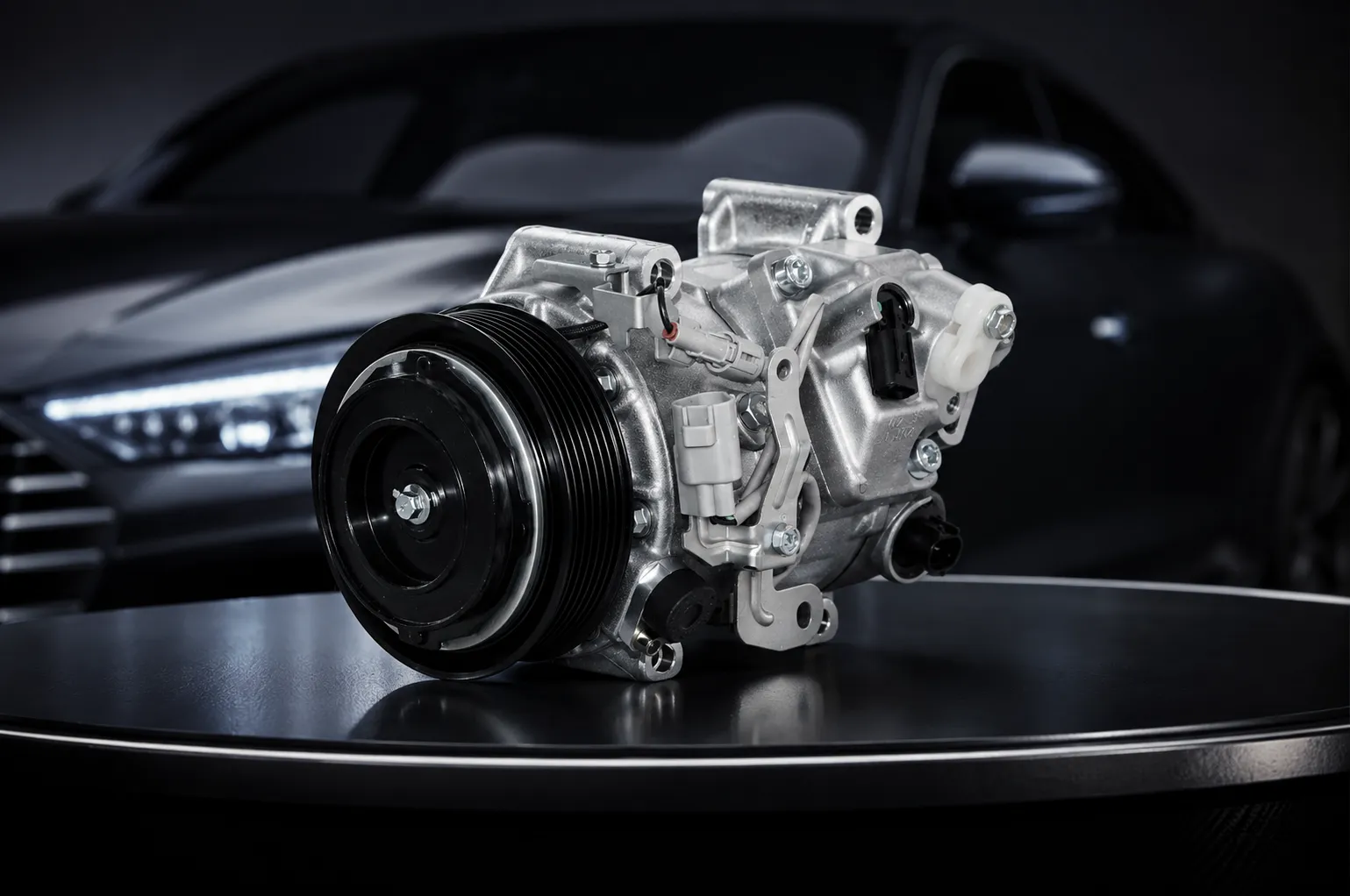
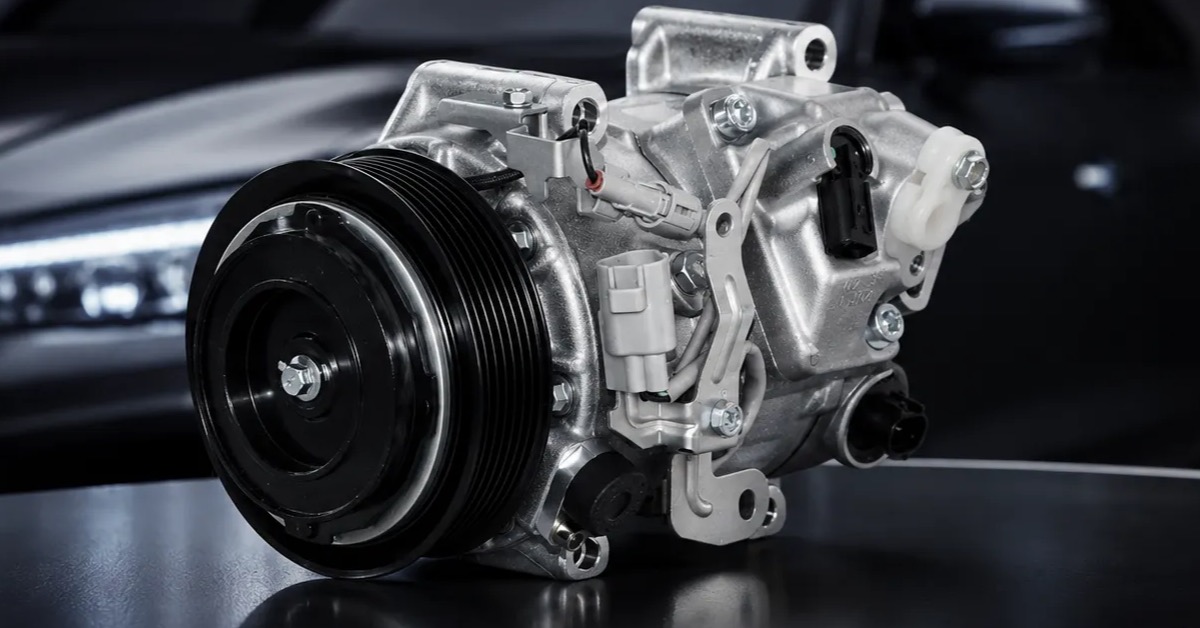
An AC compressor supplier China search should begin with the vehicle and system duty, not a photograph or a cross-reference alone. Two compressors can share a familiar silhouette while differing in displacement, control strategy, pulley alignment, ports, oil charge, refrigerant compatibility, mounting geometry, or operating envelope. A low quote does little for a buyer if the part creates belt noise, weak cooling, control faults, or repeat returns.
This guide is for distributors, aftermarket brands, fleet-parts teams, and OEM program buyers. It sets out a practical route from application definition to supplier approval, covering the records that should travel with the sample, the factory process, the pilot lot, and the released product.
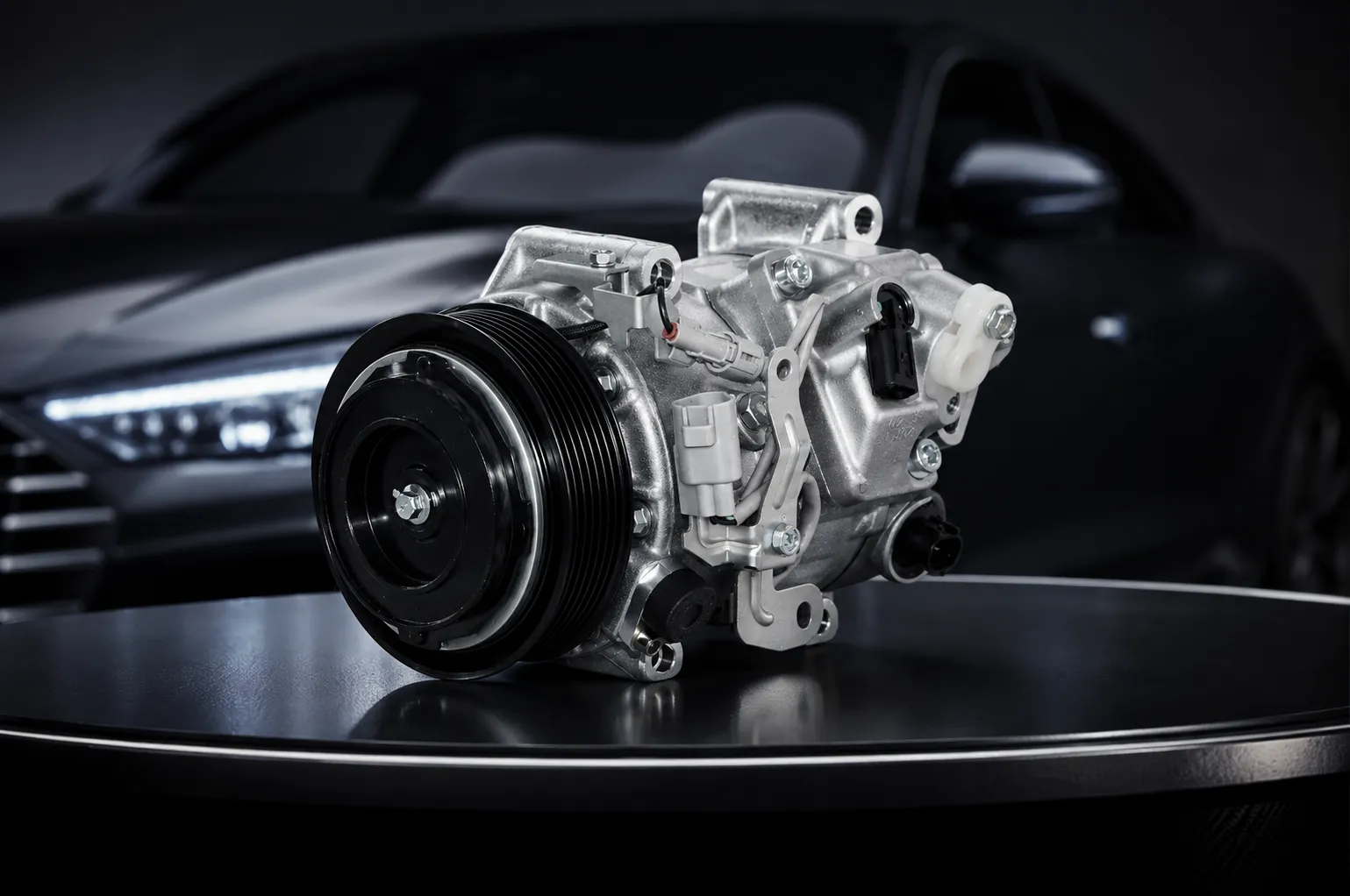
Define the application before asking for a price
Start with year, make, model, engine, market, production period, refrigerant, and the original compressor number. Add superseded references, vehicle identification details where available, photographs of the removed unit, and the reason for replacement. A cross-reference is a lead to investigate, not proof that every interface and control characteristic matches.
State what arrives in the carton. The boundary may include the clutch, control valve, connector, manifold seals, shipping oil, protective caps, mounting hardware, or fitting instructions. Ask whether the compressor is new, remanufactured, or assembled with any reused content. Those categories require different evidence and must never be left implicit.
A useful request for quotation begins with a controlled application record:
| RFQ field | Buyer question | Release evidence |
|---|---|---|
| Vehicle identity | Which exact builds are covered? | Application list, OE references, production breaks |
| System duty | What refrigerant, oil, speed, pressure, and temperature range apply? | Vehicle specification and agreed operating points |
| Interfaces | Will mounts, pulley, ports, and connectors align? | Drawing, gauges, indexed photographs, trial fit |
| Control type | How is displacement or motor output commanded? | Valve or electronic control definition and test record |
| Sellable kit | What is installed, packed, and labeled? | Bill of materials, pack standard, approved label |
Make the compressor architecture explicit
Separate belt-driven from electric compressors first. For belt-driven units, identify fixed or variable displacement, internal or external control, clutch arrangement, pulley diameter, groove count, and belt plane. For electric units, capture voltage class, connector system, communication or command method, inverter integration, isolation requirements, and thermal protection. The validation plan should follow the architecture rather than borrowing tests from a different family.
Displacement alone does not define output. Buyers also need the approved speed and pressure envelope, control behavior, volumetric response, power demand, oil circulation expectations, and protective limits. If the supplier proposes another platform, require a documented comparison of the operating principle and every vehicle interface.
When an AC compressor supplier China candidate offers several platform families, ask how application engineers choose among them. A credible answer should connect vehicle data to a released compressor family, not rely on appearance, one housing dimension, or an unverified interchange list.
Freeze interfaces with a drawing and physical checks
Inspect the mounting ears, datum surfaces, bolt sizes, port block, sealing faces, connector keys, pulley offset, clutch clearance, body envelope, and service access. Record each feature from an agreed datum. A compressor that bolts on under workshop force may still load the belt incorrectly or place a hose against another component.
Use go/no-go gauges where a simple interface needs fast control, but keep a dimensional report for the full release. Check a representative vehicle or installation fixture with the correct bracket, belt, manifold, connector, and nearby parts. Photograph the fitted condition before and after the system operates.
Preserve the approved drawing, measured sample, application record, test result, and pack specification under one revision. A loose golden sample can be damaged or misunderstood. The supplier and buyer should be able to tell which drawing created the part and which part created the test evidence.
Audit the manufacturing route and ownership
Map the process from castings and machined parts through cleaning, subassembly, final assembly, oil charging, performance checks, leak screening, marking, and packaging. Identify which steps occur in-house and which are subcontracted. Outsourcing can be controlled, but the buyer needs to know who approves the source, reviews changes, and contains a defect.
Walk one lot rather than viewing isolated workstations. Check incoming identification, line clearance, setup approval, tool and fixture control, torque or fastening records, cleanliness protection, error proofing, calibration, nonconformance handling, and the link between the finished serial or lot code and process history.
Ask for recent records from the same compressor family. A polished audit presentation is less useful than an actual traveler, first-off record, test trace, calibration label, rejected-part disposition, and corrective action. If the factory cannot retrieve a record from the sample identifier, its traceability claim has not yet been demonstrated.
Compare a performance map, not one favorable point
A single cooling-capacity number can hide the conditions that produced it. Agree on speed, suction and discharge conditions, refrigerant, superheat or inlet state, ambient or test temperature, oil condition, control command, stabilization rule, and measurement tolerance. Request capacity, power or torque demand, efficiency indicators, discharge temperature, and control response across the operating points relevant to the application.
Compare units from more than one build where risk warrants it. Review raw traces as well as a pass/fail summary. A smooth response across the requested control range may matter more than an impressive peak measured outside the vehicle's normal duty.
Keep engineering validation separate from production screening. The development bench proves capability over an agreed envelope; the end-of-line station detects whether a production unit falls outside a controlled signature. Ask what the line actually measures, how limits were derived, and what happens when a unit fails.
Control refrigerant, oil, and cleanliness as one system
The refrigerant and lubricant must be named in the product record. Specify oil type, approved viscosity or grade, charge quantity and tolerance, charging method, storage controls, and label statement. For electrically driven compressors, insulation compatibility can make the lubricant decision especially important. Do not permit an oil substitution through an informal purchasing change.
The official SAE J639 overview covers mobile A/C systems using belt-driven and electric compressors and frames design, assembly, and test across the system lifetime. The buyer should obtain the current standard and customer-specific requirements that apply to the actual program rather than treating one component claim as system approval.
Cleanliness needs a method, limit, and sampling rule. Review how chips, machining fluid, moisture, fibers, and assembly debris are prevented or measured. Ports should be capped after the final approved operation. A clean test room cannot undo contamination introduced during machining, rework, oil charging, or uncapped storage.
Keep leak, NVH, and durability evidence separate
Leak screening, noise and vibration evaluation, and endurance testing answer different questions. A compressor can pass a static leak check yet perform poorly after cycling; it can meet capacity while producing objectionable tonal noise; it can run quietly at first and fail after an oil-starved condition. Build a matrix that names the purpose, sample, condition, method, acceptance rule, and report owner for each test.
For leak records, capture the test medium, pressure, fixture, dwell or stabilization, limit, calibration status, and traceability. For NVH, define mounts, drive arrangement, speed and load points, microphone or accelerometer positions, background control, and analysis method. For durability, define cycles, temperatures, pressure ratios, control states, lubricant condition, interruptions, post-test inspection, and failure-analysis rules.
An AC compressor supplier China review should connect these reports to the quoted construction. Confirm the tested compressor used the released housing, internals, valve or electronics, seals, oil, assembly process, and revision. A family-level report is only relevant when the supplier explains why the tested configuration represents the part being purchased.
Use samples and a pilot lot to test repeatability
Issue a written sample request with the application file, drawing revision, test plan, pack concept, and due date. On receipt, record the carton, label, caps, included parts, lot identity, and as-delivered oil condition before testing. Do not quietly modify a bracket, connector, seal, or oil charge to make the sample work; log the deviation and assign a disposition.
After sample approval, run a pilot lot. Measure several units for critical interfaces and compare end-of-line results, oil charge, leak records, markings, and packaging. Select samples from the pilot lot for the agreed performance and vehicle checks. This step tests whether normal production can repeat the carefully prepared approval sample.
Release should have an owner and a closed evidence list. Conditional approval needs a specific open item, responsible person, required proof, and deadline. Commercial urgency should not turn an unanswered technical question into silent acceptance.
Check capacity, continuity, and change control
Capacity is more than the machine's theoretical output. Review the part-family mix, constraint operation, shift pattern, planned maintenance, test-station throughput, trained labor, yield, rework load, critical-source lead times, and seasonal demand. Ask how the supplier would recover after equipment failure or a delayed casting, control valve, bearing, or electronic component.
Agree on forecast horizons, minimum order quantities, frozen periods, safety-stock ownership, and communication triggers. A realistic plan states what can be reserved and what remains dependent on shared capacity or long-lead materials.
List changes that require buyer notice and approval: design, material, internal part, software or calibration, oil, seal, machine, fixture, test method, limit, factory, subcontractor, packaging, and label. The rule should include timing, validation expectations, affected inventory, and traceability of the first changed lot.
Make packaging and warranty part of qualification
A compressor reaches the customer with precision interfaces, oil, and capped ports. Packaging should restrain its mass without loading the pulley, clutch, connector, control valve, or sealing faces. Define orientation, internal support, corrosion protection, cap retention, bagging where required, label position, carton strength, pallet pattern, and mixed-SKU controls.
Test the real pack through the intended distribution route or an agreed simulation. Inspect for oil seepage, loose caps, impact marks, connector damage, pulley contact, corrosion, and unreadable labels. A change in carton size or pack quantity deserves review because it changes the load path.
Set the warranty intake before launch. Capture vehicle identity, mileage, installation date, recovery and charge procedure, oil handling, replaced system parts, operating symptom, diagnostic codes, pressures, noise evidence, photographs, and returned-part condition. Trend confirmed causes separately from contamination, incorrect charge, system restriction, electrical faults, belt problems, and application mismatch.
Build a decision-ready ZUA compressor inquiry
ZUA presents its automotive A/C compressor range as part of its climate-control offering. Buyers can prepare the evidence pack with the related guides on compressor sample requests, helium leak testing, noise and vibration testing, and durability testing. Exact application coverage and production responsibility still need confirmation for every quoted SKU.
Send the vehicle list, OE references, compressor photographs, architecture, interfaces, refrigerant and oil, operating points, annual volume, sample quantity, destination, label needs, validation plan, and warranty expectations. Ask the supplier to return a marked application matrix, drawing, construction summary, process route, test proposal, traceability example, pack plan, lead time, change rule, and a list of assumptions.
Use the ZUA contact page to begin the RFQ. The first response should narrow unknowns and assign evidence, not imply that an unverified cross-reference has already been released.
Questions buyers ask about an AC compressor supplier China
What information should I send with a compressor RFQ?
Send vehicle and market details, OE references, removed-unit photographs, refrigerant, oil, compressor architecture, interfaces, expected volume, sample needs, destination, and validation requirements.
Is an OE cross-reference enough to approve a compressor?
No. Verify production breaks, mounting, pulley or electrical interfaces, ports, control behavior, displacement, refrigerant, oil, operating envelope, and the complete sellable kit.
How do fixed and variable displacement compressors affect sourcing?
They use different output-control strategies and may require different valves, commands, performance points, diagnostics, and validation. The architecture must be recorded before comparison.
Which factory records matter most during qualification?
Review incoming identity, setup approval, critical assembly controls, oil charge, leak and end-of-line results, calibration, nonconformance disposition, lot traceability, and corrective actions.
Why is one cooling-capacity result insufficient?
Capacity changes with speed, pressure, temperature, refrigerant state, control command, and oil condition. Buyers need agreed operating points and the conditions behind every result.
Does a leak-test pass prove compressor durability?
No. Leak screening finds leakage under defined conditions, while durability examines performance and physical condition after repeated thermal, pressure, speed, vibration, and control duty.
What should a pilot lot verify?
It should verify dimensional repeatability, production-test consistency, oil charge, leak records, marking, traceability, packaging, and representative performance or vehicle checks.
Which supplier changes require buyer approval?
Require review for changes to design, internal parts, materials, oil, seals, electronics, software, equipment, fixtures, test methods, sites, subcontractors, labels, and packaging.
How should compressor warranty claims be investigated?
Preserve the returned unit and collect vehicle, installation, oil, charge, pressure, electrical, contamination, noise, code, photograph, mileage, and lot evidence before assigning cause.
How can two compressor suppliers be compared fairly?
Give both the same application boundary and score fitment, architecture, performance evidence, process control, traceability, capacity, packaging, change management, warranty response, and price.
Choose an AC compressor supplier China with a controlled release
The right AC compressor supplier China connects a specific vehicle record to the compressor architecture, interfaces, refrigerant and oil, performance map, production controls, validation reports, pilot lot, packaging, and warranty feedback. That linked evidence is more useful than a broad catalog claim or an isolated test certificate.
ZUA Auto Parts can review the application and commercial boundary before quotation. Keep uncertainties visible, approve one controlled evidence pack, and require every production and change record to point back to the released configuration.