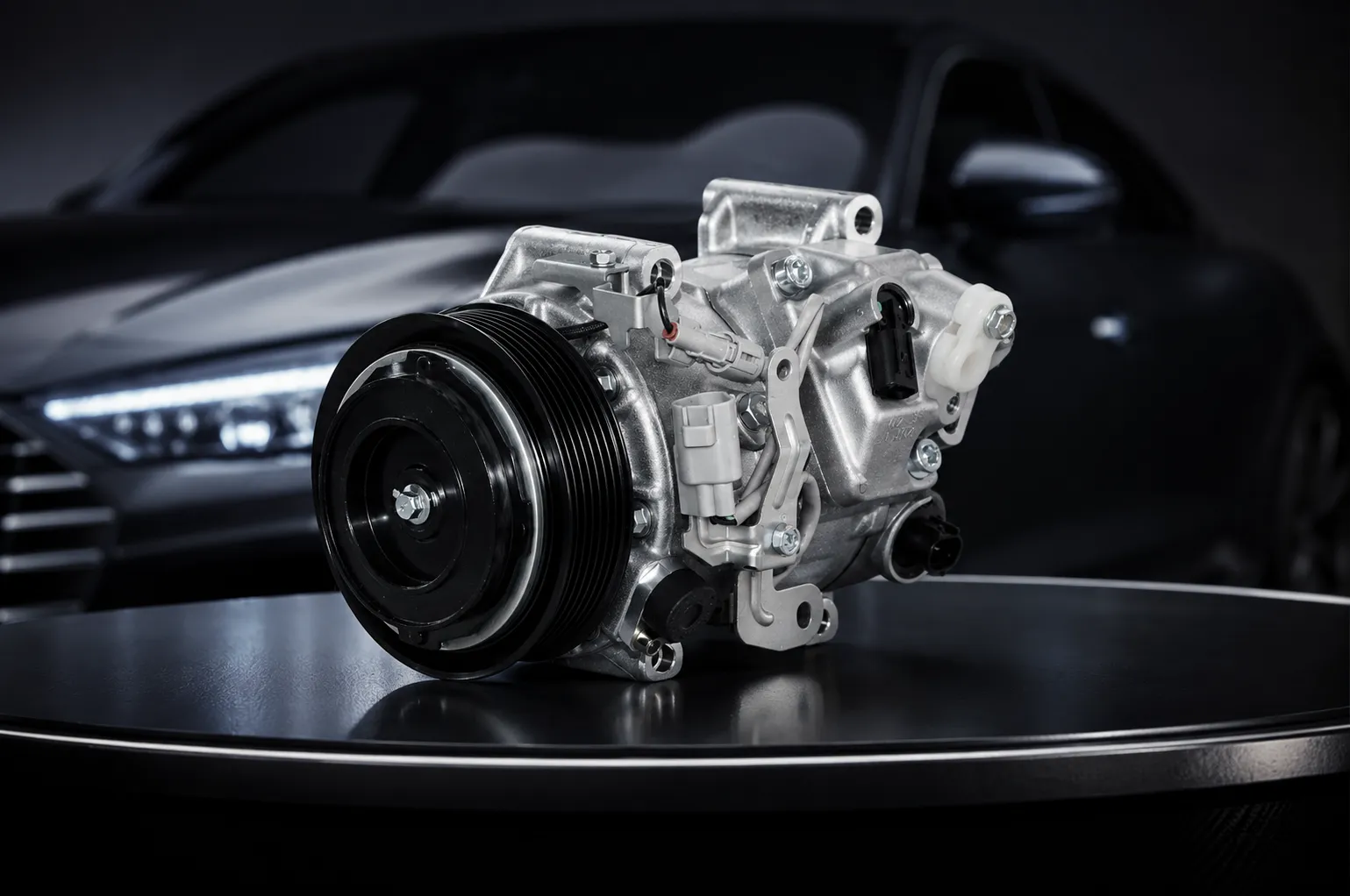
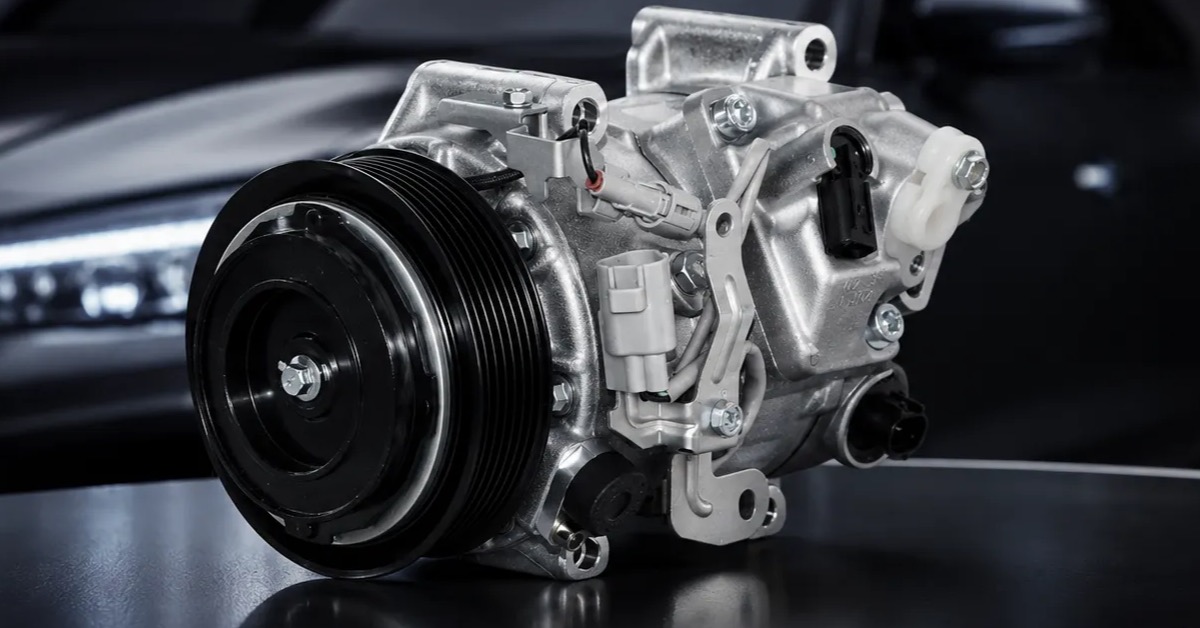
Automotive compressor production capacity cannot be verified from one annual number. Buyers need to understand product mix, line configuration, working time, changeovers, bottlenecks, quality-test time, maintenance, critical components, approved tooling, labor, forecast pattern, and the share of capacity already committed to other programs. A factory may have enough theoretical output but insufficient usable capacity for a particular model and launch date.
This ZUA Auto Parts resource helps distributors organize the evidence needed before quotation; confirm the exact application, interfaces, tests, and supplied scope for every requested part.
Guangzhou Berlin Auto Parts Manufacturing Co., Ltd. presents three compressor production lines, a stated 45-second production takt capability, and annual compressor capacity of approximately 450,000 units. These figures provide a starting point for a buyer discussion. The program decision should still be based on model-specific loading, validation status, and supply assumptions.
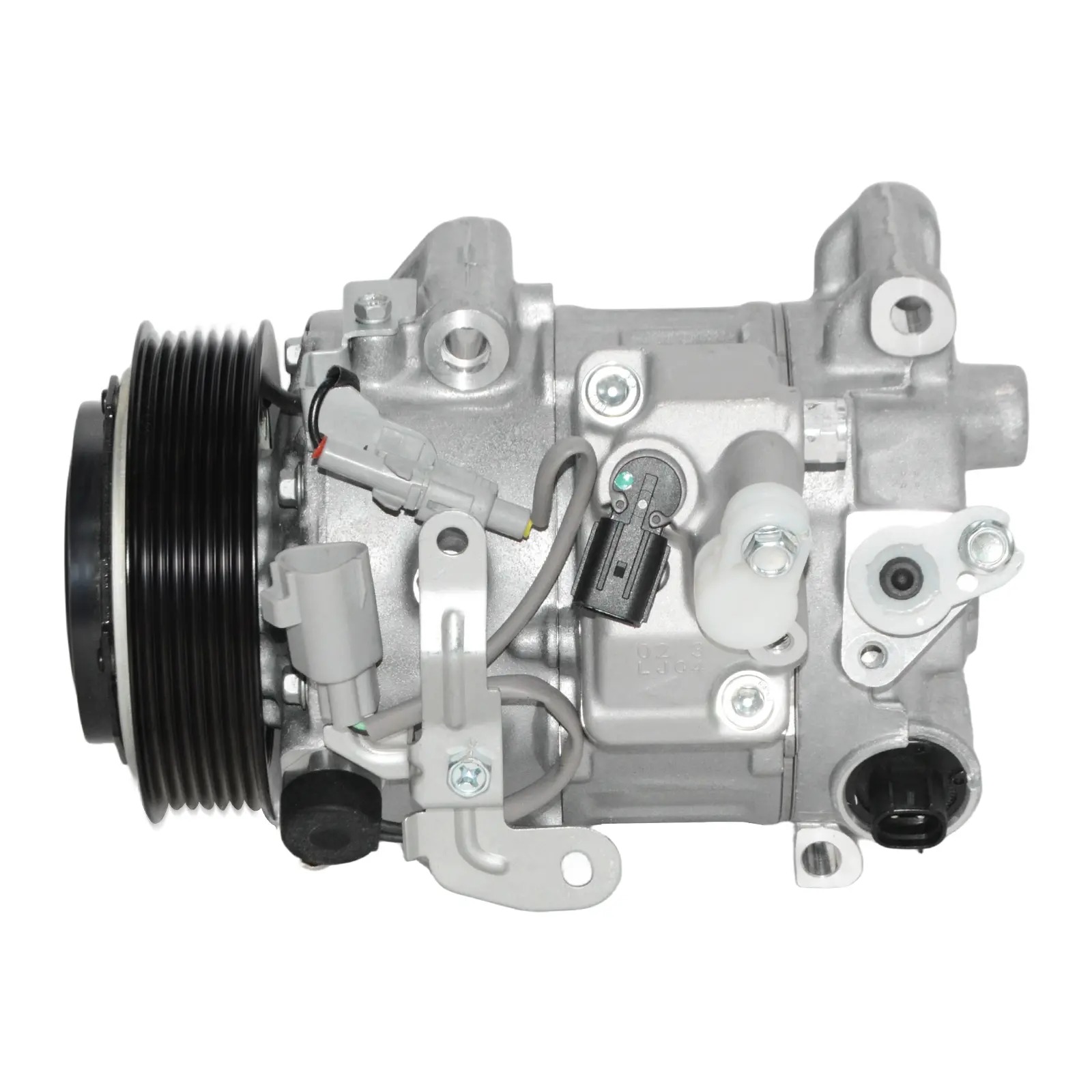
Define demand as volume, mix, and timing
Send more than an annual forecast. Provide monthly or weekly demand, compressor families, revisions, destination markets, sample phase, launch curve, seasonal peaks, safety-stock expectation, release pattern, and expected growth. A 100,000-unit forecast concentrated in four months creates a different capacity requirement from the same volume spread evenly across a year.
Identify firm orders, planning forecasts, upside scenarios, and nonbinding market estimates. The supplier should know which figures support material planning and which are for sensitivity analysis. Buyers should also state whether several models may be combined in one order or shipment.
Translate headline capacity into usable capacity
| Capacity layer | Main inputs | Buyer question |
|---|---|---|
| Design capacity | Equipment rate and planned time | What could the line produce in ideal conditions? |
| Demonstrated capacity | Actual runs and stable output | What has the released process achieved? |
| Quality capacity | Yield, inspection, retest, scrap | How many conforming units are released? |
| Available capacity | Other customers and planned downtime | What share can be assigned to this program? |
| Surge capacity | Overtime, shifts, tools, labor, parts | How can a temporary peak be supported? |
| Recovery capacity | Backup equipment and continuity plan | How is lost output recovered? |
Use takt carefully
Takt is meaningful only when its boundary is defined. Ask whether the stated time represents one station, final assembly, completed tested units, a specific model, or a mixed line. Confirm whether breaks, changeovers, cleaning, maintenance, inspection, retest, stoppages, and material shortages are included.
For automotive compressor production capacity, compare takt with the slowest required operation. Helium leak detection, full-performance testing, cleaning, machining, final inspection, or packing may constrain output even when assembly moves faster. A capacity walk should follow the entire released route.
Find the real bottleneck
Map each major operation by cycle time, equipment count, planned utilization, yield, uptime, staffing, and changeover. Include receiving inspection, machining, washing, assembly, leak testing, performance testing, labeling, packing, and release. Ask how work-in-process is controlled when one station slows.
A bottleneck may change by model. One compressor family may use a shared machining fixture, another may require longer performance testing, and a private-label project may add packaging or label approval. Capacity evidence should name the product family and revision.
Count conforming output, not only produced units
Production reports should distinguish built, tested, passed, retested, reworked, scrapped, held, and released quantities. High gross output can hide insufficient good output when yield is unstable. Review first-pass yield and abnormal-product handling without asking the supplier to disclose unrelated customer data.
ZUA describes electronic counters, error-proof alarms, Kanban, Andon, automatic cleaning, helium leak detection, full-performance inspection, and abnormal-product isolation. Buyers should connect these controls to the quoted model and understand how they affect release capacity.
Plan model changeovers and mixed production
Ask which parts, fixtures, programs, gauges, labels, and packaging change between compressor models. Review changeover time, first-piece approval, line clearance, component verification, parameter loading, and identification of previous material. Flexible production is useful only when model identity remains controlled.
For mixed orders, determine economic batch size and the effect of frequent switching. A buyer asking for many low-volume SKUs may need a different release plan from a buyer ordering one stable platform. Avoid assuming that total annual capacity is freely divisible across every SKU.
Include testing and laboratory demand
Capacity planning must include routine production tests and project validation. Performance, durability, vibration, noise, complaint reproduction, and engineering trials may compete for laboratory equipment or specialist time. Ask which tests are inline, sampled, periodic, or project-specific.
A new OEM, OES, or private-label program may require sample builds and additional evidence before volume release. Reserve engineering and laboratory slots in the launch plan instead of treating them as invisible activities outside production.
Check critical-component and tooling capacity
Identify long-lead or capacity-sensitive components such as housings, pulleys, control valves, bearings, seals, clutch parts, connectors, and packaging. Ask whether tooling is dedicated or shared, what maintenance is required, which parts have approved alternatives, and how supplier constraints are escalated.
Do not demand dual sourcing for every item without considering design control and validation. The useful question is whether the supplier knows the risk, monitors it, and has a qualified response that preserves product identity.
Build a launch and ramp-up curve
Define prototype, sample, pilot, initial production, ramp, and steady-state phases. For each phase, record quantity, timing, tooling status, material status, process release, test evidence, packaging, approval gate, and owner. Set conditions for moving to the next phase.
An automotive compressor production capacity commitment should identify when output becomes available and what assumptions support it. A new model should not be loaded at full theoretical speed before process stability and quality evidence exist.
Stress-test seasonality and forecast changes
Run at least three scenarios: base forecast, peak demand, and disruption recovery. Test the effect of higher mix, delayed materials, equipment downtime, lower yield, urgent samples, port congestion, or a packaging change. Assign actions and decision dates rather than keeping a vague promise to “add overtime.”
Clarify who authorizes schedule changes and how customers are informed. Buyers should also define their own responsibilities for frozen windows, forecast updates, purchase releases, artwork approval, and destination changes.
Review business continuity without expecting zero risk
Ask about preventive maintenance, critical spares, backup utilities, alternative equipment, data backup, trained personnel, emergency contacts, supplier escalation, and recovery priorities. Review one realistic scenario and the evidence from a drill or actual event where available.
The IATF 16949 overview provides automotive quality-management context. It does not establish a factory's available output, so buyers still need product- and period-specific capacity evidence.
Prepare a capacity-focused RFQ
Include part numbers, applications, model mix, forecast by period, launch dates, upside range, release pattern, sample needs, test plan, packaging, destination, service expectations, and change-control requirements. Ask the supplier to identify constraints, assumptions, reserved capacity, and decision deadlines.
Review ZUA's automotive A/C compressor range, its manufacturing capability information, and the broader product overview. Send the forecast and application package through the ZUA contact page.
Use an automotive compressor production capacity board
Create a time-phased view by week or month with forecast, firm releases, available line hours, planned maintenance, changeovers, expected yield, test capacity, material constraints, and finished-goods target. Show the owner and last update for each assumption. This allows purchasing and production teams to see when a risk appears instead of debating one annual figure.
Use color or status only after defining the rule. “At risk” might mean a missing component approval, insufficient test slots, forecast above reserved capacity, or a recovery action without evidence. Record the decision needed and due date beside the status.
The automotive compressor production capacity board should be reviewed when demand, model mix, yield, tooling, process, supplier, or shipment timing changes. Keep prior versions so the team can learn which assumptions caused schedule movement and improve the next forecast cycle.
Review the board jointly with quality, purchasing, production, logistics, and sales so no department silently relies on a different demand or timing assumption.
Frequently asked questions
Is annual capacity enough to approve a supplier?
No. Buyers need model mix, available line time, bottlenecks, yield, testing, components, launch status, and existing commitments.
What is the difference between design and demonstrated capacity?
Design capacity is based on intended rates and time. Demonstrated capacity is supported by stable production evidence from the released process.
Why should quality losses be included?
Customers receive conforming released units, not gross production. Retest, rework, scrap, and holds reduce usable output.
How do model changeovers affect capacity?
Tooling, components, parameters, inspections, labels, and line clearance require time and can constrain frequent mixed-SKU production.
Should a forecast be treated as a purchase order?
No. Define which volumes are firm, planning, upside, or market estimates and how each supports material and labor decisions.
What capacity information does ZUA present?
ZUA presents three compressor lines, a stated 45-second takt capability, and annual compressor capacity of approximately 450,000 units.
What should a surge plan include?
Define additional shifts, labor, tooling, components, testing, quality controls, duration, approval, cost assumptions, and recovery.
How can buyers request a capacity review?
Send applications, part references, model mix, periodic forecast, launch timing, packaging, validation, and destination requirements to ZUA.
Validate automotive compressor production capacity by program
Automotive compressor production capacity should connect demand timing, model mix, takt, bottlenecks, quality yield, testing, components, changeovers, ramp-up, seasonality, and continuity. A program-specific capacity review gives buyers a more reliable delivery decision than a single headline figure.