Automotive expansion valve quality testing should verify that the correct valve fits the intended HVAC system, controls refrigerant flow as specified, seals reliably, remains clean, responds under defined thermal conditions, and can be traced to a controlled production route. A dimensional match or basic leak check cannot prove complete system compatibility.
For a ZUA Auto Parts inquiry, use this framework to separate confirmed product data from buyer-owned validation and open questions before approving a sample or order.
This guide is for importers, distributors, private-label brands, service networks, and OEM/OES buyers sourcing block or thermostatic expansion devices. It provides an evidence-based approval structure without inventing universal flow, pressure, temperature, or leakage limits; those values must come from the design and customer specification.
Automotive expansion valve quality testing checklist
| Control | Why it matters | Evidence |
|---|---|---|
| Application review | Prevents use in the wrong vehicle or HVAC variant | Controlled fitment record |
| Dimensions and interfaces | Protects mounting, sealing, tube alignment, and sensing | Drawing and inspection report |
| Materials and components | Controls body, seals, spring, diaphragm, bulb, and fittings | Specifications and incoming records |
| Leak integrity | Protects the refrigerant circuit | Defined method and traceable result |
| Flow or control response | Confirms regulation under agreed conditions | Performance data and setup |
| Cleanliness | Reduces contamination and restriction risk | Cleaning, handling, and packaging controls |
| Durability | Evaluates cycling, temperature, vibration, and wear risk | Validation plan and report |
| Traceability | Supports containment and change control | Lot drill and retained records |
1. Freeze the application before testing
Provide OE and cross-reference numbers, vehicle make, model, year, engine, market, HVAC system, refrigerant, evaporator and compressor context, port or block layout, mounting, tube interfaces, sensing arrangement, and any control characteristics specified by the customer. Similar bodies can contain different internal calibrations.
ZUA presents thermostatic and block expansion devices on its expansion valve category page. Buyers should confirm the target model and responsible production route for every quotation because a category image is not a fitment release.
2. Clarify design and manufacturing responsibility
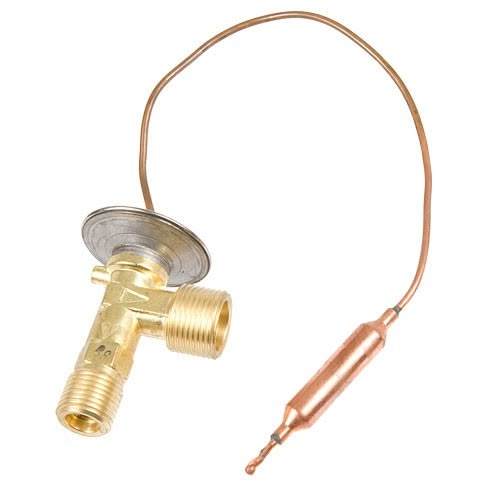
Identify the legal seller, design owner, manufacturing site, assembly site, calibration or setting operation, test site, critical sub-suppliers, and final quality owner. Ask which parts are made in-house and which are purchased: body, power element, diaphragm, spring, pin, ball, seals, sensing bulb, capillary tube, fittings, and fasteners.
A supplier relationship can be valid even when processes are outsourced, but the contracted party should control specifications, changes, verification, traceability, and failure analysis. ZUA publicly identifies compressors as its core manufacturing focus and lists expansion valves in its broader HVAC portfolio, so project responsibility should be confirmed rather than assumed.
3. Verify drawings and critical dimensions
Review datums, body envelope, mounting holes, ports, sealing features, tube or block interfaces, sensing-bulb details, capillary routing, thread or fastener requirements, and orientation. Define critical dimensions based on sealing, assembly, and refrigerant flow risk.
For initial samples, request a complete dimensional layout and mating-part fit check. For production, review gauges, fixtures, measurement methods, calibration, frequency, sampling, and the reaction plan when a result is outside limits.
4. Control materials and critical components
Appearance cannot verify alloy, elastomer compound, spring characteristics, diaphragm construction, surface treatment, or cleanliness. Ask for controlled material and component specifications, approved sources, incoming checks, storage conditions, shelf-life controls where applicable, and lot identification.
Material or sub-supplier changes can affect sealing, corrosion, hysteresis, response, and durability. Define which changes require notification, comparison testing, or complete revalidation.
5. Define leak and pressure-integrity checks
Automotive expansion valve quality testing requires a documented integrity plan. Specify whether the check evaluates external leakage, internal seat leakage, joint integrity, or another condition. Record the test stage, medium, pressure or vacuum, temperature, stabilization, duration where relevant, acceptance criterion, fixture, equipment, frequency, and failed-part handling.
Separate a production leak check applied to routine units from design-level pressure or cycling validation. Review equipment verification, master samples, fixture leakage, alarms, data retention, and re-test rules.
6. Evaluate flow-control performance
An expansion valve regulates refrigerant according to its design and sensing conditions. A meaningful test states inlet and outlet pressure, temperatures, refrigerant or approved test medium, flow conditions, sensing-bulb temperature and attachment, superheat or control targets where specified, stabilization, instrumentation, and acceptance criteria.
Ask for data across required operating points rather than one favorable point. The exact method depends on valve architecture and customer requirements. A supplier should explain how bench values relate to HVAC or vehicle-level performance.
7. Check response, hysteresis, and repeatability
Where required, assess opening and closing behavior, thermal response, repeatability across cycles, and difference between increasing and decreasing conditions. Record the sequence and stabilization method because a different test path can change the result.
Compare multiple samples and repeat measurements. If adjustment or calibration is part of production, audit the setting equipment, access control, verification, tamper prevention, and traceability to the final result.
8. Protect internal cleanliness
Small passages and moving elements can be affected by particles, residue, moisture, and damaged caps. Review component cleaning, assembly environment, tool condition, lubricant or process chemical control, open exposure, final flushing or cleaning, drying, protective caps, storage, and packaging.
A clean test sample does not prove clean production. The control plan should define routine prevention, detection, acceptance, and response. Reworked valves require the same cleanliness and final verification as normal production.
9. Validate thermal, vibration, and cycling durability
Build validation from the target installation and customer requirements. Risks may include temperature cycling, pressure cycling, flow cycling, vibration, corrosion, sensing-element fatigue, seal aging, capillary damage, and fastener loosening. The report should identify sample revision, quantity, mounting, sequence, conditions, cycles, interruptions, criteria, and post-test inspection.
Automotive expansion valve quality testing after durability should repeat agreed leakage, dimensional, response, and flow checks. Comparing pre- and post-test data is more informative than recording only visual condition.
10. Audit assembly and end-of-line controls
Follow incoming material, body preparation, component verification, assembly sequence, orientation, pressing or fastening, torque, calibration, leak checking, functional testing, marking, cap installation, and packaging. Confirm work instructions, error prevention, equipment status, operator qualification, and isolation of abnormal product.
The IATF 16949 overview describes a common automotive quality-management approach. Certificate scope can support confidence, but model-specific process and test records remain necessary.
11. Approve traceable samples
Each sample should carry part number, revision, lot, production date, manufacturing site, and any deviation. Review dimensions, materials, leakage, performance, durability, cleanliness, label, packaging, and fit or system results. Keep the approved sample and report under revision control.
When the sample uses prototype tooling or special inspection, list the differences and define production-intent reapproval. A buyer should not release volume orders based on an untraceable hand sample.
12. Test traceability and change control
Select a finished valve and trace it back to critical component lots, assembly date, equipment, settings, inspections, and test results. Select a component lot and trace it forward to finished and shipped units. Confirm how quickly affected stock can be contained.
Change notification should cover design, materials, seals, spring, power element, sub-supplier, calibration, process, tooling, equipment, test method, site, label, and packaging. The approval agreement should define notice timing and revalidation responsibility.
13. Build a supplier comparison scorecard
| Area | Suggested weight | Decision evidence |
|---|---|---|
| Application and interfaces | 20% | Fitment record, drawing, mating check |
| Flow and response | 25% | Controlled performance data |
| Integrity and cleanliness | 20% | Leak plan, cleanliness controls |
| Durability | 15% | Model-specific validation |
| Process and traceability | 10% | Audit and lot drill |
| Commercial support | 10% | Quote, packaging, warranty, changes |
Before commercial release, repeat the comparison with production-intent samples and close every open action. A complete automotive expansion valve quality testing file should let a reviewer reconstruct the part identity, test conditions, results, deviations, and final approval without relying on verbal explanations.
Also retain rejected results. They can reveal unstable calibration, unsuitable materials, weak fixtures, or cross-reference errors that a replacement sample alone would hide from future buyers.
Frequently asked questions
Is leak testing enough to approve an expansion valve?
No. Buyers should also verify application, dimensions, materials, flow-control performance, thermal response, cleanliness, durability, traceability, and packaging.
Can valves with the same body be interchangeable?
Not necessarily. Internal calibration, ports, sensing arrangement, refrigerant, mounting, and system requirements can differ even when appearance is similar.
What should a flow test report include?
It should identify the sample, setup, medium, pressures, temperatures, sensing conditions, sequence, instrumentation, acceptance criteria, raw data, and result.
Why is cleanliness critical?
Particles, residue, or moisture can restrict passages, affect moving elements, contaminate the circuit, and create inconsistent regulation.
Should every valve receive a functional test?
The production control plan should define frequency based on design and risk. Buyers should verify the target model's actual plan rather than assume.
What changes should trigger buyer notification?
Critical design, material, component, sub-supplier, calibration, process, tooling, test, site, and packaging changes should follow agreed notification and approval rules.
Does ZUA manufacture every expansion valve it supplies?
ZUA lists expansion valves in its wider HVAC portfolio while identifying compressors as its core manufacturing focus. Confirm the responsible production and test site for each project.
How can buyers request valve samples?
Send OE references, vehicle data, valve type, refrigerant, interfaces, forecast, test requirements, and packaging through the ZUA contact page.
Make automotive expansion valve quality testing traceable
A reliable automotive expansion valve quality testing program connects application data, interfaces, materials, integrity, control response, cleanliness, durability, samples, production records, and change approval. That connection lets buyers compare suppliers on evidence instead of product appearance or an unsupported equivalence claim.