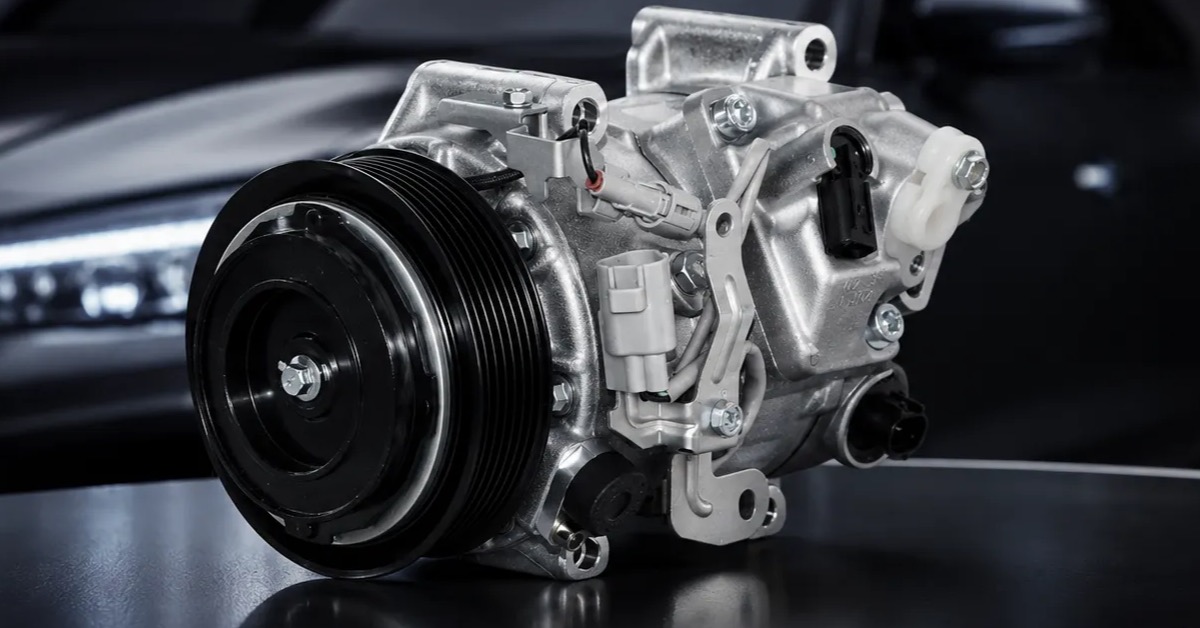
A China automotive parts sourcing guide should help buyers convert a broad supplier search into a controlled purchasing project. For automotive A/C and thermal-management parts, the real work is not finding a long vendor list. It is confirming the application, identifying who actually performs each process, reviewing quality evidence, approving samples, and maintaining the approved condition through production and shipment.
For a ZUA Auto Parts inquiry, use this framework to separate confirmed product data from buyer-owned validation and open questions before approving a sample or order.
This guide is for importers, distributors, private-label brands, repair networks, system integrators, and OEM/OES teams sourcing compressors, condensers, evaporators, valves, driers, hoses, blower motors, cooling fans, or electric coolant pumps from China.
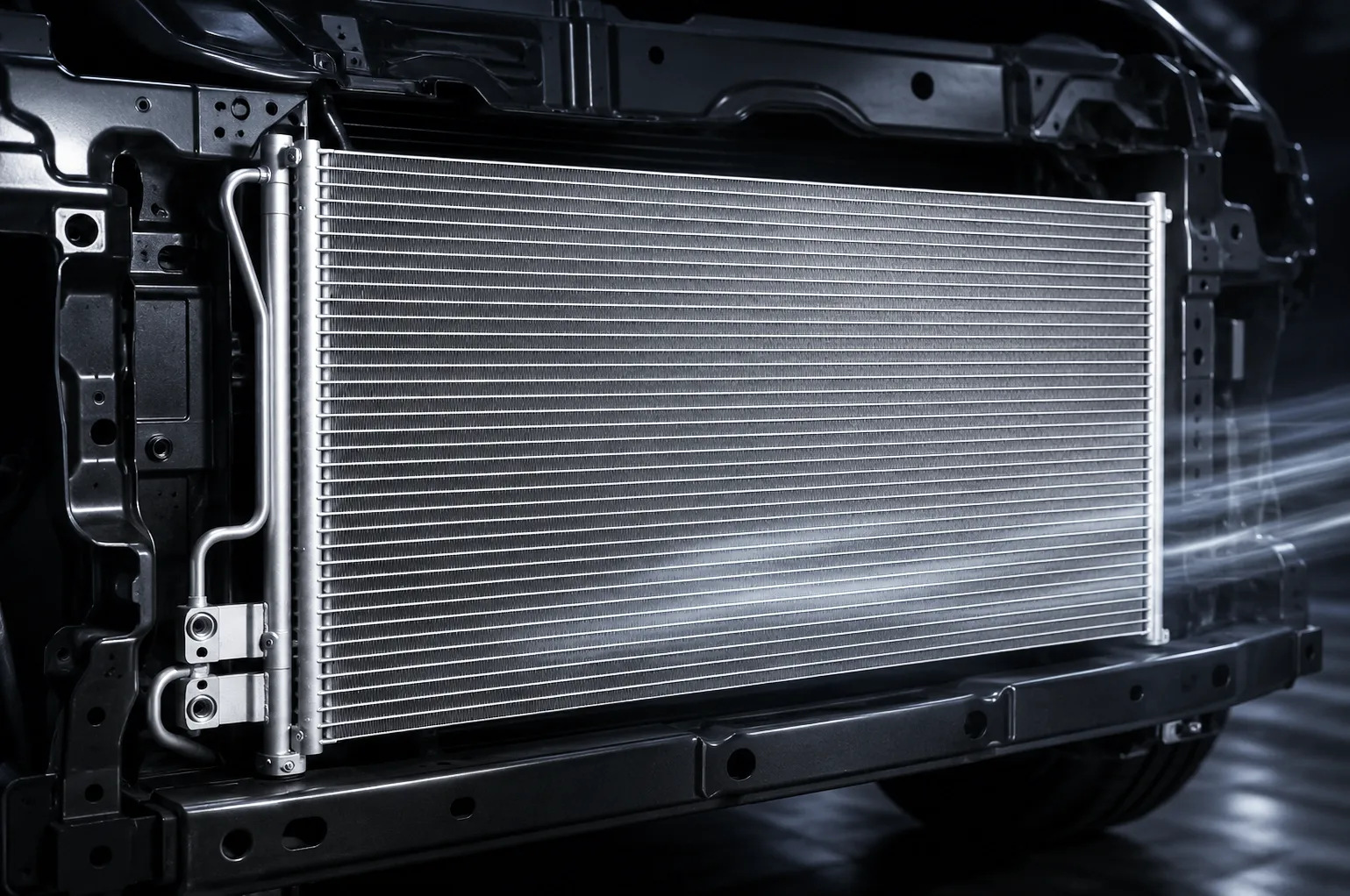
China automotive parts sourcing guide: the complete workflow
| Stage | Buyer output | Main risk controlled |
|---|---|---|
| 1. Define demand | Application matrix and forecast | Quoting the wrong vehicle or variant |
| 2. Shortlist suppliers | Capability and scope comparison | Confusing traders, assemblers, and manufacturers |
| 3. Technical review | Controlled specification and open-item list | Hidden assumptions |
| 4. Quality verification | Certificate, process, test, and traceability evidence | Unsupported quality claims |
| 5. Samples | Approved part, data, packaging, and deviations | An untraceable sample becoming the standard |
| 6. Commercial agreement | Quotation, terms, ownership, and change rules | Cost and responsibility disputes |
| 7. Pilot and production | Production-intent evidence | Sample-to-production variation |
| 8. Logistics and lifecycle | Shipment, complaint, and change controls | Damage, delays, and repeated field issues |
1. Define the application before contacting suppliers
Begin with OE or cross-reference numbers, vehicle make, model, year, engine, market, and HVAC or cooling-system variant. Add drawings, reference samples, critical dimensions, interfaces, refrigerant, lubricant, voltage, control method, operating environment, and performance requirements where applicable. Separate mandatory requirements from preferences.
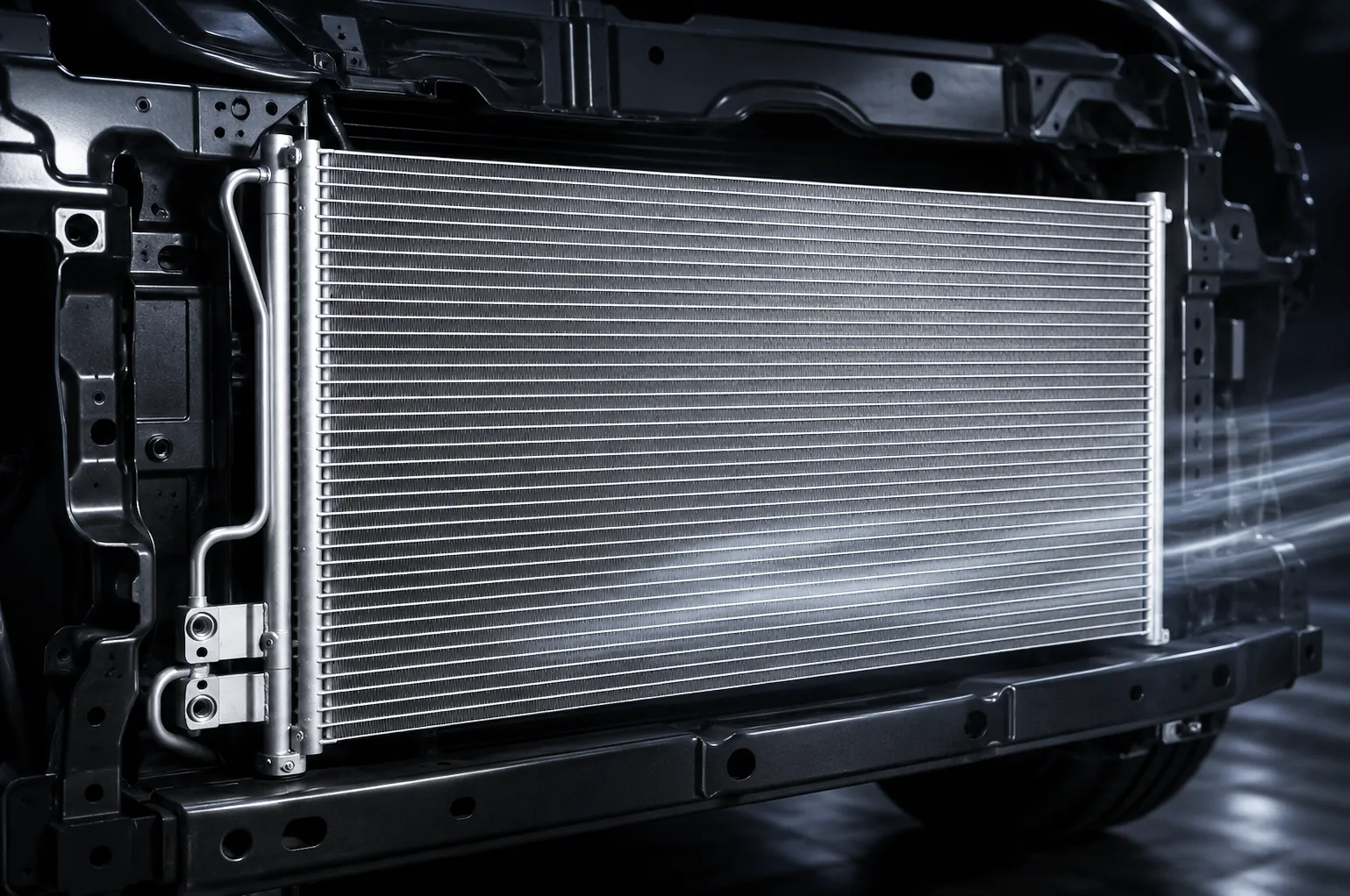
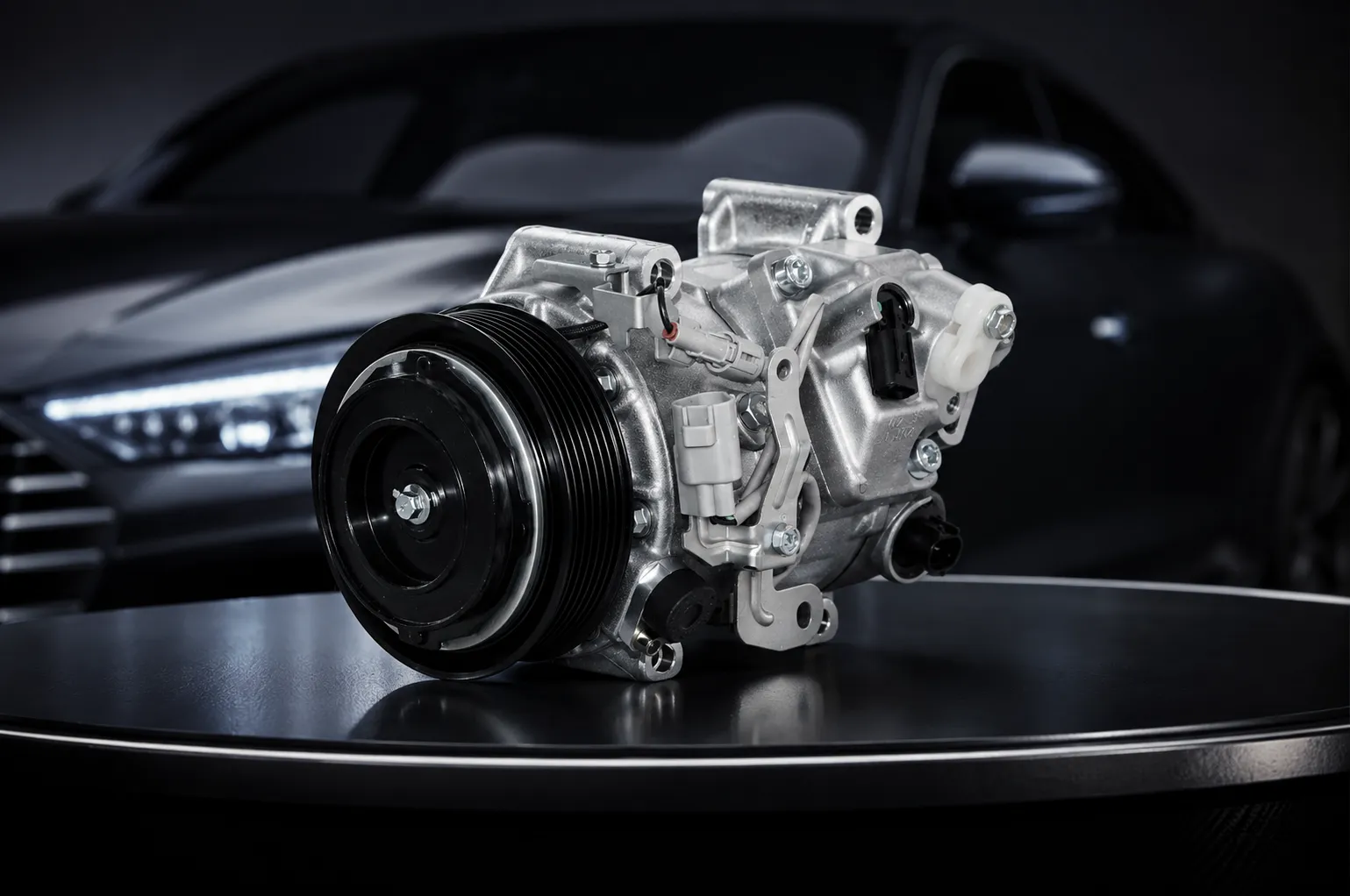
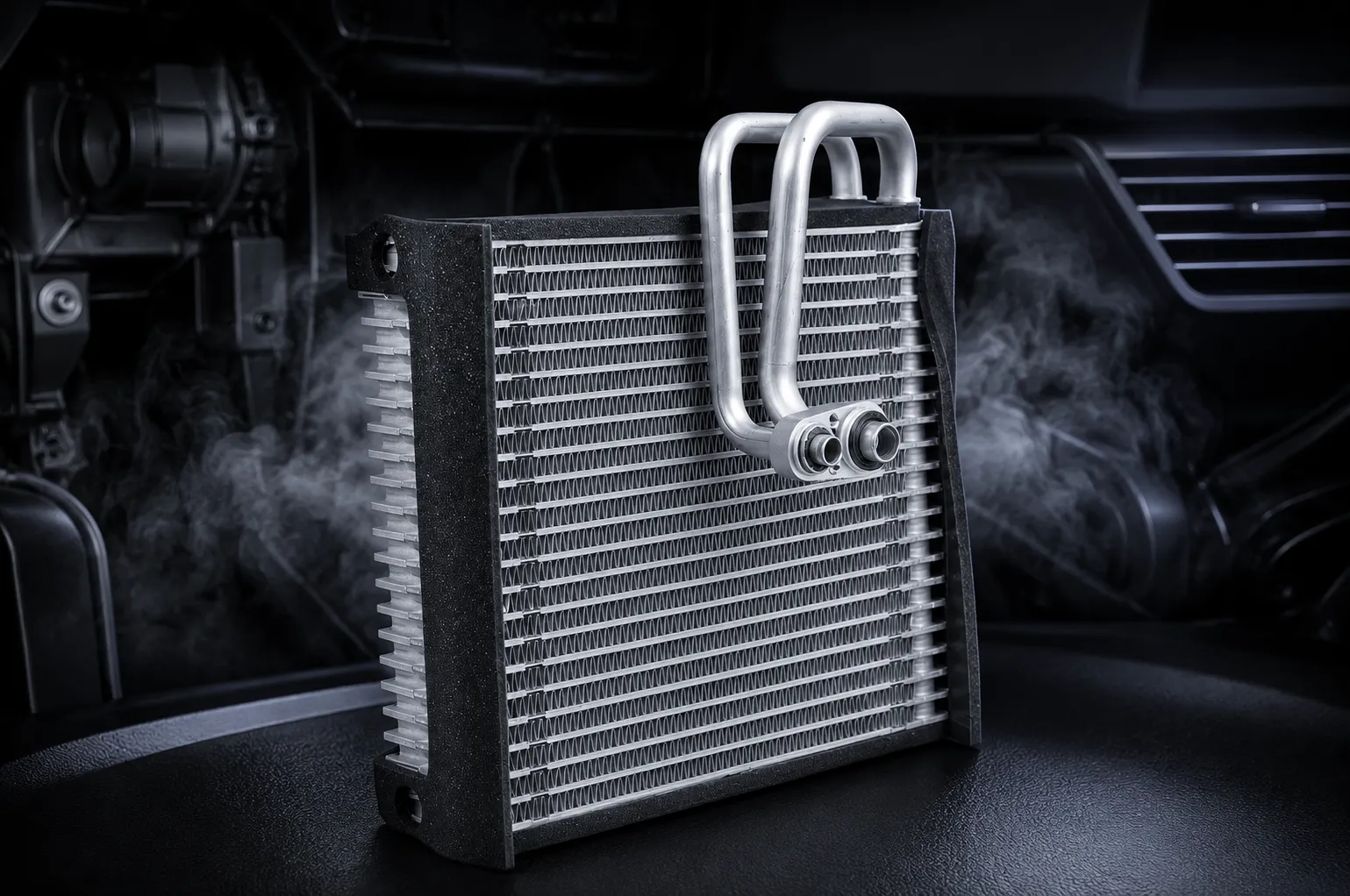
For a compressor, pulley, mounting, ports, connector, displacement, and control type are essential. For a condenser or evaporator, core dimensions, ports, brackets, airflow, pressure integrity, and packaging protection matter. For an electric component, voltage, current, connector, control signal, mounting, and duty cycle may be critical.
2. Build a supplier shortlist by actual responsibility
A useful China automotive parts sourcing guide distinguishes legal seller, manufacturing site, design owner, process owner, sub-supplier, and exporter. Ask which processes are performed in-house, which are outsourced, and who controls drawings, tooling, tests, changes, and warranty analysis. A trading company can be a valid partner, but the supply structure must be transparent.
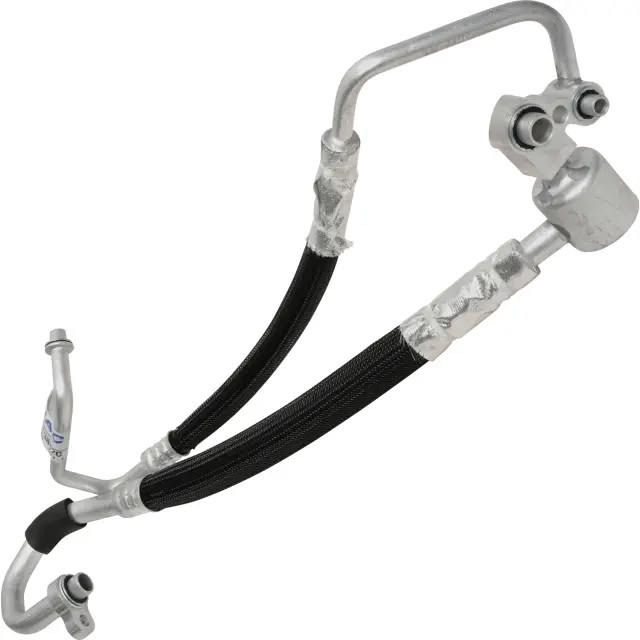
Compare suppliers on relevant products rather than total catalog size. A factory with strong compressor assembly and testing should not automatically be assumed to manufacture every HVAC accessory. ZUA identifies automotive A/C compressors as its core manufacturing focus and also supplies a broader range of mobile A/C and thermal-management components. Buyers should confirm the responsible production route for each target part.
3. Verify certificates and their scope
The International Automotive Task Force explains that IATF 16949 was created to harmonize automotive quality-system methods across the supply chain. Request the certificate number, status, issuing body, legal entity, site address, product scope, and expiration date. Then verify how the system appears in daily records.
A certificate is an entry point, not model approval. Review incoming inspection, process control, equipment calibration, operator training, nonconforming-material isolation, traceability, change management, complaints, and corrective action. ZUA states that its compressor operation follows IATF 16949 and ISO 14001 management systems; project-specific evidence should still be reviewed.
4. Send a controlled RFQ package
The RFQ should list part numbers, annual forecast, first order, order frequency, target market, packaging, labels, required documents, sample quantity, validation, delivery destination, and commercial assumptions. State whether the request is replacement, private label, build-to-print, modified platform, or new development.
Ask suppliers to mark every deviation and open question. Avoid quotations based only on photos or model names. If the supplier proposes an alternative, require a cross-reference basis and a clear list of differences. A controlled RFQ makes quotations comparable and reduces later changes.
5. Evaluate engineering and application support
Ask the technical team to demonstrate how it confirms fitment and controls revisions. Useful evidence includes an application record, drawing, bill of materials, critical-characteristic list, process flow, control plan, and test plan. For catalog programs, review how similar variants are separated in the database, labels, packaging, and warehouse.
A supplier should be willing to say when information is incomplete. Unsupported certainty is a sourcing risk. Record who approves compatibility and what buyer-side validation remains necessary.
6. Audit the process and test route
Follow one target product from incoming material through production, inspection, testing, packaging, and records. Do not treat an equipment photograph as proof. Confirm the test stage, method, acceptance criteria, frequency, equipment status, data retention, failed-part response, and relation to the target model.
ZUA reports three compressor production lines, automatic cleaning, helium leak detection, full-performance testing, Andon and Kanban management, and abnormal-product isolation. It also reports laboratory capability for performance, durability, vibration, noise, and after-sales analysis. These facts provide audit starting points for compressor projects, not automatic proof for every item in the wider catalog.
7. Approve traceable samples
Every sample should identify its part number, drawing revision, lot or serial reference, process condition, and deviations. Request agreed dimensional, leak, functional, performance, material, or validation records. Complete fit, bench, vehicle, packaging, and labeling checks according to the buyer's responsibility.
Do not approve a hand-built sample as production-ready without identifying temporary tooling or manual steps. The approval record should state exactly what is accepted and which conditions still require production-intent verification.
8. Compare total landed cost
Unit price is only one part of landed cost. Include tooling, samples, validation, packaging, inland transport, export handling, freight, insurance, duties, broker fees, inspection, inventory, financing, damage, misapplication returns, and warranty handling. Clarify the trade term and which party bears each cost and risk.
MOQ and lead time should be confirmed per part number and packaging option. Ask how forecasts, mixed orders, seasonal demand, urgent changes, and obsolete inventory are handled. Do not transfer a commercial term from one product family to another.
9. Control packaging and export documents
Automotive A/C parts can be damaged or contaminated during transport. Approve port caps, corrosion protection, fin and tube protection, dividers, cartons, pallet pattern, labels, barcodes, and private-label artwork. Conduct a transport review when the product or route creates meaningful risk.
Confirm invoice, packing list, origin information, product descriptions, labels, and any destination-specific documents before shipment. The buyer remains responsible for checking current import, product, refrigerant, and market requirements in the destination country.
10. Put change control into the contract
A China automotive parts sourcing guide is incomplete without lifecycle control. Define which changes require notification and approval: materials, sub-suppliers, drawings, tooling, equipment, process parameters, test programs, production site, packaging, labels, and software where relevant. Set notification timing and reapproval rules.
Also define tooling ownership, confidential data, intellectual property, quality records, complaint response, return analysis, warranty process, corrective action, and supply interruption. Agreements should be reviewed by qualified commercial and legal professionals for the buyer's jurisdiction.
Normalize quotations before awarding business
Use the same commercial comparison sheet for every candidate. Separate unit price, tooling, samples, validation, packaging, inland transport, export charges, freight assumptions, payment terms, and warranty support. Record the quoted drawing revision, annual volume, order quantity, currency, trade term, and price-validity period. This prevents a low quotation based on a different scope from appearing more competitive.
The China automotive parts sourcing guide should also define a fallback route. Identify long-lead materials, single-source components, tooling ownership, safety stock, recovery responsibilities, and the evidence needed to qualify a second source. A contingency plan is useful only when application data and approval records are portable and current.
Supplier scorecard for China sourcing
| Category | Suggested focus | Evidence |
|---|---|---|
| Application and engineering | 25% | Drawings, application records, revision control |
| Process and quality | 25% | Audit, control plan, calibration, nonconforming control |
| Testing and validation | 20% | Model-specific plans and reports |
| Capacity and delivery | 10% | Recent output, bottlenecks, maintenance, forecast response |
| Traceability and change control | 10% | Lot drill, notification process, corrective actions |
| Commercial and service | 10% | Quotation clarity, packaging, complaint support |
Frequently asked questions
How do I find a reliable automotive parts supplier in China?
Start with a complete application and RFQ, then compare relevant product responsibility, certificate scope, process controls, testing, traceability, samples, capacity, and change management.
Should I work with a factory or trading company?
Either structure can work if responsibilities and the production route are transparent. Verify who owns engineering, quality, testing, changes, and warranty analysis.
What documents should I request before ordering?
Typical documents include legal and certificate information, controlled specifications, drawings, sample records, agreed test evidence, packaging, labels, and commercial terms.
How should I verify an automotive sample?
Confirm identity, revision, dimensions, interfaces, function, required tests, packaging, deviations, and buyer-side fit or vehicle validation.
Can MOQ and lead time be estimated from factory size?
No. They depend on the part, materials, process, forecast, packaging, capacity, and order pattern and must be quoted for the project.
How do I protect against unapproved changes?
Define notification and approval triggers in the purchase agreement and connect them to drawings, samples, inspections, and revalidation.
What products can ZUA support?
ZUA presents compressors, condensers, evaporators, expansion devices, driers, hoses, blower motors, cooling-system parts, and other mobile A/C components on its product page.
How can I request a sourcing review?
Send part references, vehicle data, forecast, target market, packaging, and validation requirements through the ZUA contact page.
Turn this China automotive parts sourcing guide into an RFQ
The most effective China automotive parts sourcing guide creates evidence at every gate. Define the application, shortlist by real responsibility, verify the site and process, approve traceable samples, calculate landed cost, and control changes. That discipline gives both buyer and supplier a clearer path from inquiry to repeat orders.