An automotive AC parts distributor program should define how a supplier and distributor will select products, control fitment data, build inventory, set commercial rules, launch the range, train sales and technical teams, manage leads, analyze returns, approve changes, and measure performance. A price list and logo agreement are not a complete channel strategy.
ZUA Auto Parts uses this buyer-focused framework to turn the topic into a clearer product inquiry, while application, construction, and evidence must still be confirmed for each SKU.
This guide is for importers, national and regional distributors, buying groups, private-label brands, repair-network suppliers, and automotive HVAC manufacturers building a repeatable B2B relationship. Commercial and legal terms should be adapted to the target market and reviewed by qualified professionals.
Automotive AC parts distributor program framework
| Workstream | Joint decision | Required output |
|---|---|---|
| Market | Country, channels, customers, vehicles, and competition | Market scope and priorities |
| Range | Categories and launch part numbers | Controlled range file |
| Data | Fitment, OE references, images, and updates | Catalog governance |
| Commercial | Prices, MOQ, payment, territory, and targets | Signed agreement |
| Inventory | Forecast, safety stock, mixed orders, and replenishment | Stock plan |
| Launch | Samples, content, training, and customer acquisition | Launch calendar |
| Service | Claims, returns, analysis, and technical response | Warranty workflow |
| Performance | Sales, availability, quality, data, and actions | Joint scorecard |
1. Define the target market precisely
Specify countries or regions, passenger or commercial vehicle focus, wholesale, retail, workshop, fleet, e-commerce, system-integrator, or OEM/OES channels, customer types, climate, refrigerants, vehicle parc, common brands, and service practices. A range that works in one market may be unsuitable in another.
Record market assumptions and data sources. The distributor contributes local demand and customer behavior; the supplier contributes product, application, capacity, and technical evidence.
2. Select the cooperation model
Options may include standard-brand distribution, private label, neutral packaging, category exclusivity, territory exclusivity, project-specific OEM/OES supply, or a staged combination. Define brand ownership, channel conflicts, existing customers, direct accounts, online sales, and lead handling.
An automotive AC parts distributor program should state what exclusivity means, how it is earned, which products and customers it covers, how long it lasts, and what happens if targets or service obligations are missed.
3. Map the supplier's real product responsibility
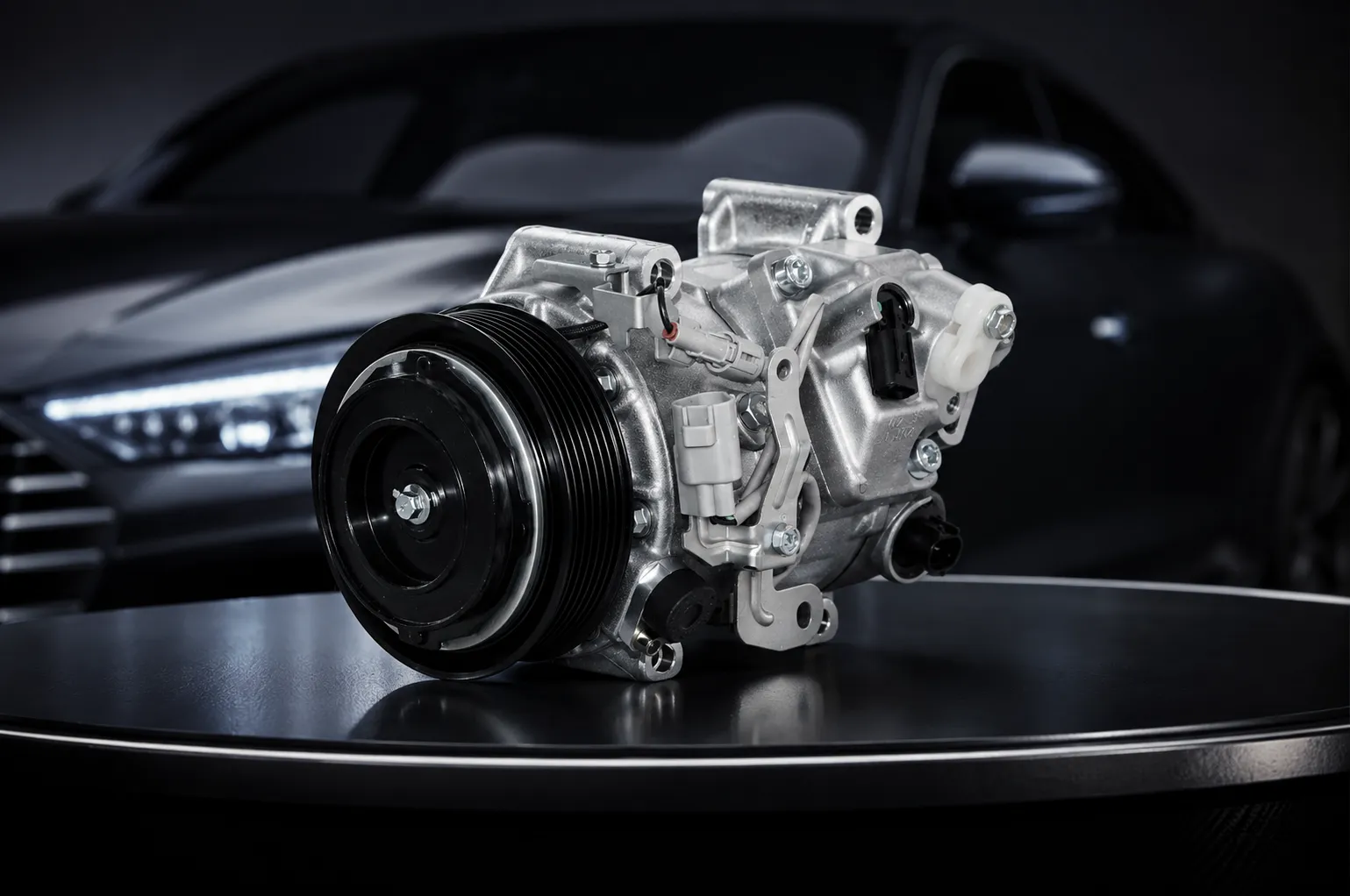
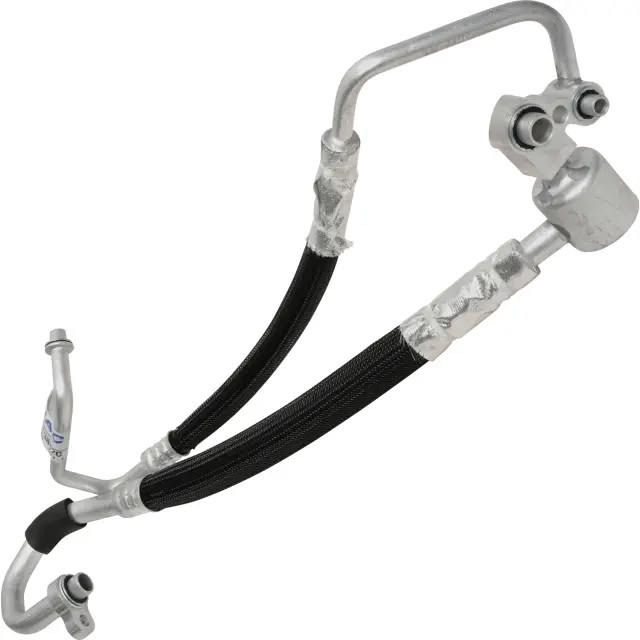
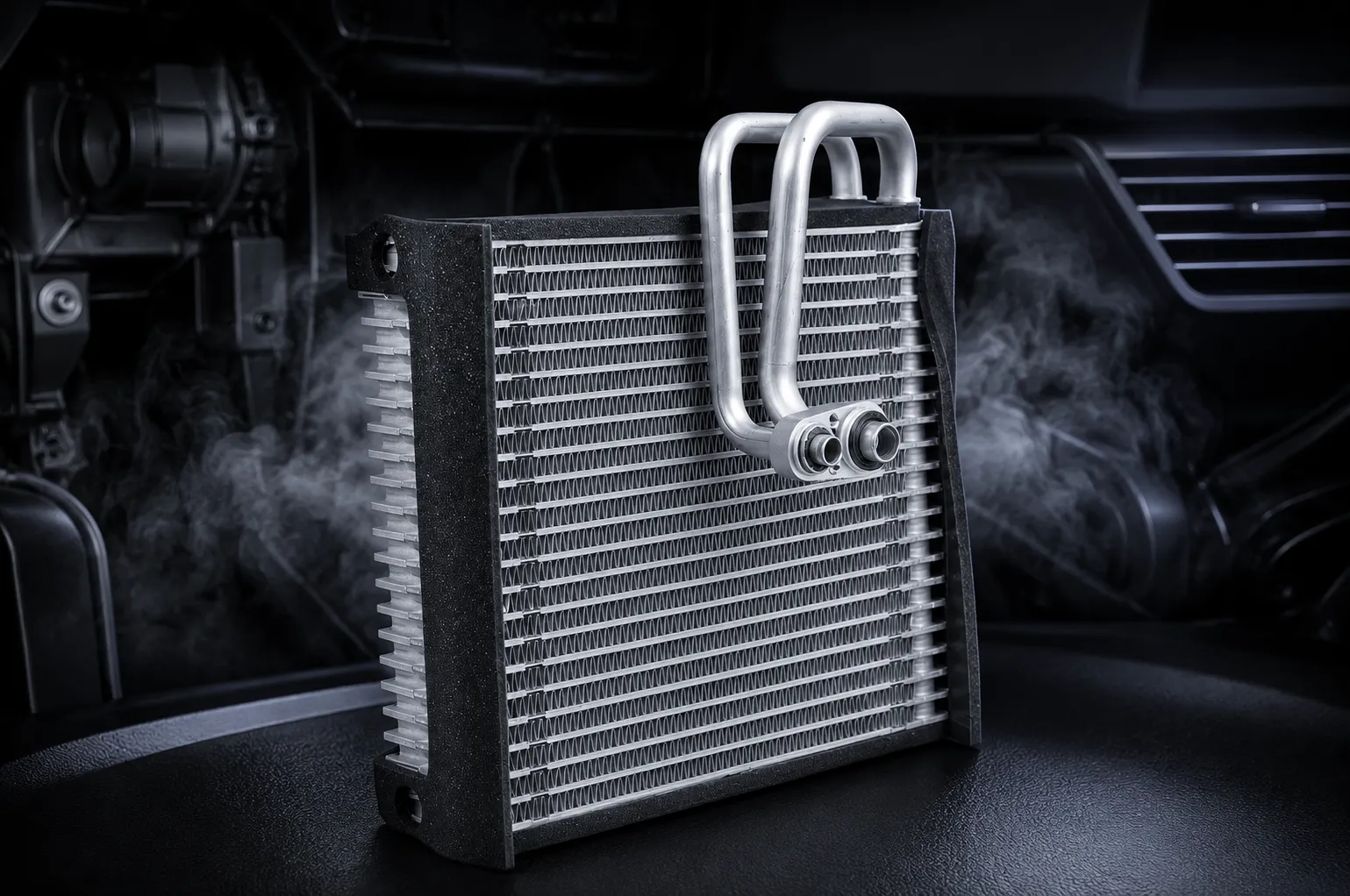
ZUA identifies automotive A/C compressors as its core manufacturing focus and also presents condensers, evaporators, expansion devices, driers, hoses, blower motors, cooling-system parts, and related components on its product page. A distributor should map design, manufacturing, testing, and warranty responsibility for each category.
A broad catalog is useful only when the supply route is transparent. Factory evidence from compressors should not automatically be applied to every accessory.
4. Build a launch range from evidence
Rank part numbers by current sales, customer requests, vehicle population, fitment confidence, technical validation, supply continuity, margin, return risk, and inventory cost. Start with a range the teams can approve and support, then add references through a controlled gate.
The range file should include supplier and distributor part numbers, OE and cross-references, application, interfaces, product status, responsible site, MOQ, lead time, packaging, label, price, validation status, and data revision.
5. Establish catalog and fitment governance
Define the owner, source, fields, review, approval, update frequency, corrections, supersessions, exclusions, translations, images, and distribution method for application data. Similar appearance or one shared reference is not enough to publish fitment.
When a customer reports an error, the workflow should correct digital catalogs, printed material, labels, warehouse stock, marketplace listings, and affected customers. Fitment quality should be measured as a program KPI.
6. Approve product and packaging samples
Samples need part, revision, lot, production site, test evidence, deviation, packaging, and label identity. Complete appropriate dimensional, functional, performance, fit, vehicle, and transport checks. Record whether the sample represents normal production.
For the first production lot, compare critical characteristics, tests, packaging, barcodes, and catalog references with the approved condition. Special launch samples should not become the only standard.
7. Design commercial rules that can be operated
Define price basis, currency, trade term, payment, price validity, annual review, MOQ by part or category, mixed orders, tooling, samples, freight, duties, rebates, targets, marketing support, warranties, and taxes. Separate firm commitments from forecasts.
Use a normalized landed-cost model. Unit price alone does not capture validation, packaging, inventory, data errors, freight, returns, technical support, or obsolete stock.
8. Plan inventory and replenishment
Set opening stock, demand classes, service levels, safety stock, reorder points, forecast cadence, lead time, minimum batch, mixed-container rules, seasonal peaks, emergency orders, and obsolete stock treatment. Share forecast changes early.
Automotive AC parts distributor program inventory should be managed by part-number behavior. A high-volume compressor and a slow-moving vehicle-specific hose should not use the same stock rule.
9. Protect territory and channel relationships
Define territory, named customers, reserved projects, lead registration, response time, quote ownership, online channels, cross-border sales, sub-distributors, and conflict escalation. Any exclusivity should be tied to measurable investment, stock, coverage, service, and performance.
Avoid vague promises. Written rules let both parties develop customers without unexpected channel conflict.
10. Build a 90-day launch plan
Set owners and dates for range approval, samples, packaging, catalog, website pages, price files, stock, staff training, customer list, launch campaign, exhibitions, workshop outreach, and first reviews. Prepare technical content that answers fitment, installation, validation, and warranty questions.
Launch in phases where useful. A pilot with selected customers can reveal application or packaging problems before a national rollout.
11. Train sales and technical teams
Training should cover product function, application fields, key interfaces, common variants, evidence available, installation limits, claim data, and escalation contacts. Sales teams should know what the supplier can prove and which questions require engineering review.
Use actual samples, comparison tables, fitment examples, and return cases. Record attendance and update training when products or data change.
12. Create a lead and quotation workflow
Define which leads go to the distributor, response expectations, required customer data, technical review, quote approval, sample requests, project registration, follow-up, and reasons for wins or losses. Protect customer information and comply with applicable data rules.
The supplier and distributor should see enough pipeline information to plan stock and support without confusing account ownership.
13. Operate warranty and return analysis
Agree claim eligibility, required part and vehicle data, installation evidence, batch identity, photos, freight, return authorization, analysis timing, credit or replacement, and corrective action. Separate product, application, installation, contamination, charging, electrical, and system causes using evidence.
ZUA reports after-sales analysis capability for compressors. For each category, confirm who receives and analyzes returns and how learning reaches catalog, process, packaging, and training updates.
14. Control product and supply changes
Notification rules should cover design, material, component, sub-supplier, tooling, equipment, software, site, process, test, packaging, labels, catalog data, and discontinuation. Define notice timing, existing stock, validation, sample reapproval, and customer communication.
A distributor cannot protect its brand or customers when changes arrive only after the new product is shipped.
15. Review a joint performance scorecard
| Metric | Example review | Owner response |
|---|---|---|
| Sales and pipeline | Revenue, active accounts, quotes, conversion, range gaps | Sales plan |
| Availability | Fill rate, stockouts, forecast accuracy, lead time | Inventory action |
| Quality | Claims, failure modes, repeat causes, containment | Corrective action |
| Application data | Corrections, misapplication returns, update time | Catalog action |
| Service | Response, analysis time, training, technical support | Support plan |
| Governance | Changes, meetings, commitments, channel conflicts | Management review |
Define renewal, recovery, and exit before problems occur
The agreement should explain review frequency, cure periods, target recovery, inventory treatment, open orders, tooling, branded packaging, customer projects, warranty obligations, data access, confidential information, and transition support. A distributor relationship can change because of performance, market conditions, ownership, strategy, compliance, or product discontinuation.
A mature automotive AC parts distributor program protects customers during both growth and transition. The parties should continue traceability, claims, safety or quality communication, and change notices for products already in the market. Qualified legal and commercial professionals should adapt termination and post-termination terms to the relevant jurisdiction.
The IATF 16949 overview provides useful context for automotive quality-system discipline, while the distributor agreement must translate product and service responsibilities into daily channel operations.
Frequently asked questions
What is an automotive A/C parts distributor program?
It is a structured agreement and operating plan for range, data, pricing, territory, inventory, launch, leads, service, changes, and performance.
Does a distributor need to carry every product category?
No. A focused, validated range can produce better availability and service than a large catalog with weak evidence.
How should territory exclusivity work?
Define products, geography, customers, channels, duration, targets, stock, service obligations, exceptions, review, and termination in writing.
Who owns fitment data?
The program should name sources, reviewers, approvers, update owners, and buyer-side validation rather than leave responsibility implicit.
How much opening inventory is required?
It depends on demand, service targets, lead time, MOQ, product mix, seasonality, and risk. Plan by part-number class.
What support should a supplier provide at launch?
Typical support includes samples, product and fitment data, images, evidence, training, technical review, packaging, lead coordination, and after-sales response.
Does ZUA work with distributors?
ZUA presents wholesale, distribution, aftermarket, OEM/OES, and private-label cooperation as target services. Specific territory and terms require review.
How can a distributor contact ZUA?
Send company profile, markets, channels, target range, forecast, current brands, quality requirements, and launch plan through the ZUA contact page.
Run the automotive AC parts distributor program as a joint system
A successful automotive AC parts distributor program connects market knowledge, transparent product responsibility, controlled fitment data, approved samples, workable commercial rules, planned inventory, trained teams, lead ownership, warranty learning, changes, and measurable performance. That operating discipline turns an initial order into a scalable channel relationship.