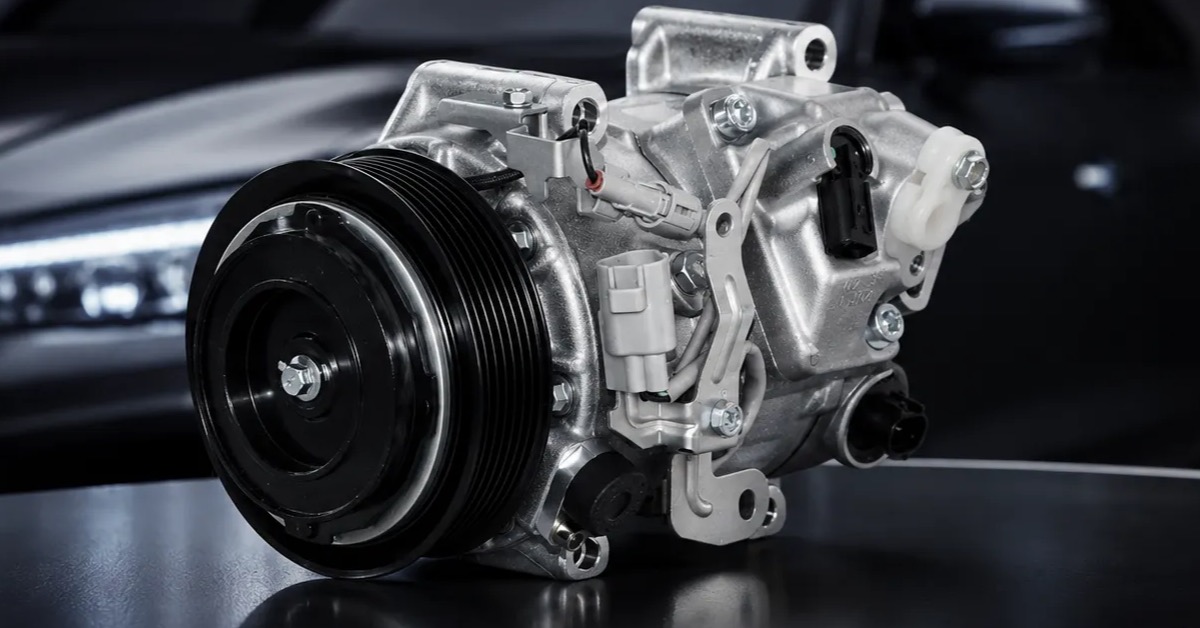
Choosing an automotive pulley manufacturer starts with a small but expensive detail: where the belt actually runs. A pulley may look right in a catalog and still produce belt wander, clutch misalignment, noise, extra bearing load, or a delayed installation. Groove shape, offset, bore, hub length, and face runout all have a say. For a distributor or compressor rebuilder, the better question is less glamorous than a price comparison: can this supplier hold the entire belt-drive interface for the exact part number?
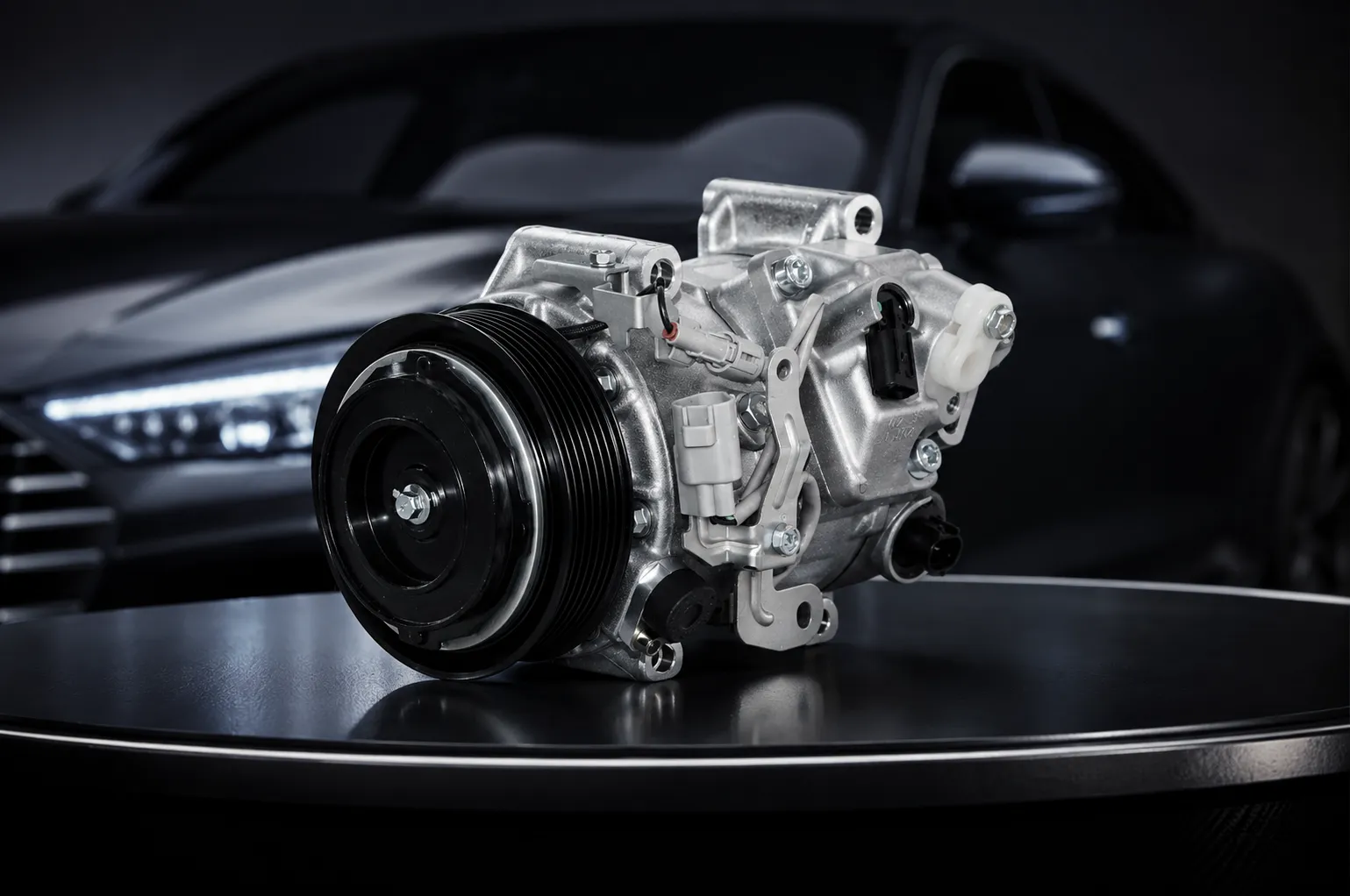
ZUA Auto Parts uses this worksheet approach for electrical and drive-component inquiries. The company also supplies automotive A/C compressors and related mobile climate-control parts, so buyers can connect a pulley request to the compressor, clutch, belt, and vehicle application instead of evaluating an isolated metal component.
Keep these pages beside a caliper and a purchase order. The goal is simple: a drawing-review sheet, a sample routine, better questions when a supplier answer is vague, and a clean way to freeze the approved configuration before the next reorder. Dimensions, material grades, tolerances, MOQ, lead time, and warranty terms still belong to the quotation for the exact part.
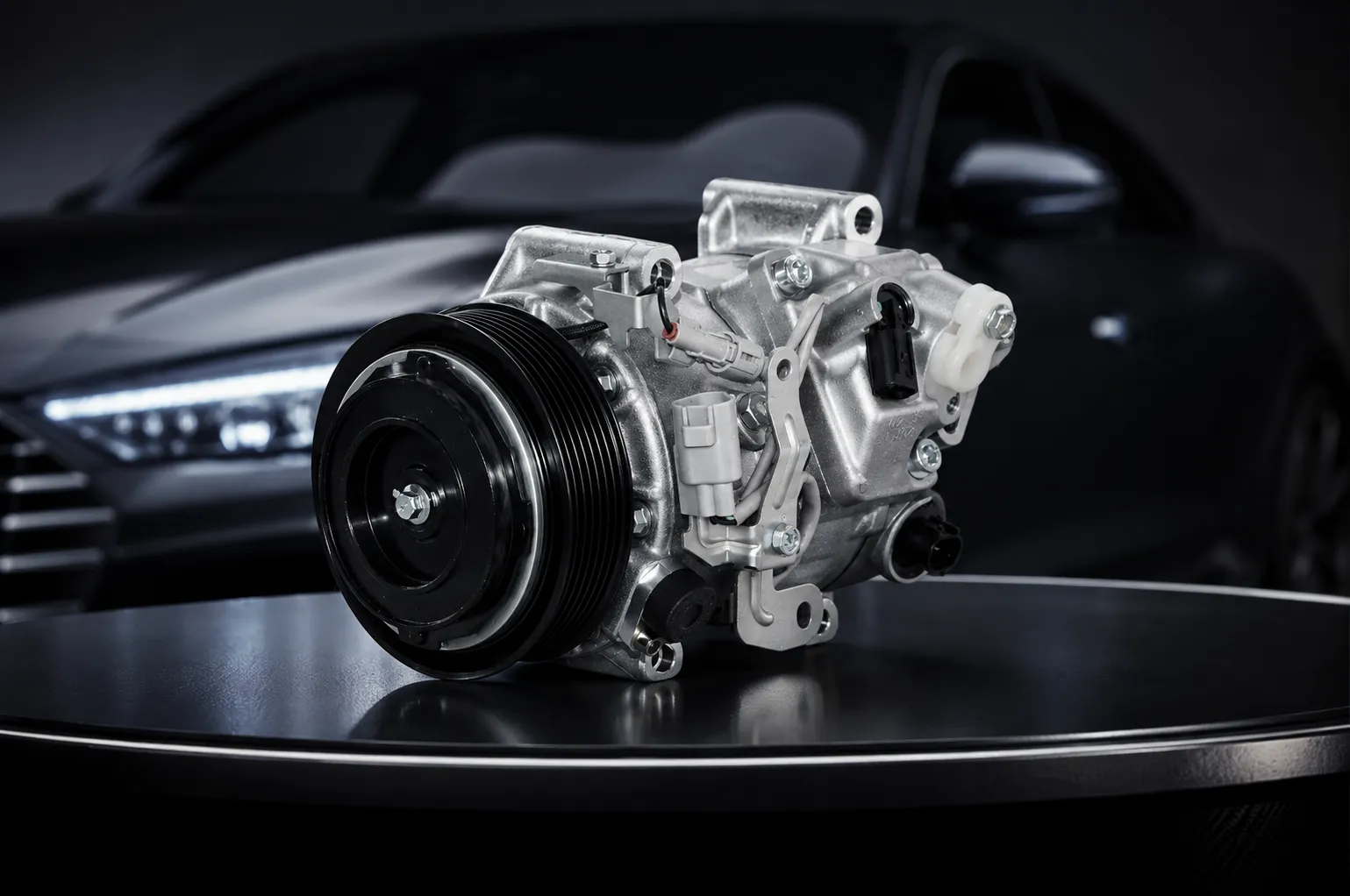
Start with the belt-drive job, not the pulley photograph
Before contacting a supplier, write one plain-English sentence about the job: “This is the pulley that drives the compressor through the vehicle belt,” or “This is an idler that guides the belt.” Is it an A/C compressor pulley, an idler, a tensioner, or part of an electromagnetic clutch? A compressor pulley carries engine torque and sits inside a clutch stack, so it has to satisfy two interfaces at once. An idler can share the same groove count and still use a different bearing or load path.
Your first page should identify the vehicle make and model, production year, engine, market, belt type, belt length if known, compressor or accessory part number, rotation direction, and the reason for replacement. Add a reference sample or controlled drawing when available. This context helps an automotive pulley manufacturer separate a true cross-reference from a visual approximation.
Build a one-page pulley identity record
A one-page identity record sounds administrative until three suppliers return three different “equivalents.” Give each candidate its own line item. Fill in the fields below, and leave an unknown field blank; a blank box is safer than a confident guess that travels into the purchase order.
| Field | What to record | Why it affects approval |
|---|---|---|
| Application | Vehicle, engine, year, market, compressor or accessory reference | Controls the fitment boundary |
| Belt interface | Groove count, pitch or profile, usable width, flange details | Controls belt seating and tracking |
| Centering | Bore, pilot, key or splined feature, hub length | Controls concentric mounting |
| Position | Face offset, stack height, reference datum, clearance | Controls alignment with the belt and clutch |
| Rotation | Required direction and any one-way or directional feature | Controls system behavior and test setup |
| Traceability | Part number, revision, lot mark, package label | Controls repeat orders and containment |
Attach photos only as supporting evidence. The approved identity is the controlled record, dimensional drawing, and sample approval, not a photo filename.
Read belt geometry as a set of relationships
Groove count is the tempting shortcut, and it is rarely enough. Put the groove form, pitch, effective diameter, outside diameter, flange shape, and belt-reference distance on the sheet. A modest change in effective diameter changes belt speed and tension behavior. A flange only slightly out of position can steer the belt toward the next rib or let it climb during a load change.
Have the supplier mark the datum on the drawing and explain the gauge or fixture behind each number. Two “same diameter” readings can disagree simply because one was taken over the flange and the other at the seating line. A section view and a sample report carrying the same revision will settle that argument quickly.
- Mark the belt contact zone, not just the outside edge.
- Identify whether the pulley is machined, stamped, formed, or assembled from more than one piece.
- Record surface condition in the belt path and any coating that changes the working dimension.
- Define which dimensions are critical and which are reference-only.
Check concentricity, runout, and face position
Many “bad belt” or “noisy compressor” complaints start with a pulley that is off-center or sitting crooked. Separate radial runout from axial face runout in the inspection plan. Name the datum, gauge, rotation method, and limit. A dial-indicator number is not useful when the sample is wobbling on a loose arbor.
For a sample review, start from one datum and measure the bore or pilot, belt reference, pulley face, and hub shoulder. Turn the part through a full revolution and write down the high and low points. Take a photo of the setup. Then remove the sample and mount it again. If the number changes, the fixture may be telling you more than the pulley is.
An automotive pulley manufacturer should be able to explain how it maintains concentricity through turning, pressing, broaching, balancing, or final assembly. Ask for the reaction plan when runout exceeds the limit: isolation, rework permission, remeasurement, and lot disposition should be clear.
Verify the hub, bearing, and clutch interfaces together
When the pulley works with an A/C compressor clutch, belt-side geometry is only half the interface. Confirm the hub bore, pilot diameter, bearing seat, shoulder, snap-ring groove if present, spacer relationship, and clearance to the clutch coil or armature. The pulley must rotate without interference while preserving the designed air gap and axial stack.
Provide the compressor part number or a controlled clutch drawing to the supplier. Do not assume that a pulley from a similar compressor family will preserve the same bearing width or offset. If the program uses a complete compressor, review the pulley together with the ZUA compressor platform and the approved clutch configuration.
Ask whether the supplier delivers the pulley alone or as an assembly. The quotation should state included bearings, seals, spacers, fasteners, protective caps, and any balancing operation. This prevents a “same pulley” comparison from hiding different scopes.
Use material and process evidence to explain service life
Material claims should connect to the actual load and environment. The pulley may face belt tension, cyclic torque, temperature change, corrosion exposure, vibration, and repeated clutch engagement. Ask for the controlled material specification, incoming verification, heat-treatment or forming controls where applicable, and the process features that prevent cracks, sharp edges, distortion, or surface damage.
For assembled pulleys, review how bearings are pressed, how force is monitored, and how the operation avoids brinelling or seal damage. For machined parts, review tool-life control, burr removal, and cleaning. For coated or plated parts, confirm thickness or coverage requirements and whether the belt-running surface is intentionally left within a defined working condition.
ISO 9001 describes a quality-management approach based on controlled processes and continual improvement; buyers can use the official ISO 9001 overview as a starting point when reviewing a supplier's system. Certification is an entry signal, not a substitute for part-specific evidence.
Turn sample approval into a repeatable measurement card
Sample approval is more useful when it leaves behind a measurement card that production and purchasing can actually reuse. List each critical dimension, the instrument or fixture, the result, the limit, the revision, and the person who approved it. Add photos of belt seating, hub contact, bearing position, and the installed relationship when a reference compressor is available.
| Sample check | Evidence | Release question |
|---|---|---|
| Visual workmanship | No cracks, burrs, dents, loose components, or coating damage | Is the sample representative of the quoted process? |
| Belt seating | Profile, groove position, flange and reference measurement | Does the belt sit at the defined datum? |
| Runout | Radial and axial readings with fixture details | Are the results inside the approved limit? |
| Hub and bearing | Bore, pilot, shoulder, press fit, rotation and clearance | Does it match the compressor or accessory stack? |
| Packaging | Caps, separators, label, carton and transport condition | Will the part arrive without bent flanges or contamination? |
Do not approve from one measurement taken by one person. A second check by quality or engineering can reveal a datum misunderstanding before volume production.
Ask the supplier to demonstrate production control
During a remote or on-site review, follow one part from incoming material to packing. Watch how the operator identifies the work order, selects the correct tooling, verifies the component, and records the inspection. Ask what happens after a tool change, a bearing substitution, a drawing revision, or a nonconforming result.
A capable automotive pulley manufacturer should show a controlled process flow, an inspection plan, gauge calibration, nonconforming-product isolation, and traceability from finished part to material or component lot. The depth of evidence should match the risk and the intended volume. A small replacement order may need a focused record; an OEM program needs stronger change control and validation ownership.
Include packaging in the production review. Thin flanges and belt grooves can be damaged by uncontrolled bulk packing. Define separators, caps, orientation, carton quantity, label content, moisture protection, and pallet limits. If private-label packaging is required, approve the artwork and barcode version alongside the physical pack.
Freeze commercial scope before the first repeat order
When the sample passes, turn that result into a purchasing boundary. Put the exact part number, drawing revision, included components, package configuration, label language, inspection documents, MOQ, lead time, payment terms, warranty route, and change-notification rule in the specification. A pulley-only order and a complete compressor assembly rarely share the same commercial scope.
Ask the supplier to identify what triggers a new approval. Examples include a different bearing source, altered coating, changed forming tool, revised groove geometry, relocated production, new subcontractor, or packaging change. A written change rule protects the belt-fit result that your customer has already accepted.
For a brand or distributor, route the approved record through purchasing, quality, engineering, and service. Store the sample photographs and measurement card with the SKU. When a field complaint arrives, the team should be able to identify the production lot and compare the returned part with the approved baseline.
Prepare an RFQ that an automotive pulley manufacturer can answer
Make the RFQ expose the unknowns instead of hiding them in a broad product name. Include application data, references, drawings or samples, forecast by part number, target market, packaging expectations, and the evidence you need to see. Separate prices for development, samples, tooling, production, inspection documents, and private-label packaging keep the comparison honest.
Use the ZUA contact page to submit the application package and ask which pulley or compressor information is needed for a model-specific review. Buyers can also cross-check the broader ZUA product catalog before requesting a combined compressor, clutch, or drive-component quotation.
A useful RFQ asks for answers in the same order as the measurement card. This reduces back-and-forth and makes supplier comparisons fair. It also gives the manufacturer a chance to flag missing data instead of silently quoting a visually similar part.
Frequently asked questions
What is the most important pulley dimension?
There is no single universal dimension. Groove geometry, belt reference position, bore or pilot, face offset, and runout must work together for the specified application.
Can groove count confirm a replacement pulley?
No. Groove count is only one data point. Profile, pitch, effective diameter, flange shape, offset, hub, bearing, and compressor or accessory interfaces also need confirmation.
How should pulley runout be measured?
Use a controlled datum and fixture, rotate the sample through a full revolution, and record radial and axial readings with the gauge and setup identified.
Should a pulley supplier receive the compressor part number?
Yes, when the pulley interfaces with a compressor clutch or shaft. The part number helps the supplier review the bearing, hub, stack height, and clearance relationship.
What evidence should be requested with a sample?
Request a dimensional report, material or component information, runout results, workmanship photos, packaging details, and any agreed functional or balancing evidence.
Are private-label pulley packages available?
They may be available, but artwork, labels, barcode data, MOQ, carton quantity, cost, and lead time must be confirmed for the selected part and market.
What changes require renewed approval?
Define triggers in writing. Material, bearing source, groove geometry, tooling, coating, production site, subcontractor, and packaging changes are common review points.
Can ZUA quote a pulley with a compressor program?
Yes, buyers can provide the compressor reference, vehicle data, belt details, forecast, and packaging needs through ZUA's contact route for a project-specific review.
How can distributors reduce repeat-order errors?
Keep the approved drawing revision, sample photos, measurement card, label file, and lot requirements attached to the SKU and purchase order.
What should be written on the purchase order?
State the exact part number, revision, included scope, packaging, inspection evidence, approved changes, delivery terms, and the contact responsible for technical deviations.
Approve the interface, then scale the order
The right automotive pulley manufacturer leaves fewer blank boxes on the worksheet. Belt geometry, centering, clutch interfaces, process controls, and repeat-order information should be visible enough to audit. Compare evidence rather than catalog adjectives, approve one controlled configuration, and keep the pulley record attached to the compressor or vehicle application. That is the practical route ZUA Auto Parts can share with customers moving from a first sample to dependable supply.