An automotive compressor supplier factory audit should answer one commercial question: can this factory repeatedly deliver the correct compressor for your application, not merely produce a sample that looks acceptable? For importers, distributors, private-label brands, OEM teams, and service networks, the audit must connect application data, process controls, test evidence, capacity, and change management. A certificate or equipment list is useful, but neither replaces model-specific records and an observed production process.
For buyers sourcing through ZUA Auto Parts, this framework connects the technical question to a controlled product inquiry; exact fitment and quoted specifications remain SKU-specific.
This checklist provides a practical route from document review to shop-floor verification. It also separates facts that can be confirmed during an audit from terms such as MOQ, tooling cost, sample lead time, and warranty handling that should be agreed in writing for each project.
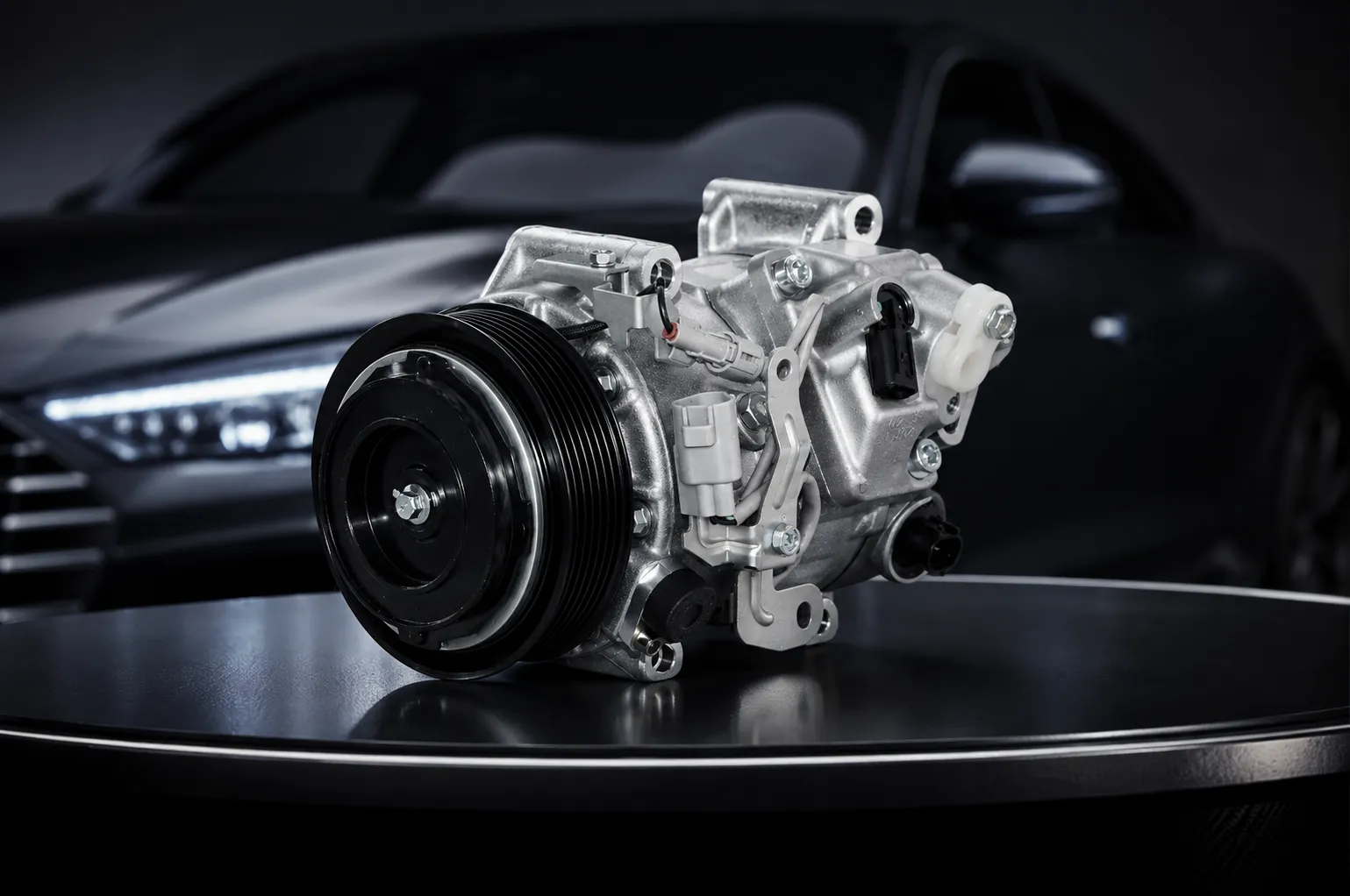
1. Start the automotive compressor supplier factory audit with scope
Define the products, plants, processes, and markets included in the audit. A supplier may manufacture several compressor platforms, outsource selected parts, or use different lines for aftermarket and OEM programs. Ask which legal entity will sign the contract, which location will manufacture the parts, and which processes are completed in-house.
The International Automotive Task Force explains that IATF 16949 was created to harmonize quality-system requirements across the automotive supply chain. During an audit, verify the certificate number, validity, issuing body, manufacturing address, and scope. Then check whether daily practices match the documented system.
| Audit area | Evidence to request | Buyer decision |
|---|---|---|
| Legal and site scope | Business license, site address, process map | Is the quoted factory the actual producer? |
| Quality system | Certificate, audit findings, corrective actions | Does the scope cover the target product and site? |
| Product responsibility | Design responsibility matrix, outsourced-process list | Who owns drawings, tooling, validation, and changes? |
| Target application | OE number, vehicle and engine data, interface drawing | Can compatibility be approved objectively? |
2. Audit application engineering before production
Compressor sourcing failures frequently begin with incomplete application matching. Ask the engineering team to demonstrate how it reviews OE numbers, vehicle models, engine variants, mounting points, pulley diameter and groove count, port orientation, electrical connectors, displacement, control type, refrigerant, and lubricant requirements. A photo comparison is not a technical approval method.
A capable supplier should control revisions of drawings, bills of materials, inspection specifications, and approved samples. Request one anonymized example showing how an inquiry became a controlled product record. The evidence should reveal who reviewed the application, which characteristics were classified as critical, and how uncertainties were resolved before quotation or sampling.
Questions for the engineering team
- Which data are mandatory before the supplier confirms a cross-reference?
- How are fixed, internally controlled variable, and externally controlled variable compressors distinguished?
- How are connector pin definitions and control-valve requirements verified?
- How are customer drawings and confidential files access-controlled?
- What triggers a new sample approval after a design or process change?
3. Walk the machining and incoming-material controls
During the automotive compressor supplier factory audit, follow material from receiving to the first controlled operation. Review how housings, bearings, seals, valves, shafts, pulleys, clutches, fasteners, and electronic components are identified. Check supplier approval records, incoming inspection plans, acceptance criteria, nonconforming-material areas, and lot traceability.
For machined housings and mating surfaces, ask how the factory controls datums, port geometry, mounting dimensions, bores, sealing surfaces, and cleanliness. Equipment ownership matters less than control of the complete process. Observe calibration labels, inspection frequency, reaction plans, tool-life management, and the handling of measurements outside specification.
4. Verify assembly controls in an automotive compressor supplier factory audit
Assembly should translate a controlled bill of materials into a traceable unit. Look for part verification, torque control, seal and lubricant management, cleanliness protection, work instructions, fixture identification, and methods that prevent incorrect components from entering the line. Ask an operator to explain the work instruction and the response to an abnormal condition.
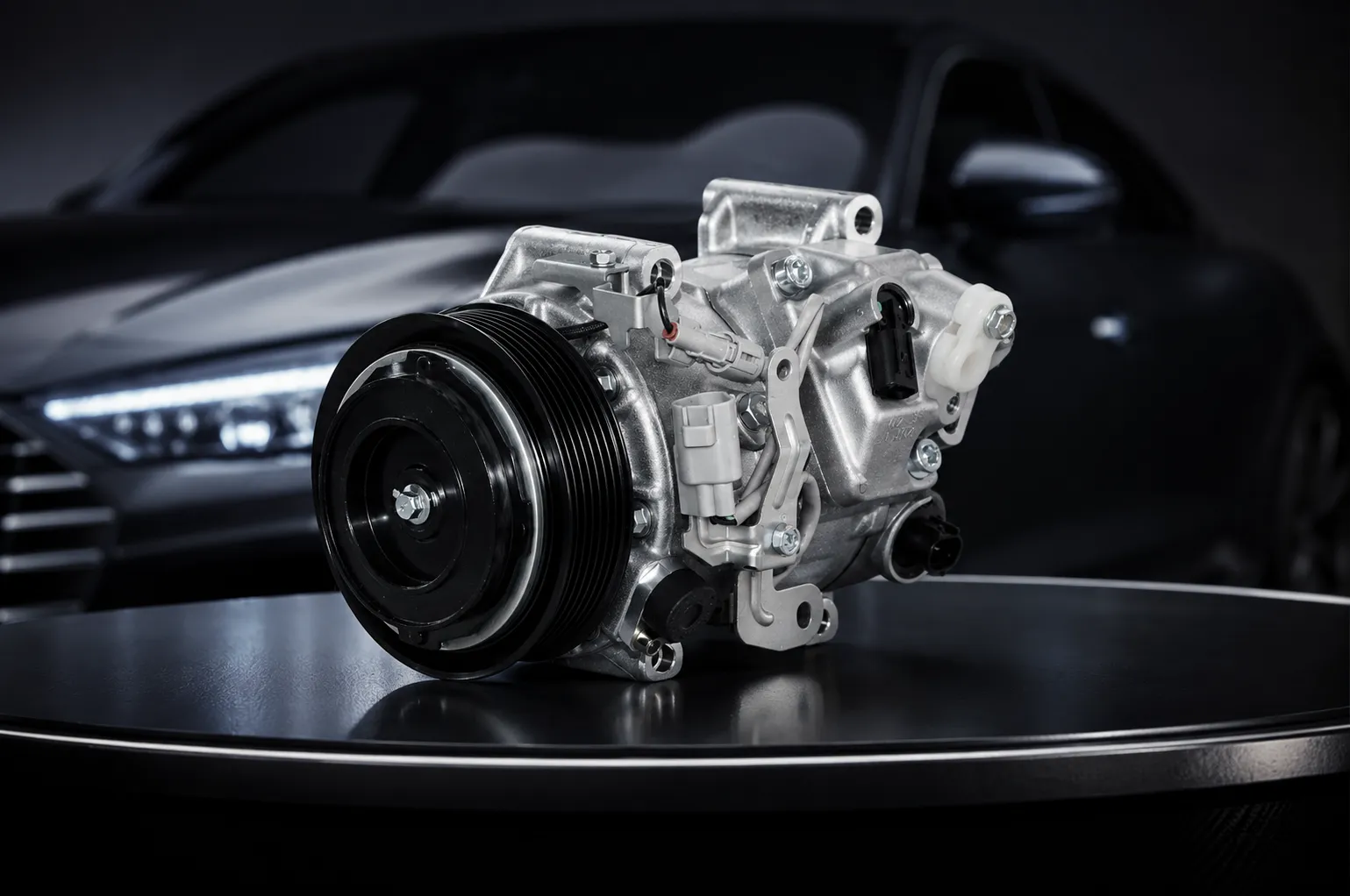
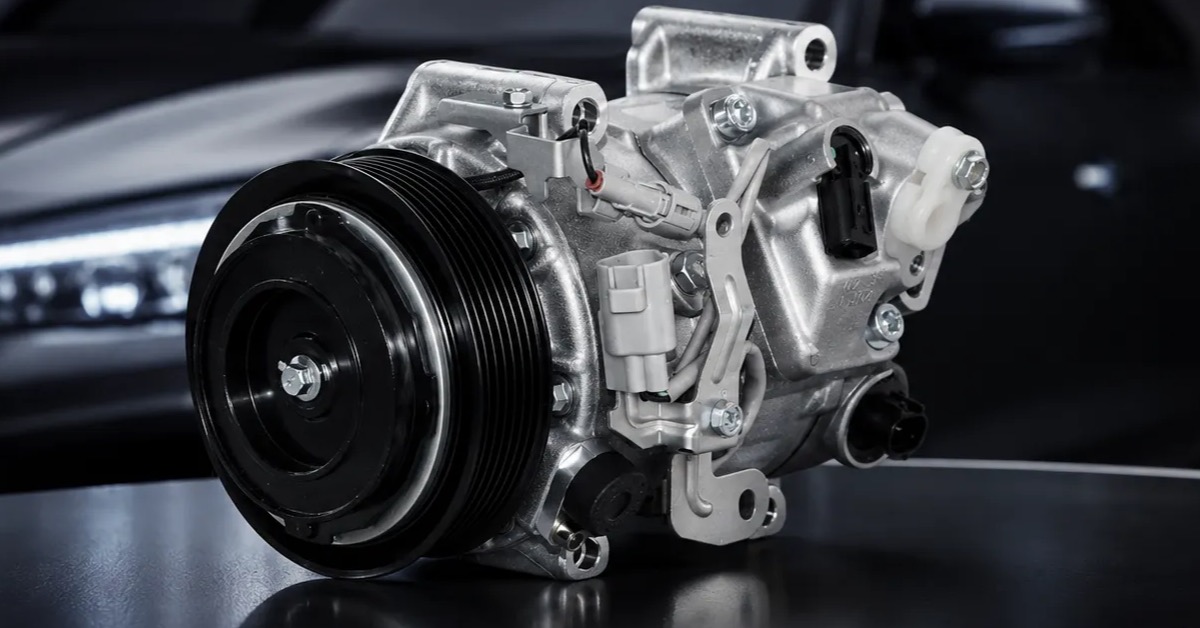
ZUA states that its compressor manufacturing operation uses three production lines, automatic cleaning, Andon and Kanban management, abnormal-product isolation, helium leak detection, and full-performance testing. These are useful audit points, but buyers should still ask for the control plan and records for the exact model under review. Learn more about the disclosed operation on the ZUA company page.
5. Inspect the test route, not only the laboratory
Ask the supplier to trace one finished compressor through its required inspections. Depending on the product and project, the route may include dimensional checks, electrical checks, leak detection, functional or performance testing, noise and vibration evaluation, durability validation, and analysis of returned parts. The test conditions, sample frequency, limits, equipment status, record format, and reaction plan must be defined.
Do not accept a photograph of a test bench as proof that every product receives every test. Determine which tests are performed on each unit, which are sampled by lot, and which belong to design validation. Request a recent record tied to a traceable part number and lot. If the supplier cannot disclose customer data, a redacted record should still show the control logic.
6. Check capacity against your product mix
Capacity should be evaluated by bottleneck, shift pattern, model mix, changeover time, maintenance, and accepted yield. ZUA reports an annual compressor capacity of 450,000 units and a 45-second production takt across three lines. These figures provide a starting point, not an automatic allocation for a new order. Ask what capacity is available for the target platform and forecast.
Review preventive-maintenance plans, spare-parts strategy, critical-equipment backups, operator training, and recovery arrangements. Compare the stated output with recent production records. For seasonal aftermarket demand, discuss forecast windows, packaging capacity, and how urgent schedule changes are controlled.
7. Test traceability and change control
Select a finished unit and ask the team to trace it backward to its assembly record, component lots, inspection results, operator or line, and production date. Then select a material lot and trace it forward to affected finished products. A useful traceability drill should be completed within a defined time and produce records that support containment.
Change control is equally important. Ask how the supplier handles alternative components, tooling repairs, software or test-program revisions, process relocation, sub-supplier changes, and drawing updates. The purchase agreement should define which changes require customer notification and renewed approval.
8. Review environmental and workplace controls
ZUA states that it holds ISO 14001 certification. ISO published ISO 14001:2026 in April 2026, so buyers should confirm the edition, certificate status, scope, and transition arrangements relevant to the audit date. Shop-floor observations may include management of cleaning agents, oils, scrap, waste, spills, ventilation, and emergency response.
9. Add commercial readiness to the automotive compressor supplier factory audit
An automotive compressor supplier factory audit should also examine quotation discipline, packaging control, labeling, export documentation, complaint response, warranty analysis, and intellectual-property handling. Do not assume that standard MOQ, lead time, payment terms, or customization limits apply to every model. Record these as project-specific confirmations.
| Commercial item | What to confirm in writing | Why it matters |
|---|---|---|
| Samples | Configuration, quantity, cost, timing, approval method | Prevents an unapproved sample becoming the production standard |
| MOQ and forecast | Per-part MOQ, annual estimate, order frequency | Aligns production planning and inventory exposure |
| Packaging | Neutral or private-label artwork, protection, labels | Protects the compressor and supports traceability |
| Warranty | Period, exclusions, evidence, return-analysis process | Defines the response to field complaints |
| Change notice | Notification period and approval triggers | Protects validated applications |
10. Score the automotive compressor supplier factory audit
A practical scorecard can assign greater weight to application engineering, critical process control, testing, traceability, and corrective-action capability. Price should be reviewed only after technical and quality risks are visible. Record objective evidence, the responsible owner, due date, and closure proof for every gap. A supplier with transparent limitations and a credible corrective plan may be lower risk than one that answers every question with an unsupported yes.
Frequently asked questions
What is the first document to check in an automotive compressor supplier factory audit?
Start with the certificate and manufacturing scope, then connect them to the legal entity, actual production site, process map, and target compressor platform.
Is IATF 16949 certification enough to approve a supplier?
No. It is an important automotive quality-system entry point, but model-specific process controls, test records, traceability, capacity, and application engineering still require verification.
Should every compressor receive helium leak testing?
The supplier should define which leak test is applied, at what stage, with which acceptance criteria and frequency. Buyers should verify the target model's control plan rather than assume a universal route.
How should buyers audit production capacity?
Review bottlenecks, shifts, model mix, changeovers, maintenance, yield, recent output, and reserved capacity for the requested forecast.
What traceability evidence should be requested?
Ask for backward and forward traceability linking the finished unit, production date, line, inspections, and critical component lots.
How are MOQ and lead time checked?
They should be confirmed per part number, configuration, packaging requirement, and order volume. They should not be inferred from factory size or a different product.
What should happen after the audit?
Issue a gap list with objective evidence, risk level, owner, due date, and required closure evidence. Re-audit critical items when documents alone cannot prove effectiveness.
Can ZUA support a compressor sourcing review?
Buyers can send OE references, vehicle and engine data, control type, pulley, ports, connectors, refrigerant, forecast, and validation needs through the ZUA contact page. The team can then confirm the applicable platform and project-specific commercial terms.
Next step: turn the audit into an evidence request
Before visiting a factory, send a controlled audit agenda and a target-part data sheet. During the visit, trace one actual product through engineering, material control, machining, assembly, testing, packing, and records. To review ZUA's available compressor platforms before an audit, visit the automotive compressor range and prepare a model-specific RFQ.