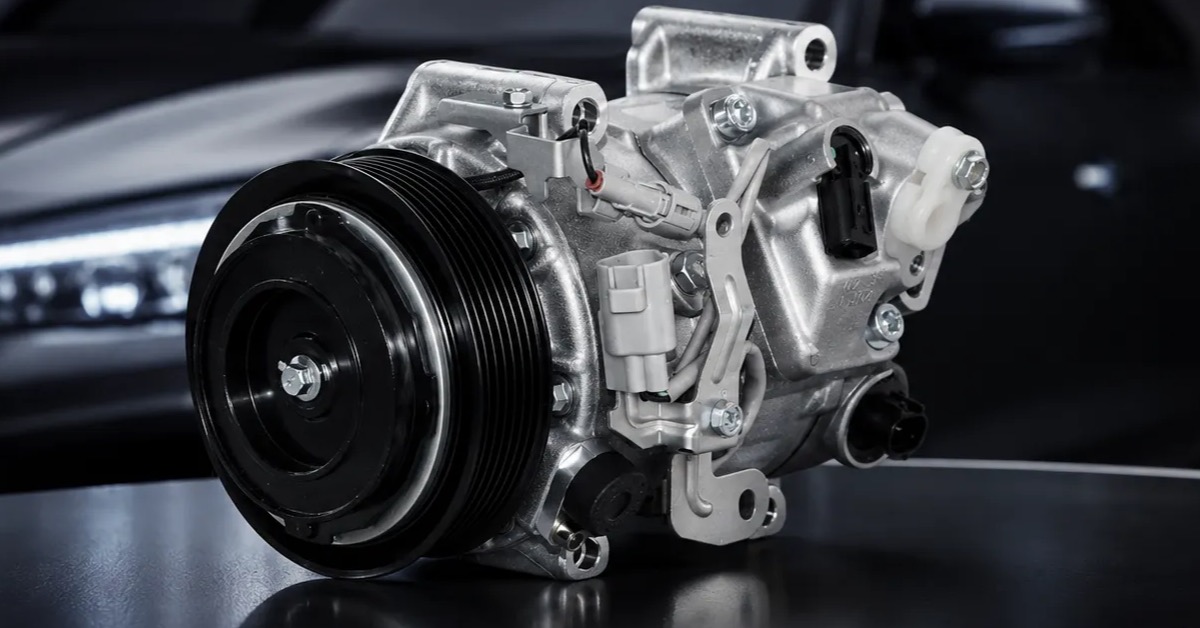
Choosing an AC expansion valve manufacturer is not simply a matter of finding a compact aluminum part that appears to match a catalog photograph. The valve sits at a critical point in the vehicle air-conditioning circuit: it meters refrigerant into the evaporator and helps separate the high- and low-pressure sides. For sourcing managers and engineering teams, the real decision is whether a supplier can provide the correct vehicle-specific geometry, controlled machining, dependable sealing, and a repeatable validation process.
This ZUA Auto Parts resource helps distributors organize the evidence needed before quotation; confirm the exact application, interfaces, tests, and supplied scope for every requested part.
This guide explains what can be identified from a typical automotive expansion-valve assembly, which manufacturing details deserve attention, and how buyers should qualify a supplier before requesting production quantities. It is especially relevant to aftermarket brands, HVAC distributors, repair networks, and vehicle-component companies evaluating an auto expansion valve supplier.
What an automotive expansion valve does
An expansion valve meters refrigerant as it enters the vehicle evaporator. It is positioned between the higher-pressure liquid side of the air-conditioning system and the lower-pressure evaporator side. By controlling flow, the valve supports the evaporator’s ability to absorb heat from the cabin or equipment compartment.
That description sounds straightforward, but the component is sensitive to application details. Port arrangement, internal passages, actuator characteristics, refrigerant compatibility, and the intended evaporator all affect whether a valve is suitable. A part with the same general outline may still be wrong because of a different internal calibration, thread, sealing arrangement, or vehicle fitment.
For this reason, buyers should treat visual similarity as an initial screening step, not as proof of interchangeability. A supplier should be able to work from drawings, samples, OE references, or vehicle-specific data before confirming a production part.
Quick reference: what to verify before buying
| Area | Why it matters | What to request |
|---|---|---|
| Valve identification | Different expansion-valve designs may look similar externally. | Part number, drawing, application list, or sample-based identification. |
| Port geometry | Incorrect bore size, thread, spacing, or orientation can prevent installation. | Dimensioned drawing and controlled port specifications. |
| Refrigerant and pressure conditions | The internal design and sealing system must suit the intended HVAC circuit. | Confirmed refrigerant compatibility and operating requirements. |
| Machining quality | Burrs, contamination, or poor surface finish can affect flow and sealing. | Inspection method, deburring process, and sample inspection records where available. |
| Leak control | Small leakage can compromise system performance and service life. | Applicable leak-test method and acceptance criteria. |
| Production support | Aftermarket and OEM/ODM programs require repeatability, not only a workable prototype. | Process flow, assembly controls, traceability, and change-management practice. |
Reading the visible construction of the valve
The product shown appears to be a compact block-style automotive air-conditioning valve, likely a thermostatic expansion valve or a closely related refrigerant metering valve. The identification is based on its machined body, several refrigerant ports, and the domed actuator or sensing section mounted on top. The exact valve type should still be confirmed through technical documentation.
The body appears to be machined aluminum or an aluminum alloy with a bright bare-metal finish. Its rectangular form has stepped and radiused edges, a shape commonly suited to tight installation spaces around an automotive evaporator. The visible face includes one larger upper circular port, two smaller adjacent ports, a smaller central threaded or drilled opening, and a larger lower circular port. These features indicate a multi-port refrigerant component, but they do not by themselves establish the port specifications or the internal flow path.
Visible circular bores and the relatively compact body suggest a manufacturing route involving CNC machining or precision drilling, followed by deburring and port finishing. The top cap is a separate metallic component with a circular stamped or formed profile. It appears to serve as part of the actuator or sensing assembly. Internal passages and a slender internal element can be seen through the openings, although the image does not reveal the complete internal design, calibration, or sealing method.
That distinction matters during procurement. A polished machined body may indicate careful production, but appearance cannot verify leak tightness, flow behavior, or actuator response. Buyers should ask how the supplier controls internal cleanliness and how it prevents chips or burrs from remaining in drilled passages.
Manufacturing and quality considerations
Machining and port finishing
For a valve body of this type, machining accuracy is important at the interfaces rather than only on the exterior. Port locations, bore geometry, thread condition, and surface finish influence installation and sealing. Deburring should be treated as a defined process step, especially where intersecting drilled passages can leave sharp edges or loose particles.
A capable supplier should be prepared to explain the production sequence: material preparation, CNC machining or drilling, deburring, cleaning, inspection, actuator installation, and final testing. The precise sequence may vary, but the controls should be clear enough for a buyer to understand where critical characteristics are checked.
Assembly of the sensing section
The domed top assembly is not merely decorative. As part of the valve’s actuator or sensing system, it may influence how the valve responds to evaporator conditions. The exact mechanism and calibration cannot be confirmed from the supplied product view, so procurement teams should request technical confirmation rather than assume the part is interchangeable with another TXV.
Assembly control is particularly relevant when a supplier offers OEM/ODM development. Ask how the actuator component is positioned, how assembly variation is controlled, and whether the finished unit receives a functional check. If the supplier uses automated assembly, request a description of which operations are automated and which remain operator-dependent.
Leak detection and inspection capability
The manufacturer states that it has helium leak detection, coordinate measurement, vibration testing, salt-spray testing, machining, and automated assembly capabilities. It also states that its quality system is certified to IATF 16949. These capabilities are useful signals when assessing an automotive-component supplier, but they should be connected to the specific valve program.
For example, coordinate measurement may be relevant to external dimensions and port relationships, while helium leak detection may be relevant to sealing verification. That does not mean every listed test is automatically performed on this particular expansion valve. The buyer should ask which controls apply to the quoted part, what the acceptance criteria are, and whether records can be supplied for the agreed inspection plan.
How to select the right supplier
Start with application definition. Provide the vehicle or equipment type, model-year information where relevant, OE or aftermarket reference numbers, refrigerant requirement, available drawings, and a physical sample if the identification is uncertain. A supplier that accepts an image alone without asking for fitment information may be moving too quickly.
Next, separate product confirmation from commercial quotation. Before discussing a car AC expansion valve wholesale program, establish that the supplier can produce the correct port arrangement and internal specification. Confirm the body material, finish, sealing components, actuator configuration, and any required packaging or labeling. Exact tolerances, dimensions, pressure limits, flow capacity, and temperature range should come from the approved drawing or technical datasheet, not from assumptions based on appearance.
It is also worth evaluating engineering communication. OEM/ODM work usually involves drawing review, sample approval, design changes, and controlled release of revised documents. Ask who owns the technical interface, how changes are recorded, and whether production parts can be traced to a defined revision. These administrative details often become practical quality issues later.
Common purchasing mistakes
- Ordering by photograph alone: Similar external bodies can hide different internal calibrations or port specifications.
- Ignoring the sealing arrangement: Thread, gasket, O-ring, and mating-surface details must match the vehicle system.
- Assuming a general automotive certificate covers every part: A stated quality-system certification does not replace part-specific validation.
- Failing to define refrigerant compatibility: The supplier needs the intended system requirements before confirming suitability.
- Skipping sample inspection: Check port orientation, mounting fit, finish, cleanliness, and packaging before approving a larger order.
- Requesting only a unit price: A low price is not useful if the supplier cannot control revisions, leakage, or application accuracy.
A practical aside: if a valve is being sourced for a broad aftermarket catalog, build an application matrix rather than describing it as a universal replacement. Expansion valves are often vehicle-specific, and a clear cross-reference process can prevent costly returns.
Buyer questions to put in the RFQ
- Can you confirm the exact valve type and intended vehicle applications?
- Which drawing, sample, or OE reference will control production?
- What are the port dimensions, thread details, and sealing interfaces?
- Which refrigerants and operating conditions are supported?
- How are the machined passages cleaned and deburred?
- What leak-detection method is used for the finished assembly?
- Which dimensional and functional checks are performed on each batch?
- Can you support OEM/ODM development and controlled engineering changes?
- What packaging protects the ports and actuator during shipment?
FAQ
Is the pictured part definitely a thermostatic expansion valve?
No. Its machined body, multiple refrigerant ports, and top actuator section are consistent with a block-style TXV or related metering valve, but the exact design should be confirmed from technical documentation or application data.
Can this component be used across several vehicle models?
Possibly, but that should not be assumed. Compatibility depends on port geometry, internal characteristics, sealing details, refrigerant requirements, and the vehicle HVAC system. Request a validated application or cross-reference list.
What supplier capabilities are especially relevant?
For this type of component, machining, port finishing, automated or controlled assembly, leak detection, dimensional inspection, and documented change control are all relevant. The stated supplier capabilities include these areas, but the buyer should confirm how they are applied to the specific valve.
Next step for sourcing teams
Prepare a technical RFQ package before comparing suppliers on price. Include the sample or drawing, application references, port and sealing requirements, refrigerant information, inspection expectations, and packaging needs. Then ask the supplier to identify what is confirmed, what requires sample validation, and what remains unknown.
A manufacturer offering automotive air-conditioning components, OEM/ODM support, precision machining, automated assembly, helium leak detection, coordinate measurement, vibration and salt-spray testing, and an IATF 16949-certified quality system may be a useful candidate for evaluation. The final decision, however, should rest on part-specific evidence: approved geometry, controlled assembly, suitable testing, and repeatable production performance.