How to Evaluate an Auto Cooling Fan Supplier for Automotive Replacement and OEM Programs
For a ZUA Auto Parts inquiry, use this framework to separate confirmed product data from buyer-owned validation and open questions before approving a sample or order.
Choosing an auto cooling fan supplier is not simply a matter of comparing fan diameter or counting blades. A complete electric cooling fan assembly must fit the vehicle’s heat exchanger, connect correctly to the electrical system, provide suitable airflow, and withstand the thermal and vibration conditions of road use. For sourcing managers and product teams, the real decision is whether a supplier can deliver a compatible, repeatable fan-and-shroud assembly for the intended vehicle program—not merely a product that looks similar in a photograph.
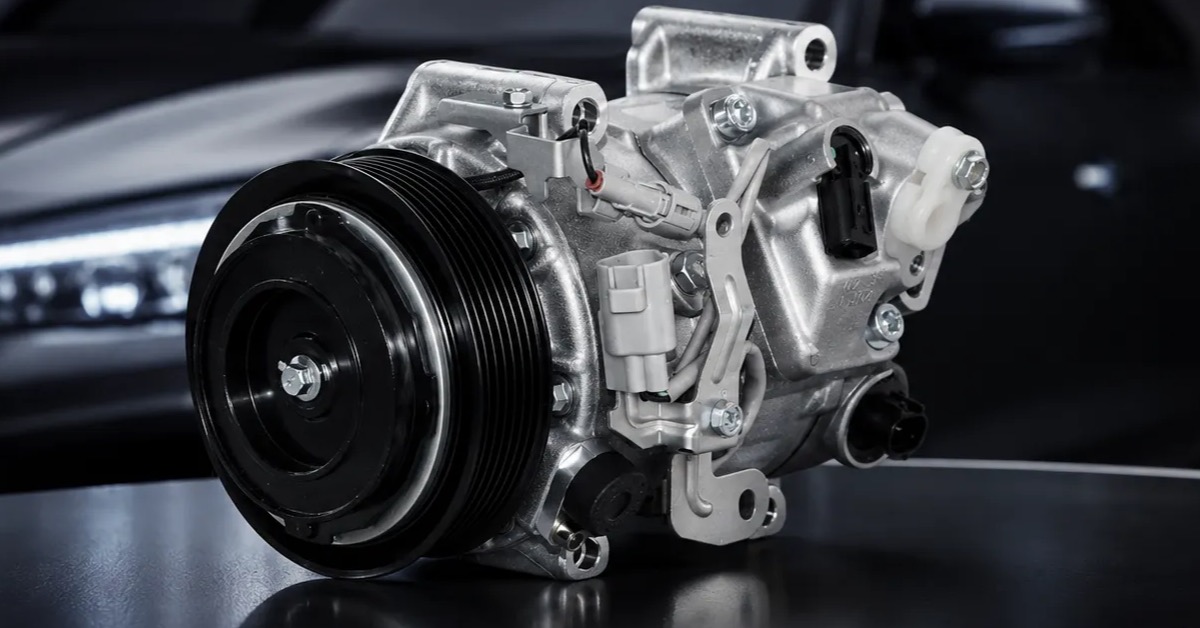
The dual electric fan assembly shown in the supplied product information is a useful example. It combines two axial fans of different apparent diameters with a molded shroud, mounting features, structural ribs, and a visible electrical connector. The likely purpose is to move air through a radiator, air-conditioning condenser, or combined cooling stack, particularly when vehicle speed is low or the vehicle is stationary. The exact application must still be confirmed against vehicle, heat-exchanger, and electrical requirements.
What Buyers Should Confirm First
| Evaluation area | Why it matters | Information to request |
|---|---|---|
| Vehicle and heat-exchanger fit | A shroud that does not seal or locate correctly can reduce effective airflow and complicate installation. | Vehicle application, part number, mounting drawing, dimensions, and intended radiator or condenser layout. |
| Electrical compatibility | Incorrect voltage, current demand, connector configuration, or control method can cause installation and reliability problems. | Voltage, current draw, connector pinout, fuse requirements, and control strategy. |
| Air-moving performance | Nominal fan size does not by itself establish useful airflow through a heat exchanger. | Airflow, static pressure, speed, operating curves, and test conditions where available. |
| Mechanical durability | The assembly will experience heat, vibration, moisture, and repeated starting cycles. | Material information, temperature capability, balancing controls, validation plan, and service-life data. |
| Commercial and production fit | A technically suitable assembly still has to work within the buyer’s launch and replenishment model. | OEM/ODM capability, trial-order options, small-volume purchasing, packaging, and production communication process. |
This checklist helps separate a genuine sourcing discussion from a catalogue inquiry. If a supplier cannot identify the intended vehicle system or provide the information needed to verify fit, the buyer should treat the assembly as an evaluation sample rather than a confirmed replacement part.
Understanding the Dual-Fan Assembly
Fan geometry and airflow path
The pictured assembly uses two axial fans mounted in a common molded shroud. The different fan diameters may reflect the available space, the shape of the heat exchanger, or a vehicle-specific airflow requirement. That geometry is practical for packaging, but it also means the assembly should be evaluated as a system. Individual motor or blade specifications do not tell the complete story once the fans are installed behind a radiator or condenser.
The shroud is likely intended to guide air through the heat-exchanger surface rather than allowing air to circulate around the fan openings. Its molded ribs, mounting tabs, apertures, and locating features are therefore functional details, not cosmetic additions. Their position affects fit, stiffness, clearance, and the ability to maintain a consistent seal against the surrounding cooling pack.
Materials and manufacturing considerations
The black molded polymer appearance and integrated geometry suggest that the shroud is likely injection molded. The motors, impellers, electrical terminals, fasteners, and wiring would normally be produced or sourced separately before final assembly. These are reasonable manufacturing inferences from the product form, not confirmed process specifications for a particular model.
For a production program, the buyer should ask which polymer is used, what temperature range is supported, and how dimensional stability is controlled. The supplier should also explain how fan balance, motor operation, connector assembly, and final fit are checked. It is not necessary for every supplier to disclose proprietary process details, but the purchaser needs enough evidence to understand how variation will be controlled across batches.
Automotive Radiator Fan Manufacturer or General Component Vendor?
A supplier describing itself as an automotive radiator fan manufacturer should be able to discuss more than molded plastic and motor assembly. The useful questions concern application engineering: how the shroud is matched to the heat exchanger, how mounting variation is managed, how the electrical interface is defined, and how the finished assembly is tested.
The supplied information indicates that the supplier offers product development, testing, customization, OEM/ODM support, trial orders, and small-volume purchasing. Those capabilities can be valuable for aftermarket importers and vehicle-part distributors that need a custom replacement assembly, a private-label product, or an initial validation batch. They are also relevant to product teams developing a new vehicle or cooling-pack configuration.
The supplier states that its quality system is certified to IATF 16949. This should be treated as a company-level claim until the buyer verifies the applicable certificate, scope, and issuing body. It should not be interpreted as proof that the pictured assembly has a particular airflow rating, service life, or vehicle compatibility. Certification status and product performance are related but separate purchasing questions.
Questions to Ask Before Approving a Sample
Fit and installation
Request a controlled drawing or dimensional file showing the overall envelope, mounting points, connector location, fan openings, and clearance zones. Ask whether the assembly is supplied as a complete fan-and-shroud module or whether motors, blades, wiring, and mounting hardware are separate options. Confirm whether the part is designed for a radiator, condenser, intercooler, or combined cooling pack.
Do not rely on visual similarity. Two assemblies can have comparable fan openings while differing in mounting tabs, shroud depth, connector position, or clearance to adjacent engine components. These differences often create more installation work than the buyer expected.
Electrical and control requirements
The visible connector does not reveal its pinout or control method. Ask whether the fans operate independently, together, in stages, or through variable-speed control. Confirm nominal voltage, current draw, power requirements, fuse recommendations, connector mating information, and the intended switching or vehicle-control interface.
This point deserves particular attention in aftermarket programs. A mechanically compatible assembly can still fail as a replacement if the vehicle’s control module does not recognize the motor arrangement or if the circuit cannot support the electrical load.
Performance and validation
Ask for airflow and static-pressure data under defined test conditions rather than accepting a single headline airflow number. The useful performance of a fan depends on resistance from the radiator, condenser, grille, shroud, and surrounding vehicle structure. Request information on rotational speed, noise evaluation, thermal testing, vibration testing, and repeated start-stop operation where relevant.
If formal test results are not available at the quotation stage, agree on what will be measured during sample approval. This is often more productive than asking for broad claims that cannot be traced to a test method.
Common Sourcing Mistakes
- Specifying only fan diameter: Diameter is easy to compare, but it does not establish airflow through the installed heat exchanger.
- Ignoring the shroud: The shroud controls the airflow path and often determines whether the assembly can be installed without modification.
- Assuming the connector is standard: Connector appearance is not enough to confirm pinout, current capacity, or control compatibility.
- Requesting price before defining the part: A quotation based on an unclear image may exclude wiring, hardware, packaging, or vehicle-specific features.
- Treating a trial order as a production approval: A small batch can reveal fit and assembly issues, but the buyer should still define change control and repeatability expectations for later orders.
When Car Cooling Fan Wholesale Makes Sense
Car cooling fan wholesale purchasing can suit distributors, repair networks, and importers that have established demand for a defined group of replacement applications. It is less suitable when the buyer has not yet confirmed compatibility or expects one generic assembly to cover multiple vehicle platforms.
For a wholesale program, document the part number, supported applications, packaging label, connector configuration, and revision status. If several assemblies look similar, require clear identification to prevent mixed inventory. A supplier able to support OEM/ODM development and small-volume purchasing may also be useful for testing a new application before committing to a larger commercial program.
Practical Buyer Advice
Send the supplier the vehicle application, existing part number, heat-exchanger dimensions, mounting information, electrical requirements, and expected use case. Include photographs only as supporting material; drawings and measured interfaces are more reliable. Ask the supplier to mark which specifications are confirmed, which are estimated, and which require sample verification.
For the pictured dual-fan design, the next sensible step is a structured sample review: inspect mounting alignment, shroud clearance, connector access, blade rotation, fan sequencing, and interference with the radiator or condenser. Performance testing should then be carried out in the intended installation configuration, because bench results without the relevant airflow resistance may not represent vehicle behavior.
Frequently Asked Questions
Is this assembly definitely a radiator fan?
It appears to be an automotive dual electric cooling fan assembly intended to move air through a radiator, condenser, or combined cooling stack. The supplied information does not confirm the exact vehicle system or application.
Can the two fans be controlled separately?
That cannot be determined from the available product view. The buyer should request the wiring diagram, connector pinout, and control description before approving the part.
Does the image confirm the fan’s performance?
No. The image shows construction and geometry, but it does not establish airflow, static pressure, speed, noise, current draw, or service life.
What should an OEM or aftermarket buyer request first?
Start with a compatible part number or vehicle application, dimensional drawing, electrical specification, connector details, material information, available validation data, and confirmation of customization or trial-order support.
Next Step for Sourcing Teams
Use the dual-fan assembly as a starting point for a documented technical inquiry, not as a substitute for a specification. Ask the supplier to confirm the intended application, provide controlled mechanical and electrical data, explain the validation process, and identify the boundaries of what has been verified. That approach gives engineers a sound basis for sample approval and gives purchasing teams a clearer comparison between suppliers, whether the project involves a replacement part, a private-label range, or an OEM/ODM cooling module.