An ISO 14001 auto parts manufacturer should be evaluated through more than a certificate image. Automotive buyers need to confirm the legal entity, certified site, scope, validity, environmental responsibilities, operating controls, evidence records, and connection between the management system and the product program. This prevents a general environmental claim from being treated as proof for an unverified factory, process, or supplier.
ZUA Auto Parts uses this buyer-focused framework to turn the topic into a clearer product inquiry, while application, construction, and evidence must still be confirmed for each SKU.
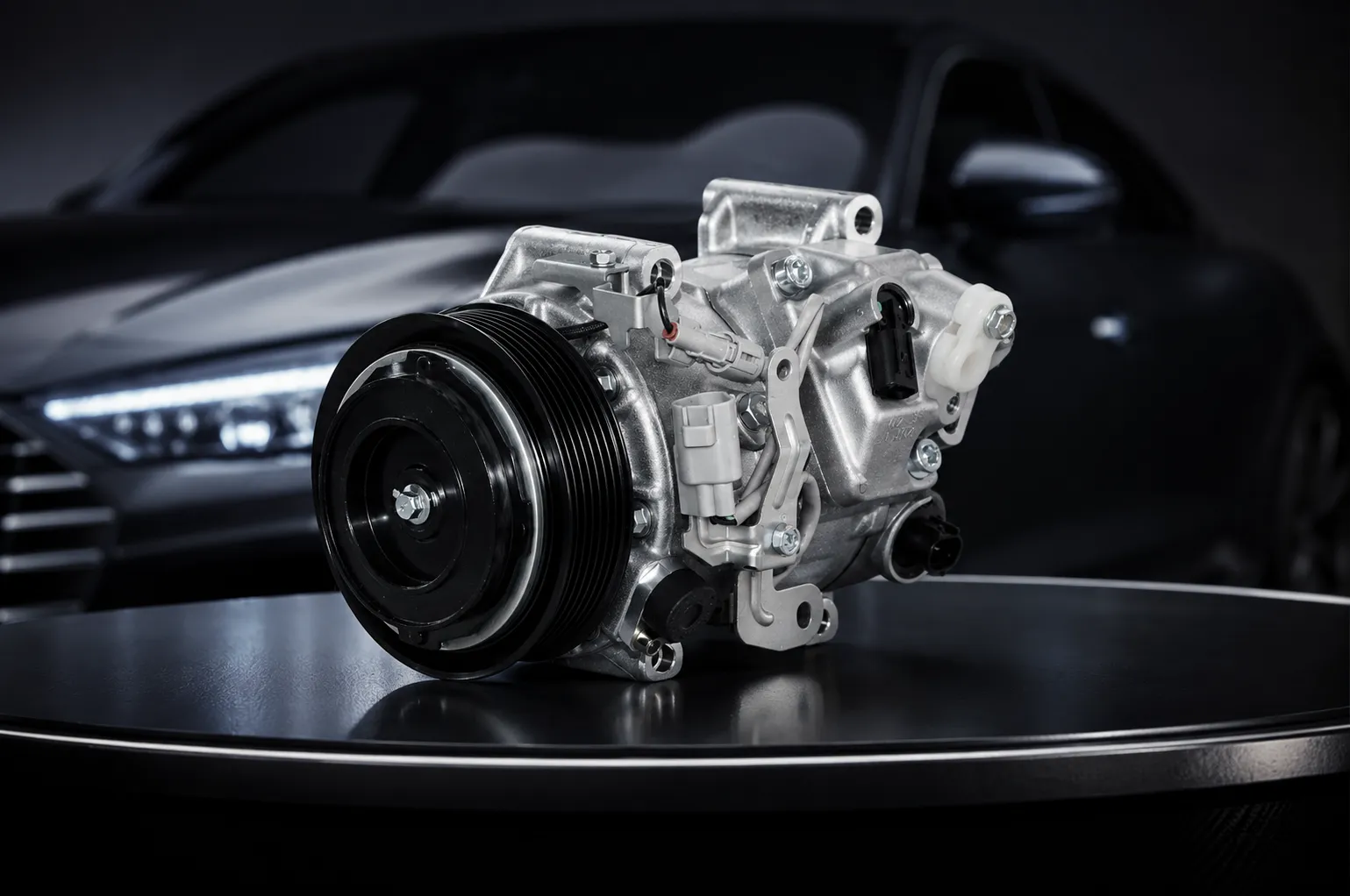
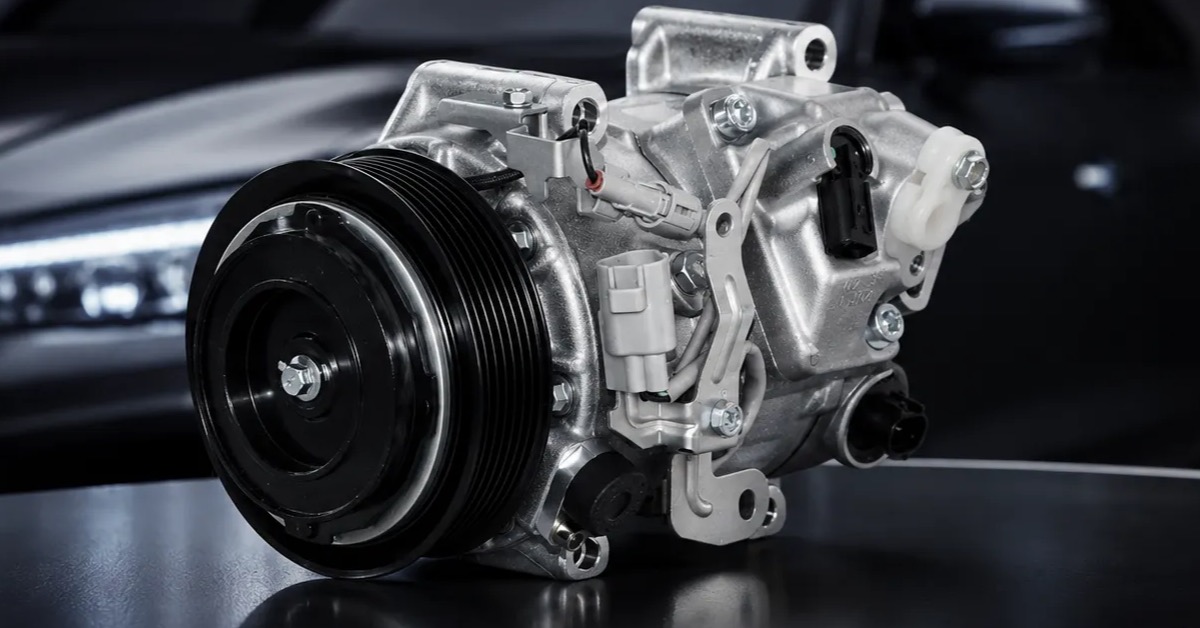
Guangzhou Berlin Auto Parts Manufacturing Co., Ltd. presents ISO 14001 among its company credentials and identifies automotive A/C compressors as its core manufacturing focus. This guide explains how importers, distributors, OEM project teams, and private-label buyers can review environmental-management evidence without inventing sustainability claims or confusing a system certificate with product performance.

Begin with certificate identity and scope
Ask for the current certificate as a controlled document. Check the organization name, site address, certification body, certificate number, issue and expiry dates, activity scope, standard reference, and any listed exclusions. The company that signs the quotation should be clearly connected to the certified site and the production route used for the quoted part.
If a group has several sites, do not assume that one certificate covers all factories, warehouses, laboratories, or partner facilities. Record which activities occur at each location and who owns environmental controls for machining, cleaning, assembly, testing, packing, storage, and waste handling.
Separate environmental management from product approval
| Evidence layer | What it can support | What it cannot prove alone |
|---|---|---|
| ISO 14001 certificate | Environmental-management system scope | Exact product fitment or performance |
| Environmental aspect register | Identification of significant impacts | Compliance at every process without records |
| Operating procedure | Defined control and responsibility | Consistent execution without observation |
| Monitoring record | Measured or inspected activity | Future performance after an uncontrolled change |
| Product test report | Part-specific technical evidence | Complete environmental-system maturity |
| Supplier declaration | Starting point for clarification | Independent verification |
Map environmental aspects to the actual process
A useful review follows the product through the factory. For automotive compressors, potential aspects may involve energy use, metal machining, cleaning agents, oils, refrigerant-related test media, water, scrap, packaging, noise, leaks, maintenance materials, and waste segregation. The supplier should determine which aspects are significant under its own controlled method.
Ask how normal operation, startup, shutdown, maintenance, abnormal conditions, and emergencies are considered. An ISO 14001 auto parts manufacturer should be able to explain the process-specific control, responsible role, monitoring method, retained record, and reaction when a limit or requirement is not met.
Review legal and other compliance obligations
Request an explanation of how applicable environmental obligations are identified, updated, assigned, and evaluated. The relevant requirements depend on site, process, materials, emissions, waste, water, chemicals, transport, and destination-market responsibilities. Buyers should not prescribe a universal legal checklist from another country.
Look for a controlled register, responsible owner, update source, evaluation schedule, findings, corrective actions, and closure evidence. If a buyer adds restricted materials, special packaging, reporting, or customer-specific rules, place those obligations in the contract and program documents rather than relying on a generic policy statement.
Walk the site with evidence questions
During an on-site or video review, observe chemical identification, secondary containment, waste bins, scrap routes, maintenance areas, spill response, drain protection, housekeeping, ventilation, storage, equipment condition, and emergency materials. Ask operators what they do during an abnormal event and where the current instruction is located.
Photographs are useful only when dated and connected to a location and process. A clean demonstration area does not represent the complete site. Sample records from different shifts and periods, and compare the written control with actual behavior.
Connect objectives to measurable improvement
Environmental objectives should have a baseline, target, owner, action, timing, monitoring method, and review result. Examples may concern energy, resource use, waste, packaging, leakage, or process efficiency, but the company should select objectives based on its significant aspects and business context.
Do not convert an internal target into a marketing claim without approved data boundaries. Ask whether the result is absolute or intensity-based, which site and period it covers, whether production volume changed, and how the calculation is checked. This prevents an improvement statement from becoming misleading green language.
Check competence, awareness, and emergency readiness
Identify roles that can create a significant environmental impact: operators, maintenance staff, chemical handlers, warehouse teams, contractors, and emergency responders. Review competence requirements, training, attendance, effectiveness checks, and refresher triggers. A signed training sheet alone does not show that a person can respond correctly.
For emergency preparedness, ask about credible scenarios, notification, containment, equipment, drills, findings, and corrective actions. The scenarios should reflect the site rather than a generic template. Verify that lessons from a drill result in updated controls where needed.
Include outsourced processes and suppliers
Environmental responsibility does not stop at the factory gate. Clarify how plating, heat treatment, casting, machining, transport, waste service, packaging, and other outsourced activities are evaluated when relevant to the product route. The level of control should reflect risk, legal obligations, and the supplier's influence.
For categories outside ZUA's core compressor manufacturing, ask whether the item is manufactured, assembled, or sourced through a qualified partner. Record who approves the production site, verifies environmental and quality evidence, controls changes, and responds to customer questions.
Audit records without requesting unnecessary volume
Use a focused sample: one significant aspect, one operational control, one monitoring record, one compliance evaluation, one nonconformity, one corrective action, one training record, and one management-review input. Trace each item from requirement to execution and closure. This provides more insight than collecting hundreds of unreviewed files.
The official ISO 14001 standard page provides context for environmental management systems. Buyers should use the applicable certificate and contract documents for the supplier program rather than treating a web summary as audit evidence.
Link environmental evidence to the RFQ
State the product family, production site, expected processes, destination markets, packaging, restricted-material requirements, reporting needs, audit rights, document retention, and change-notification expectations. Keep environmental requirements proportionate to the project and identify which items are mandatory before sample, approval, or production.
Buyers can review the ZUA company and certification information, browse its compressor range, and inspect the broader product categories. Use the contact page to request the current certificate scope and program-specific evidence.
Avoid common environmental-claim mistakes
Do not state that a product is environmentally friendly, carbon neutral, recyclable, low emission, or compliant in every country without a defined claim, method, boundary, and evidence. Certification of a management system does not automatically validate a product-level environmental claim.
A credible ISO 14001 auto parts manufacturer review distinguishes policy, system, site controls, records, product evidence, and marketing language. Keep uncertain items open until the responsible party supplies proof.
Build a reusable environmental supplier file
Keep the certificate, scope review, aspect summary, site evidence, program requirements, open issues, corrective actions, changes, and approval decision in one controlled folder. Add review dates and owners. When a process, site, supplier, chemical, or packaging method changes, assess whether the existing conclusion remains valid.
Update the file with delivery and after-sales evidence. This turns the environmental review into a working supplier-management tool rather than a one-time document collection exercise.
Review corrective action and management oversight
Sample one environmental nonconformity from detection through containment, cause analysis, corrective action, verification, and closure. Check whether the response changed a process, instruction, training, maintenance plan, supplier control, or monitoring activity. Repeated temporary cleanup without cause removal is a weak signal.
Ask how management reviews performance, compliance status, objectives, resources, risks, audit results, incidents, and changing obligations. For an ISO 14001 auto parts manufacturer, leadership evidence should show decisions and follow-up rather than a meeting record with no assigned action.
Compare suppliers without creating a false green score
Use evidence categories such as certificate verified, scope applicable, significant controls observed, compliance review current, corrective actions effective, and buyer requirements agreed. Do not combine unrelated environmental indicators into a single percentage unless the buyer has defined the method and risk weighting.
An ISO 14001 auto parts manufacturer can be suitable for one process and still require additional evidence for another site or outsourced activity. Preserve the scope of every conclusion.
Frequently asked questions
What should be checked on an ISO 14001 certificate?
Check the legal entity, site, scope, certification body, certificate number, issue and expiry dates, standard reference, and exclusions.
Does ISO 14001 prove product quality?
No. It concerns an environmental-management system. Product drawings, tests, fitment, process controls, and release evidence remain necessary.
Should every supplier have the same environmental objectives?
No. Objectives should reflect significant aspects, obligations, site context, risks, opportunities, and business priorities.
Can a buyer rely on a certificate logo shown online?
The logo is a starting signal. Request the current certificate and connect its entity, site, and scope to the quoted production route.
How should outsourced processes be reviewed?
Identify the process, responsible supplier, applicable controls, approval evidence, monitoring, change notification, and escalation route.
Does ZUA present ISO 14001 information?
ZUA's about page presents ISO 14001 among its credentials. Buyers should request the current certificate and verify program applicability.
What evidence should be included in an RFQ?
State the site, product, process, markets, packaging, material restrictions, reporting, audit, retention, and change requirements.
How can buyers request ZUA environmental evidence?
Send the product, market, site, document, packaging, and customer-specific requirements through the ZUA contact page.
Verify an ISO 14001 auto parts manufacturer with controlled evidence
An ISO 14001 auto parts manufacturer qualification is strongest when certificate identity, site scope, environmental aspects, legal obligations, operational controls, records, competence, outsourced processes, RFQ requirements, and claims are reviewed together. This evidence-based approach supports a more reliable supplier decision without overstating what certification proves.