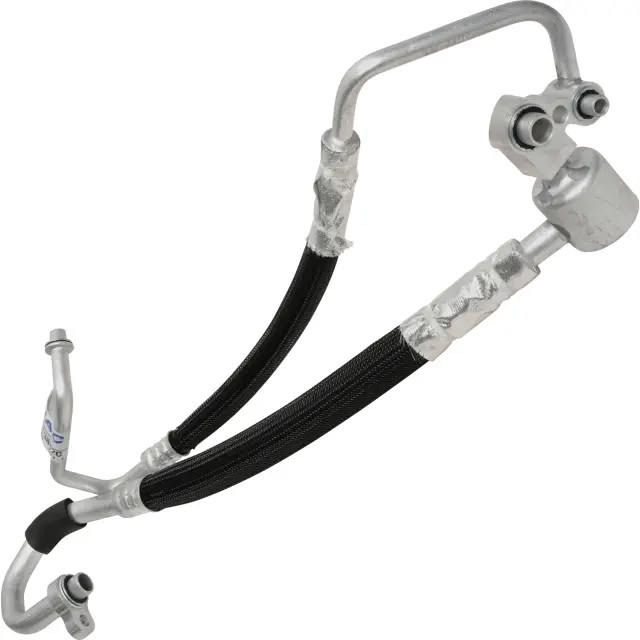
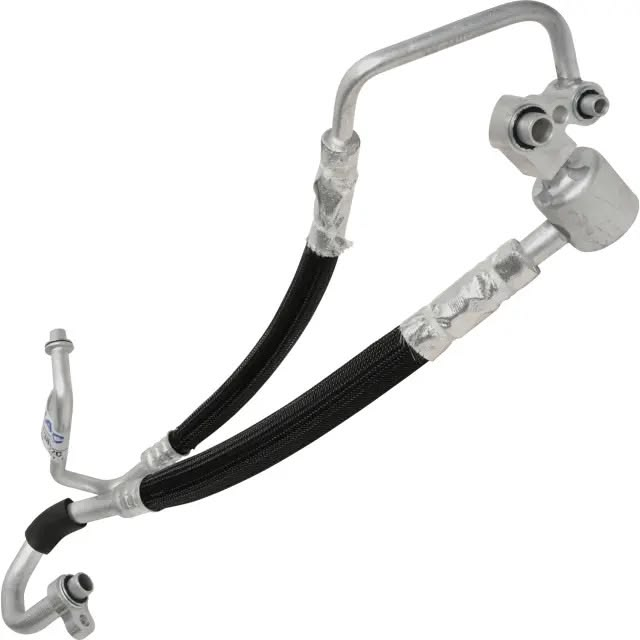
An OEM automotive AC hose assembly is released successfully when its interfaces and process records agree: vehicle routing, refrigerant and lubricant, hose construction, aluminum pipes, fittings, sealing faces, brackets, heat protection, crimp geometry, internal cleanliness, leakage performance, pressure durability, markings, and packaging. A line can look correct on a table yet fail when installed near heat, motion, sharp edges, or limited service space.
For buyers sourcing through ZUA Auto Parts, this framework connects the technical question to a controlled product inquiry; exact fitment and quoted specifications remain SKU-specific.
The practical solution is a stage-gate file. Each gate answers a different question, and tooling or volume production does not move forward until the evidence at the prior gate is complete.
Gate zero: define the application boundary
Record vehicle, model year, engine, HVAC configuration, refrigerant, lubricant, line function, mating components, operating pressure and temperature boundaries, vibration environment, heat sources, motion, installation sequence, service access, and destination-market requirements. Separate confirmed data from assumptions.
If one line is proposed for several applications, create a compatibility matrix. A shared OE reference or similar drawing does not automatically prove identical routing, bracket location, heat exposure, or service procedure.
Gate one: freeze the interface stack
| Interface | Release evidence | Risk if vague |
|---|---|---|
| Ports and sealing | Geometry, finish, seals, cleanliness | Leakage or assembly damage |
| Routing envelope | 3D path, clearance, bend and motion | Rubbing, heat damage, interference |
| Brackets | Datums, orientation, retention, torque | Stress, noise, installation mismatch |
| Hose-to-fitting | Material identity and crimp specification | Pullout, leakage, permeation variation |
| Pipe sections | Alloy, wall, bends, weld or braze route | Cracks, distortion, blockage |
| Protection | Sleeves, shields, caps, transit supports | Abrasion, contamination, shipping damage |
Gate two: validate routing in the vehicle space
Use controlled CAD data, a checked fixture, or the actual vehicle environment. Inspect clearance to exhaust, engine, fans, belts, body edges, fasteners, moving parts, and service tools. Evaluate engine movement, thermal expansion, vibration, steering or suspension motion where relevant, and assembly tolerance.
For an OEM automotive AC hose assembly, minimum bend radius is only one routing variable. Bend location, twist, fitting clocking, bracket sequence, hose free length, and the direction of imposed motion also influence fatigue and installation load.
Gate three: control ports and sealing faces
Freeze port type, sealing concept, groove dimensions, surface finish, flatness, thread or fastener details, bead geometry, protective cap, and the specified service seal. Define inspection datums that reflect the assembled connection.
Handle sealing faces as controlled surfaces. Avoid contact damage, scratches, chips, braze residue, and mixed caps. The packaging and workstation should prevent the accepted port from being damaged after final inspection.
Gate four: identify hose construction and refrigerant scope
Record hose supplier, construction, size, barrier system, reinforcement, cover, date or lot code, approved refrigerant and lubricant context, storage conditions, cutting method, and shelf-life rule where applicable. Do not accept a generic hose family name as complete identity.
The official SAE J2064 page describes scope for coupled automotive refrigerant air-conditioning hose assemblies. Buyers must still identify the applicable revision, refrigerant, customer requirements, construction, tests, and acceptance criteria in program documents.
Gate five: make the crimp a controlled process
The crimp specification should connect fitting, ferrule, hose, insertion depth, orientation, machine, die set, closure target, measurement method, inspection frequency, setup approval, tool wear, maintenance, and reaction plan. Crimp diameter alone may not capture ovality, position, material springback, or incorrect components.
An OEM automotive AC hose assembly crimp record should identify the actual line, machine, tool, operator or automated station, time, lot, measured result, and disposition. First-piece and restart rules should be clear after tool changes, maintenance, material changes, or long stoppages.
Gate six: verify joints in aluminum pipe sections
If the assembly includes welded, brazed, formed, or mechanically joined pipe features, define material, preparation, fixture, process parameters, joint acceptance, distortion checks, and rework boundaries. Inspect internal obstruction as well as external appearance.
Connect periodic destructive or structural verification to routine production screening. The evidence should show why the selected sample and interval represent the process risk.
Gate seven: preserve internal cleanliness
Define cutting and deburring control, washing, flushing, extraction method, particle reporting, residue limits, drying, capped time, storage, workstation cleanliness, and handling. Metal chips, elastomer fragments, oil, water, fibers, and process chemicals can all matter.
Sample at meaningful stages to locate the source of contamination. Final inspection alone may reveal a problem without showing whether it came from cutting, forming, joining, crimping, washing, or packing.
Gate eight: assign each pressure test a question
A leak test screens for a defined leakage threshold. Proof pressure examines response without intended permanent damage. Burst testing supports destructive margin evidence. Pressure cycling evaluates repeated load. Permeation, thermal exposure, vibration, pull, impulse, and refrigerant compatibility answer other questions.
Specify medium, pressure, temperature, dwell, ramp, fixture, sample conditioning, detection, calibration, failure definition, and post-test inspection. For an OEM automotive AC hose assembly, a single leak-test statement cannot replace the full validation matrix.
Gate nine: correlate samples to production intent
Mark every sample with configuration, material lots, equipment, tools, process route, date, and deviation status. Distinguish hand-built prototypes, tool trials, pre-production units, and normal production samples. Approval evidence should show which stage each result represents.
Use the same installation sequence, seals, mating parts, torque, refrigerant preparation, and test setup intended for evaluation. Keep retained samples or controlled photographs of critical routes and interfaces.
Gate ten: package without changing the geometry
Long and irregular assemblies can be bent, twisted, scratched, contaminated, or forced into the wrong clocking during packing. Locate strong pipe or bracket features, protect ports, control coil diameter if coiling is permitted, prevent bracket contact, and show the unpacking sequence.
Validate the final pack through the intended logistics route or justified simulation. Recheck port protection, fitting clocking, bracket position, hose damage, cleanliness, leakage, labels, and scanability after exposure.
Gate eleven: define change notification before approval
List changes that require notification or reapproval: hose construction or source, fittings, ferrules, pipe material, bracket, seals, cap, crimp machine, die, target, joining process, cleaning, leak equipment, production site, packaging, or responsible supplier. State evidence, timing, and inventory segregation.
The buyer should also control vehicle-side changes that affect the line, including mating component, routing, thermal shield, bracket, refrigerant, lubricant, assembly order, or software strategy. An OEM automotive AC hose assembly approval belongs to a defined system configuration.
Gate twelve: audit the first shipment against the OEM automotive AC hose assembly file
Before accepting the first production shipment, select units across cartons, pallets, time periods, and visible lot codes. Compare markings, protective caps, fitting clocking, bracket position, routing shape, hose identity, crimp records, port condition, cleanliness status, leak-screen record, packaging supports, labels, and scan data with the released file. Record both conforming evidence and open deviations.
The audit should also test traceability in reverse. Starting from a finished line, determine whether the team can retrieve the hose lot, fittings, ferrules, pipe or bracket lot, crimp machine and die, joining route, cleaning batch, leak station, operator or automated station, date, and packaging lot appropriate to the program. This does not require every company to use the same database; it requires the agreed evidence to be retrievable. For an OEM automotive AC hose assembly, a successful reverse trace is the final proof that the stage-gate file can support production containment and field analysis.
Connect the release file to ZUA
ZUA lists automotive A/C hose assemblies within its climate-control range. Buyers should confirm exact application coverage, production responsibility, hose and fitting identity, validation ownership, and change controls for the quoted line.
Review the broader product portfolio and company capability information. Send 2D and 3D data, OE references, vehicle information, refrigerant, interfaces, test requirements, sample stage, forecast, and packaging route through the contact page.
Frequently asked questions
Why is a vehicle routing check necessary if the drawing matches?
Drawings may not capture all motion, heat, tolerance, service access, assembly sequence, and neighboring-component conditions.
Is crimp diameter enough to approve the process?
No. Identity, insertion, die, machine, position, ovality, tool condition, setup, frequency, and correlated performance also matter.
What should be frozen for the sealing interface?
Freeze port geometry, finish, flatness, groove, seal, mating part, torque or retention, cleanliness, and protective handling.
Can one leak test cover all validation risks?
No. Leakage, proof, burst, cycling, permeation, thermal, vibration, pull, and compatibility tests answer different questions.
Why control hose shelf life?
Storage time and conditions can affect material handling or performance; use supplier evidence and program requirements to define the rule.
What contamination sources should be reviewed?
Review cutting, deburring, forming, joining, crimping, washing, drying, storage, caps, workstations, and packaging.
Should prototype results approve mass production?
Only when the prototype configuration and process are representative, or when later production-intent evidence closes the differences.
What packaging controls fitting clocking?
Use supports and orientation that avoid forced twist, bending, bracket contact, and load through ports or flexible sections.
Which changes commonly require reapproval?
Hose, fitting, ferrule, pipe, crimp, joining, cleaning, leak test, site, supplier, cap, bracket, and packaging changes are common examples.
What should an RFQ include?
Include vehicle and OE data, drawings, refrigerant, routing, ports, materials, tests, sample stage, forecast, marking, and packaging.
Release the evidence chain
An OEM automotive AC hose assembly is ready for volume only when application boundaries, interfaces, routing, materials, crimping, joints, cleanliness, tests, samples, packaging, and changes form one traceable evidence chain. That file makes approval faster, production reactions clearer, and later field analysis far more credible.