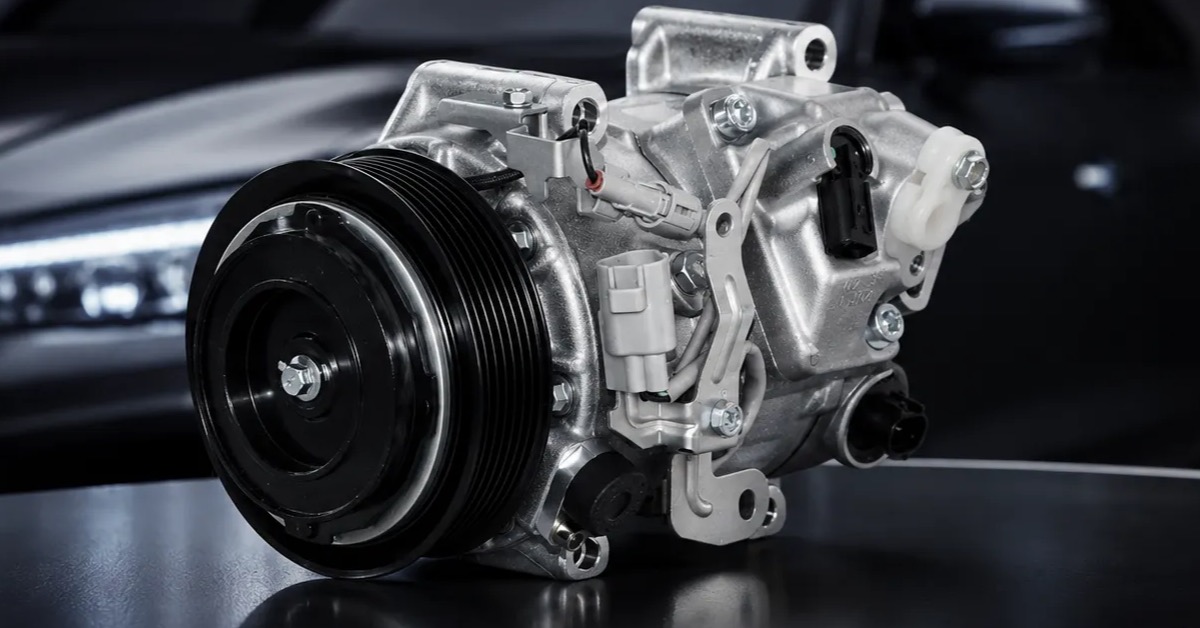
A vehicle climate control actuator supplier can deliver a mechanically attractive part and still create a program failure if the handoff omits door geometry, output indexing, calibration ownership, connector logic, service procedure, or diagnostic evidence. The actuator is not an isolated motor. It is the point where a vehicle controller, harness, HVAC case, linkage, door seal, and software expectation meet.
ZUA Auto Parts uses this buyer-focused framework to turn the topic into a clearer product inquiry, while application, construction, and evidence must still be confirmed for each SKU.
A strong handoff makes responsibilities explicit before quotation and sample approval. It records what the buyer owns, what the supplier owns, what must be measured in the vehicle, and what evidence closes each open question.
Start with the door function, not the actuator name
Name the door: blend, mode, recirculation, fresh-air, shutoff, defrost, or another function. Record vehicle position, linkage, direction, travel, end stops, seal load, normal temperature, contamination risk, and whether multiple actuators appear interchangeable.
Use a controlled application identifier that combines vehicle, HVAC case, door function, output index, and revision. “HVAC actuator” is too broad to own a technical handoff.
The handoff responsibility matrix
| Topic | Buyer or vehicle owner | Supplier response |
|---|---|---|
| Application | Vehicle, HVAC case, door location, market | Confirmed coverage and open gaps |
| Mechanics | Door travel, load, linkage, mounting datums | Output geometry, torque, travel, index |
| Electrical | Harness and controller behavior | Pinout, voltage, feedback, communication |
| Calibration | Service and vehicle learning rules | Initial position, limits, guidance |
| Validation | Vehicle acceptance criteria | Component evidence and deviations |
| Field support | Return and diagnostic data | Analysis path and response owner |
Transfer vehicle climate control actuator supplier geometry in a measurable format
Provide mounting holes, locating features, connector orientation, output shaft or lever shape, reference angle, travel range, housing envelope, and door-side clearances. Use datums and photographs together. A flexible linkage photo without a reference plane cannot define an installation.
For a vehicle climate control actuator supplier, the as-shipped index is a critical field. Accidental rotation during handling can make a correct actuator appear incompatible or damage the HVAC door during installation.
Agree on the control interface boundary
Identify polarity reversal, dedicated command, analog feedback, integrated controller, or vehicle-network communication. Freeze terminal function, voltage range, current behavior, wake and sleep state, feedback scaling, fault reaction, and connector retention. Do not accept connector fit as electrical compatibility.
The vehicle owner should supply controller expectations and relevant diagnostics. The supplier should state what the actuator receives, how it responds, and which conditions are outside the confirmed scope.
Make calibration a shared deliverable
State whether installation requires initialization, relearn, scan-tool operation, command sequence, or no calibration. Define the initial position, travel limits, stop strategy, interruption behavior, and post-calibration confirmation.
Put the procedure in the service data and sample plan. A replacement part can be wrongly returned when the real issue is a blocked door, wrong index, damaged linkage, or skipped relearn.
Describe load without hiding the door
Test free travel and installed-equivalent travel separately. Record torque, current, speed, travel time, feedback, end-stop behavior, and temperature under the loads that represent the application. Include seal load and linkage friction when they are relevant.
Peak torque alone is weak evidence. A current trace through travel can show friction, a stop, ratcheting, protection, or a damaged gear. Define sampling and filtering so supplier and buyer can compare results.
Use a fitment packet that service teams can read
The packet should include vehicle coverage, door function, location illustration, output orientation, connector view, wiring or pinout, installation position, calibration step, common non-product causes, and required return evidence. Keep the language specific to the application rather than copying a generic actuator instruction.
Link the public catalog description to the same controlled application record. If a left or right designation depends on market viewpoint, show the reference position with an image.
Define diagnostic evidence before the first claim
When a field issue occurs, collect fault codes, command, supply and ground, connector images, output position, door and linkage condition, calibration attempt, current or movement observation, vehicle data, mileage, lot, and as-received position. Do not rotate or disassemble the part before documenting it.
Classify the finding as product, application, wiring, door mechanism, calibration, installation, shipping, or insufficient evidence. This classification determines the next action and prevents circular debate.
Review changes through the handoff matrix
Require review for output geometry, gears, motor, feedback element, electronics, connector, firmware, housing, lubricant, supplier, site, test method, service instruction, or packaging changes. A component can remain visually similar while changing travel, noise, current, or calibration behavior.
Update the public fitment record and service data when the change alters application coverage or installation. Keep old and new stock identifiable during the transition.
Use a practical supplier scorecard
Score the handoff on application completeness, geometry evidence, interface clarity, calibration ownership, sample traceability, validation relevance, change notification, field response, and document retrieval. Do not score only price or apparent interchangeability.
Use the scorecard to identify missing evidence, not to create a false precision. A supplier with a clear open-question list may be safer than one that marks every field “confirmed” without supporting data.
Anchor the handoff to the vehicle environment
Use the customer specification to define temperature, vibration, electrical, and service exposures. The ISO 16750-3 overview provides general context for mechanical loads on road-vehicle electrical and electronic equipment, but it is not a substitute for the actuator program's fixture, severity, function status, or acceptance criteria.
Record which evidence is supplier-level and which must be generated in the vehicle HVAC case. This boundary prevents an actuator supplier from being asked to prove a door, linkage, or controller condition that the vehicle team owns, while still requiring the component evidence needed for a sound handoff.
Set the escalation clock before a field issue
Define who receives a fitment question, who owns a suspected product issue, when a vehicle test is required, and which evidence pauses a replacement decision. Separate urgent safety or immobilization concerns from routine catalog corrections. A simple escalation sheet can list symptom, application, evidence received, first response owner, technical owner, containment action, and closure record.
For a vehicle climate control actuator supplier, this matters because the same complaint may move between the workshop, distributor, vehicle team, and factory. A response rule prevents the part from being swapped repeatedly while the door mechanism or calibration remains unchecked. It also protects the supplier relationship by making unanswered questions visible and assigning them to the party best able to close them.
Close the handoff in a witnessed review
Schedule a short review with the buyer, vehicle or HVAC owner, service representative, quality contact, and supplier. Walk through one application from OE reference to door geometry, connector, calibration, sample, test, catalog record, and warranty return. Mark each item accepted, open, or outside scope, and attach the evidence reference beside the decision.
Repeat the review after the first sample or first field case. This catches the small discrepancies that written exchanges often miss: an image viewed from the opposite side, an output index described in vehicle coordinates, a calibration step omitted from service text, or a lot code that cannot be traced. A witnessed closeout makes the vehicle climate control actuator supplier handoff usable by people who were not in the original quotation meeting.
Archive the evidence where the next team can find it
Store the responsibility matrix, drawings, photographs, calibration instruction, test records, sample labels, deviations, meeting decisions, and field-return examples under the controlled application identifier. Give each file a revision and owner. Avoid leaving the only copy in a personal inbox or an unlinked quotation attachment.
When a new buyer, service partner, or engineer joins the program, the archive should explain the current configuration and the reason behind any limitation. Retrieval time is part of supplier performance: a technically capable answer that cannot be found during a field issue still creates delay. Keep the public fitment record, service instruction, and internal evidence linked so a correction can be applied consistently.
Connect actuator sourcing to ZUA
ZUA includes climate-control components in its HVAC product category. Buyers can review the complete product portfolio, read company information, and send the responsibility matrix through the contact page.
Provide OE number, vehicle and HVAC case, door function, output images, connector, calibration requirement, sample quantity, forecast, and desired evidence. Ask ZUA to confirm the exact SKU, production route, and validation responsibility for the requested application.
Frequently asked questions
Why does an actuator handoff need door data?
The actuator's travel, torque, index, and calibration depend on the specific door, linkage, seals, and HVAC case.
Is a matching connector enough?
No. Pinout, voltage, feedback, communication, current, and diagnostic behavior can differ.
Who owns calibration?
Assign ownership explicitly between the vehicle team, service team, and supplier, including the evidence each must provide.
What is an as-shipped index?
It is the controlled output position supplied for installation before the actuator is rotated or calibrated.
What should a fitment packet show?
Show application, door location, output, connector, installation orientation, calibration, and non-product checks.
Why test installed-equivalent load?
Free-running tests cannot represent door seal load, linkage friction, end stops, or case constraints.
What evidence helps a warranty decision?
Capture codes, command, voltage, connector, door condition, calibration, movement, lot, mileage, and as-received position.
Which changes need review?
Review geometry, gears, motor, feedback, electronics, firmware, connector, supplier, site, documents, and packaging changes.
How should uncertain coverage be handled?
Mark it as verification required and list the missing vehicle, case, or interface information.
How can buyers start a ZUA actuator inquiry?
Send OE, vehicle, door function, images, connector, calibration, forecast, samples, and required evidence.
Make the handoff reconstructable
A vehicle climate control actuator supplier relationship works when application ownership, door geometry, control interface, calibration, validation, service data, returns, and changes remain connected. A clear handoff protects both the vehicle program and the supplier from fitment assumptions that cannot be tested later.