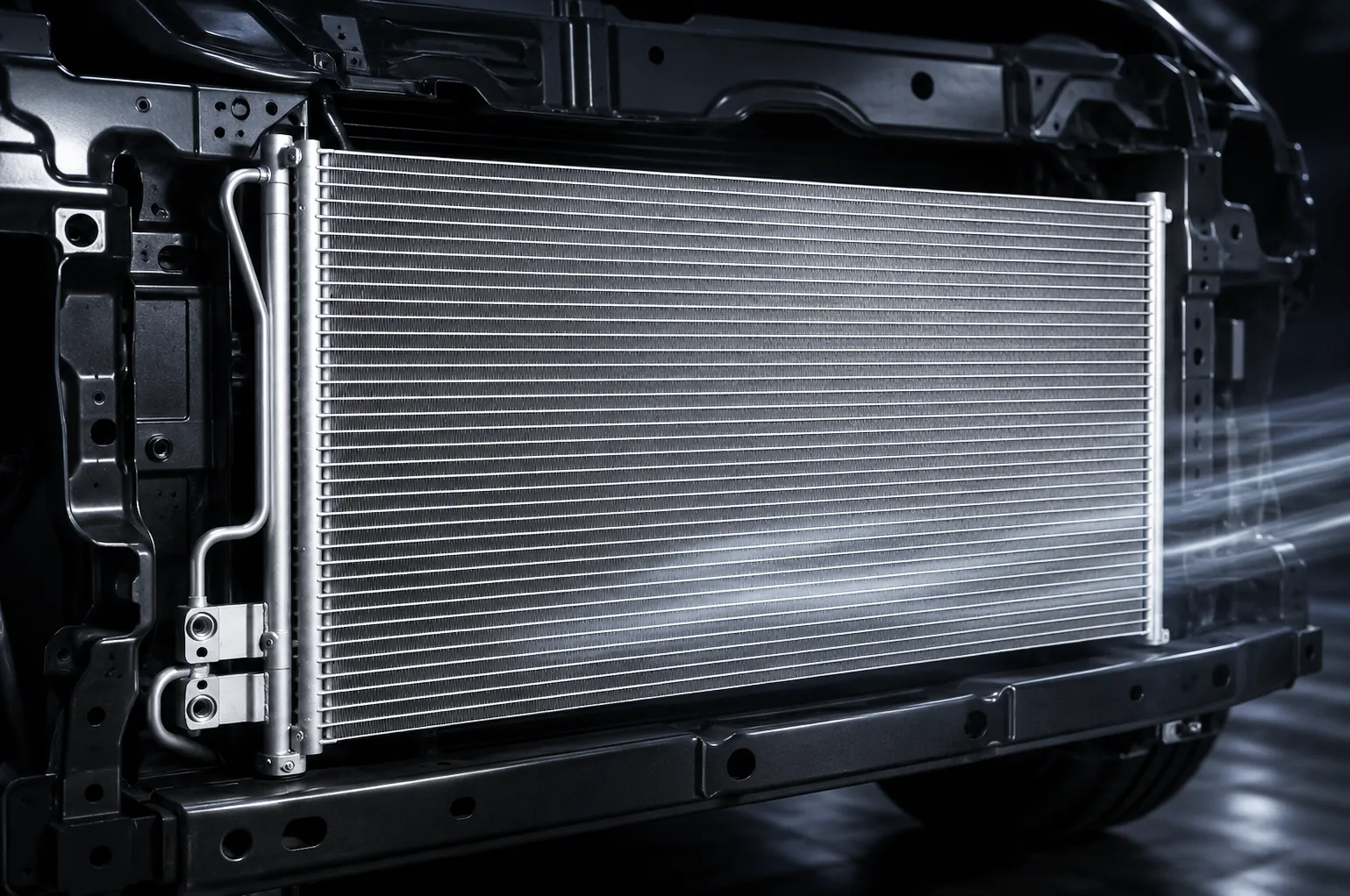
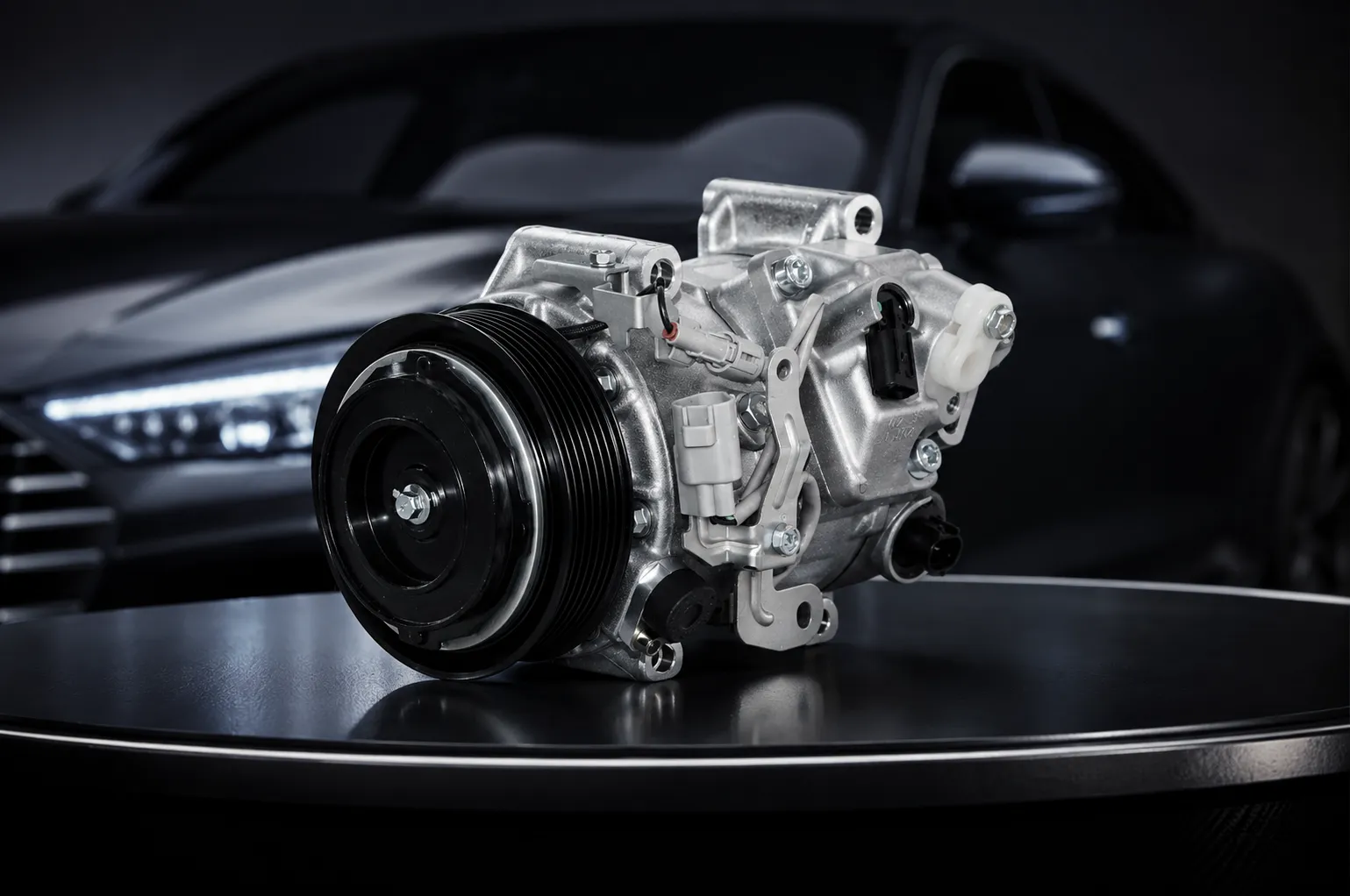
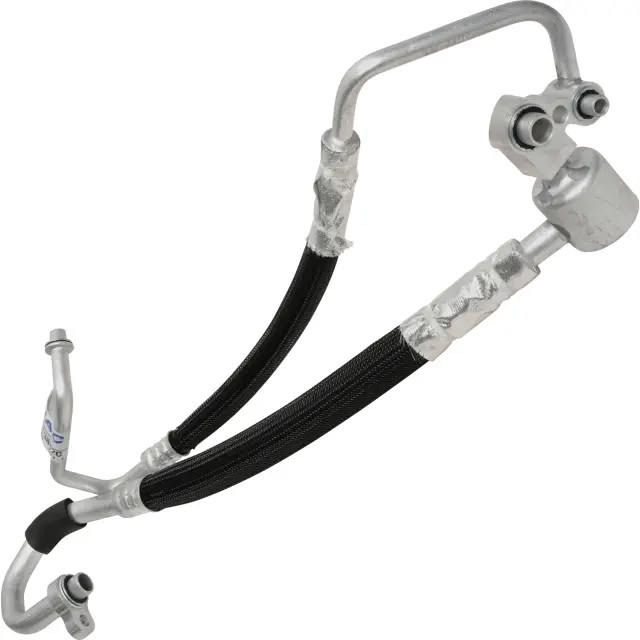
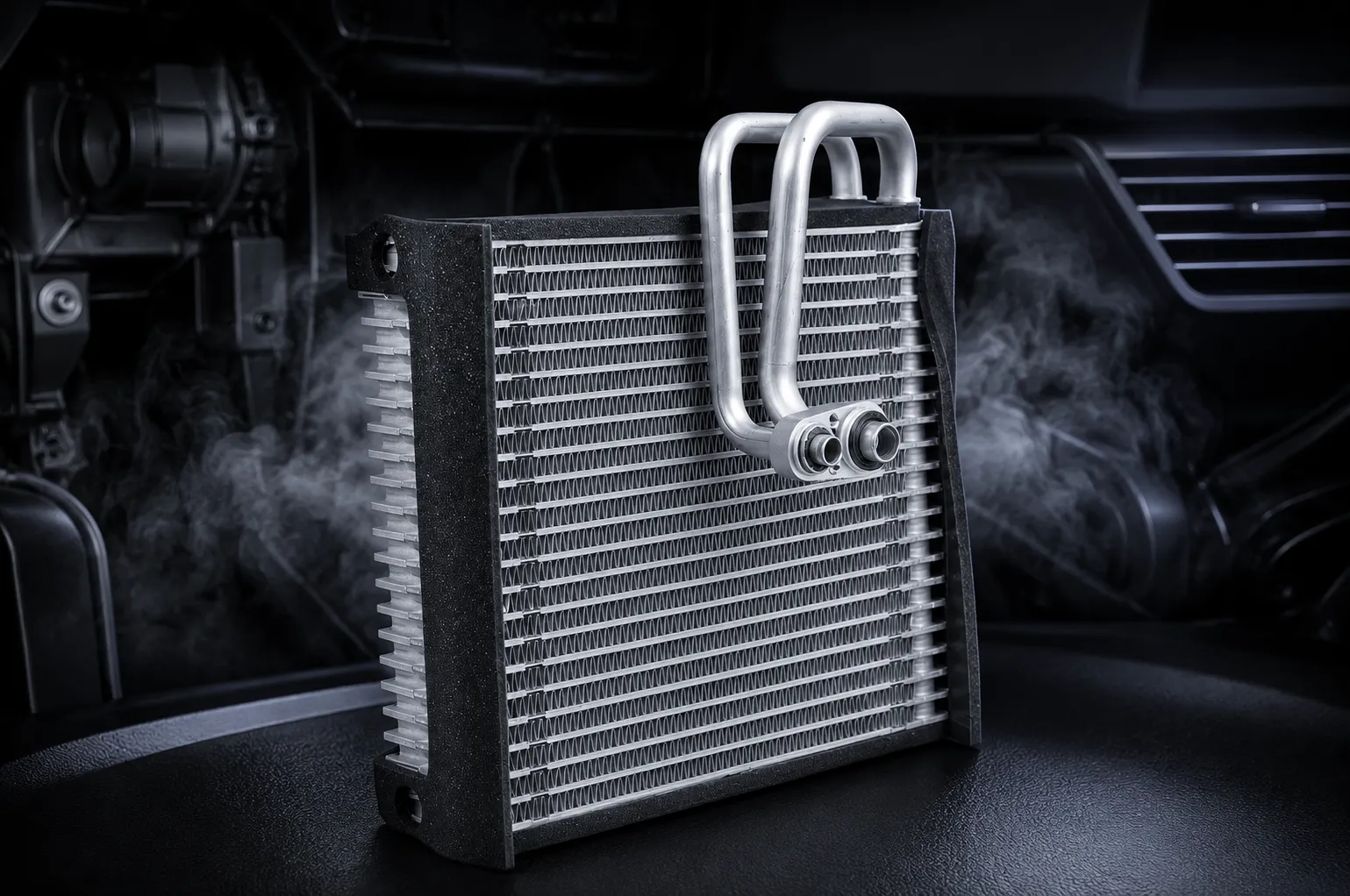
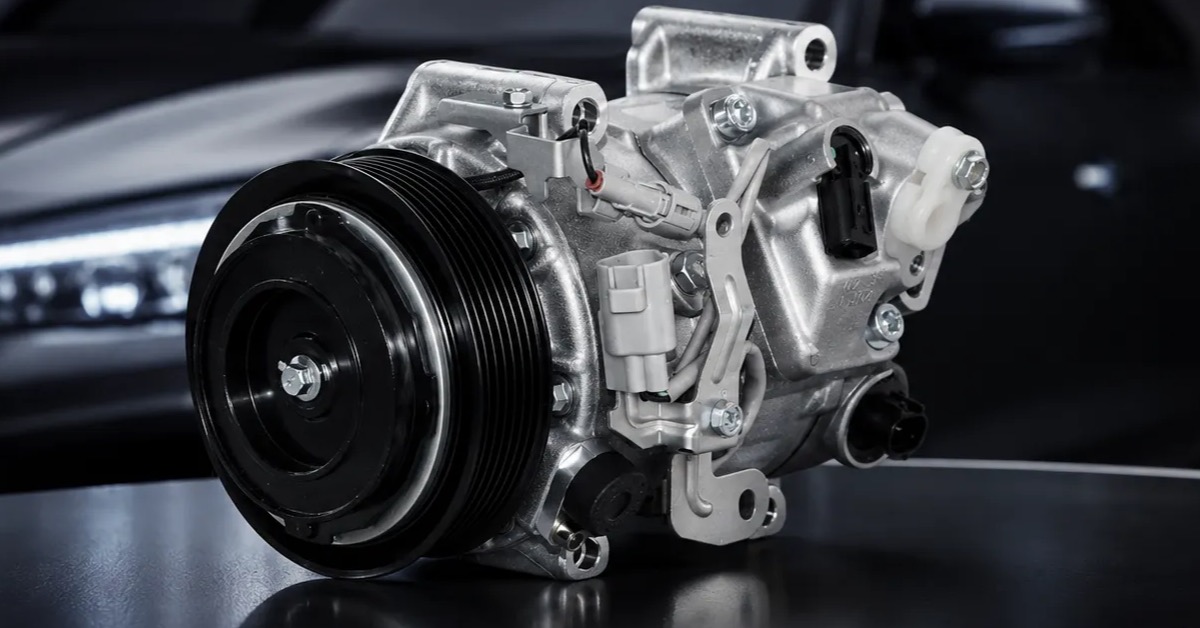
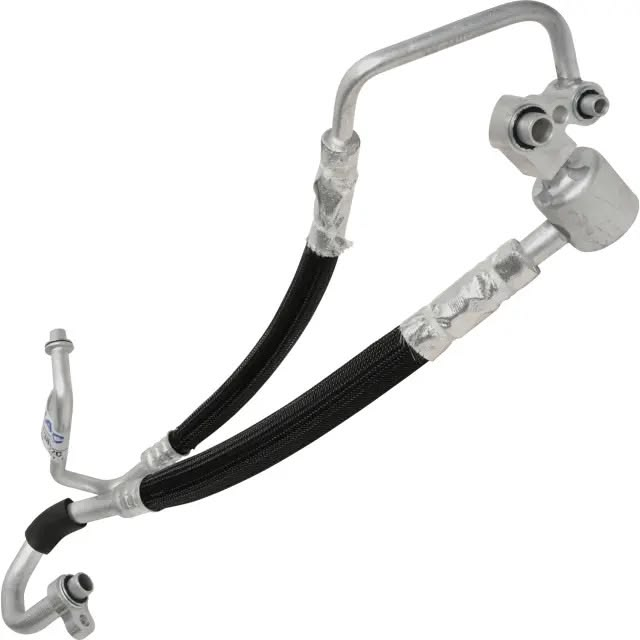
An automotive AC hose supplier China search should begin with the complete refrigerant-line assembly, not a length of hose and a quoted unit price. The sellable part may combine barrier hose, aluminum pipe, formed bends, brazed blocks, service ports, mufflers, brackets, O-rings, protective sleeves, and several crimped joints. A small error in one clocking angle can make an otherwise sound assembly impossible to install.
This guide is for importers, aftermarket brands, distributors, fleet-parts teams, and vehicle-program buyers. It explains how to turn vehicle evidence into a controlled request for quotation, evaluate the supplier's manufacturing route, and preserve the approved assembly through sampling, production, shipment, and warranty review.
Define the exact refrigerant-line assembly first
A vehicle A/C circuit contains different lines serving different pressure and temperature conditions. Do not request an "A/C hose" without identifying the line position, refrigerant, compressor architecture, service-port arrangement, and vehicle application. Record year, make, model, engine, market, body, production break, original part number, and any supersession. Include the removed assembly when available.
Draw the sellable boundary around everything that must arrive in the carton. State whether seals, caps, brackets, clamps, heat shields, sleeves, service-port valves, sensors, or mounting hardware are included. If an installer must transfer a bracket or fitting, say so in the catalog and purchase record. Otherwise, two suppliers can quote different products under the same description.
Use a controlled assembly table before requesting samples:
| Control field | Why it matters | Useful evidence |
|---|---|---|
| Vehicle and line position | Separates similar assemblies with different duties and routes | Application list, OE number, circuit sketch, removed part |
| Refrigerant and oil | Affects hose, seals, cleanliness, and validation | Vehicle specification and agreed material declaration |
| Port interfaces | Controls sealing, service access, and connection identity | Port drawing, thread or pad details, seal type, gauges |
| Routing envelope | Prevents contact, twist, strain, and installation interference | 3D data, fixture, indexed photographs, vehicle trial-fit |
| Kit contents | Keeps quotation, packing, and service expectations aligned | Bill of materials, pack image, label revision |
Freeze routing and end orientation, not only length
Overall length is a weak release characteristic for a shaped line. A hose can match length while a block fitting points toward the wrong component, a bend contacts a belt, or a service port sits under an inaccessible panel. Measure datum-to-datum length, rigid-tube bends, flexible sections, bracket locations, port centerlines, and the clocking of each end. Mark the reference plane on the drawing and inspection fixture.
Photograph the sample in a repeatable orientation with a scale and part label visible. Add close views of every fitting, crimp, bracket, service port, sleeve, and welded or brazed joint. Trial-fit the assembly in the vehicle or a representative installation fixture. Record connection engagement, free movement, clearance from heat and moving parts, clamp alignment, and whether the hose is relaxed rather than twisted after tightening.
For an automotive AC hose supplier China program, the golden sample should include the approved drawing and route fixture result. A loose reference part in an unmarked carton is not enough; it can be damaged, confused with another revision, or interpreted differently by a new inspector.
Match hose, fitting, seal, and refrigerant as one system
The assembly performs through the interaction of its parts. Ask for the hose construction, barrier layer, reinforcement, cover material, fitting and ferrule material, surface treatment, seal material, joining process, and intended refrigerant and oil. Do not accept a statement that each item is individually suitable as proof that the coupled assembly has been validated.
The official SAE J2064 overview distinguishes requirements for coupled automotive refrigerant hose assemblies and notes that compliant hose alone does not ensure that the finished assembly meets the coupled-assembly criteria. Buyers should obtain the applicable customer specification and current standard rather than copying a test limit from an unrelated line.
Confirm whether a proposed material substitution changes permeation, flexibility, chemical compatibility, temperature capability, noise transmission, crimp behavior, or aging performance. The correct response to an "equivalent" hose is a documented comparison and approval decision, not a verbal assurance.
Audit the crimp as a controlled manufacturing process
A crimp joins the hose, ferrule, and fitting under a specific tooling and process window. Ask the supplier to identify the crimp machine, die set, programmed or controlled dimension, inspection method, first-off approval, sampling frequency, and reaction plan. The drawing should make clear where the crimp diameter or other release measurement is taken.
Review cut sections from process-development or validation samples when appropriate. Look for the intended compression and engagement without cutting, folding, displaced reinforcement, damaged barrier material, or poorly seated fittings. A finished crimp can look tidy from the outside while hiding an incorrect hose insertion depth or mismatched ferrule.
Control fitting insertion before crimping. A witness mark, mechanical stop, depth gauge, or vision check can make the condition visible. Record die maintenance and replacement because tool wear may shift the process gradually. If several hose and fitting families run on one line, require setup identification that prevents the wrong program or die from being selected.
Separate leak screening from assembly validation
Production leak screening answers whether an obvious leak is present at the time of test. It does not by itself demonstrate permeation performance, pressure durability, thermal endurance, impulse resistance, vibration survival, or joint retention after aging. Ask the supplier to separate routine line checks from qualification tests and to state the purpose of each.
A useful leak record identifies the test medium, pressure, stabilization time, test duration, temperature, fixture sealing method, acceptance limit, calibration status, and lot link. Define how failed parts are contained and whether retest is allowed. An unqualified statement such as "100 percent leak tested" leaves too many variables unknown.
Build validation around the assembly's actual duty. The program may require pressure cycling, burst, thermal aging, vibration, pull or retention, refrigerant loss, vacuum behavior, corrosion, or customer-specific sequences. Agree on the condition of the assembly before and after each test. Evidence should refer to the approved hose, fittings, crimp settings, and routing revision.
Make cleanliness and open-port control visible
Debris or moisture introduced by a replacement line can circulate through the A/C system and complicate diagnosis. Ask where tubes are cut and formed, how burrs and chips are removed, how brazed areas are cleaned, and how the internal path is protected between operations. Define the cleanliness method and acceptance rule appropriate to the customer program.
Ports should be capped after the final approved process and remain capped through packing and receiving. Verify that caps fit the actual port, resist normal handling, and do not shed material. If the assembly includes a service port or valve core, protect it from impact and define whether its cap is functional, protective, or both.
During an audit, follow one assembly from incoming hose and fittings to the sealed carton. A clean final bench cannot compensate for open parts stored beneath cutting or grinding work. This process walk also reveals how nonconforming parts, rework, and mixed revisions are identified.
Verify brackets, brazed joints, and aluminum tube work
Rigid sections carry their own manufacturing risks. Check tube material and wall specification, bend radii, flattening, end forming, brazed blocks, welded joints, port threads, sealing faces, and surface protection. A bracket that shifts during joining can move the whole route even when every individual component was in tolerance before assembly.
Ask how the supplier fixtures the assembly during brazing, welding, or bracket attachment and how heat distortion is detected. Critical sealing surfaces need protection from spatter, scratches, coating buildup, and handling damage. Go/no-go gauges can be useful for interfaces, while a route fixture can verify the relationship between multiple features.
Salt or environmental exposure may be relevant to the vehicle location and customer specification, but the test method and pass criteria must be defined. Avoid reducing corrosion approval to the color of a new coating. The important question is whether the released material, surface process, and joined assembly meet the agreed requirement.
Score supplier capability with traceable evidence
When comparing an automotive AC hose supplier China shortlist, ask which operations are performed in-house and which are subcontracted. Map ownership for hose sourcing, tube bending, machining, brazing, crimping, leak testing, cleaning, inspection, and packaging. Outsourcing is not automatically a problem, but hidden responsibility makes changes and failures harder to control.
Request recent records tied to a part family rather than a presentation assembled for the visit. Useful evidence includes incoming inspection, setup approval, route-fixture results, crimp measurements, leak logs, calibration status, nonconformance disposition, training records, lot travelers, and corrective actions. Check whether the identifiers on the sample can lead back to those records.
A balanced scorecard should cover application capability, manufacturing controls, validation evidence, capacity, delivery, communication, change management, and claim response. Weight the factors according to program risk. A low-volume service line with difficult fitment may need stronger application support than a simple price comparison suggests.
Run a controlled sample and pilot-lot release
Begin with a documented sample request containing the application record, drawing, critical characteristics, test plan, packaging concept, and due date. When the sample arrives, preserve its label and carton, then inspect the sellable contents before testing. Record every deviation rather than quietly correcting the part during installation.
After sample approval, use a pilot lot to test repeatability. Compare several units for route, clocking, bracket position, crimp measurement, sealing interfaces, visible cleanliness, labels, and pack condition. Review the supplier's production records for the same lot. A successful golden sample does not prove the routine process can repeat it.
Define the release authority and unresolved-item list. Conditional approval should state the condition, owner, evidence required, and deadline. Do not let a commercial shipping date erase an open technical question.
Design packaging around shape and sealing surfaces
Long, irregular assemblies can rub, kink, or bend when packed as loose coils. Specify the permitted bend condition, separators, support points, port caps, protective sleeves, bagging where required, inner quantity, master-carton orientation, and pallet pattern. Prevent heavy fittings from striking adjacent tubes or sealing faces.
Test the pack using the real route, handling method, and storage period. Inspect after transport simulation or a controlled shipment for kinked hose, shifted brackets, bent tubes, loose caps, damaged threads, and abrasion. Packaging approval belongs to the released part configuration; changing carton size or quantity can change the load path.
Align unit, carton, and pallet labels with the controlled SKU, revision where used, and lot identity. Private-label artwork should be approved before volume printing. Keep mixed-SKU pallets visibly mapped so warehouse staff can receive them without opening every carton.
Convert field claims into useful supplier feedback
Not every refrigerant-loss complaint proves a hose defect. Possible causes include installation damage, a reused seal, an incorrect torque or connection, compressor or condenser leakage, damaged service ports, contamination, routing contact, or application mismatch. The claim form should capture the vehicle, part and lot, installation date, refrigerant, symptom, leak location and method, photographs, returned-part condition, and related repairs.
Use a shared cause vocabulary and preserve evidence before cutting the assembly apart. Trend confirmed issues by joint, hose family, fitting, SKU, lot, and installer context. Feed recurring patterns into drawings, fixtures, work instructions, packaging, application data, and supplier corrective actions.
Agree on the warranty decision path before launch. The buyer and supplier should know who authorizes return, who performs analysis, which records are required, and how urgent containment is communicated.
Build a precise ZUA sourcing inquiry
ZUA lists automotive A/C hose assemblies within its climate-control range. Related guidance covers vehicle-specific fitment data, A/C hose quality testing, and an OEM hose-assembly release process. These pages help a buyer organize the inquiry, but exact application coverage and production responsibility still need confirmation for the quoted SKU.
For buyers evaluating an automotive AC hose supplier China inquiry, the quality of the evidence pack determines how precisely each source can respond. Send ZUA the vehicle list, OE references, circuit position, removed-part photographs, dimensional or 3D data, refrigerant and oil, required kit contents, forecast, sample quantity, destination, labels, test requirements, and expected warranty process. Ask for the assembly drawing, material summary, crimp controls, leak method, traceability route, pack proposal, change rule, lead time, and stated unknowns.
The ZUA contact page is the practical route for the RFQ. The first reply should be treated as the start of technical clarification, not as automatic approval of every cross-reference.
Questions buyers ask about an automotive AC hose supplier China
What should I send with the first hose-assembly inquiry?
Send the vehicle and market, OE number, circuit position, refrigerant, removed-part photographs, route and port details, kit boundary, forecast, destination, and required validation.
Why is overall hose length not enough?
Length does not control end clocking, rigid-tube bends, bracket positions, port orientation, service access, or clearance from heat and moving parts.
Should the hose and coupled assembly be approved separately?
Yes. Hose material evidence is useful, but the completed assembly also depends on its fittings, ferrules, crimp process, joints, seals, and routing.
Which crimp records should a buyer request?
Request the machine and die identity, setup approval, insertion control, measurement location, process limits, sampling frequency, tool maintenance, and reaction plan.
Does 100 percent leak testing prove durability?
No. Production screening can identify current leaks, while durability requires a separate validation plan for the expected pressure, temperature, vibration, aging, and environmental duty.
How should cleanliness be specified?
Use the customer or program method, defined sample preparation, measurable acceptance criteria, controlled cleaning, and capped ports linked to the final process.
What must a route fixture check?
It should check critical datums, port positions, end orientation, tube bends, bracket locations, service ports, and the relationship between features that affect installation.
When is a pilot lot necessary?
Use a pilot lot before scale-up when repeatability, new tooling, a new line, difficult routing, new packaging, or a new supplier creates meaningful release risk.
Which changes require buyer notification?
Require review for changes to hose, fittings, seals, ferrules, crimp equipment or settings, tube or joining processes, factory, subcontractor, test method, labels, and packaging.
How can I compare two Chinese hose suppliers fairly?
Compare the same assembly boundary and score application evidence, manufacturing control, validation, traceability, capacity, packaging, change management, and claim response before price.
Choose an automotive AC hose supplier China with a repeatable release system
The right automotive AC hose supplier China connects the vehicle record to the routed assembly, material combination, crimp process, leak and durability evidence, cleanliness controls, packaging, lot history, and change decisions. That record is what allows a buyer to expand from one approved sample to repeatable supply.
ZUA Auto Parts can review the application and commercial boundary before quotation. Give the team an indexed evidence pack, keep assumptions visible, and make the approved drawing, golden sample, validation result, pilot lot, label, and packaging version part of one release file.