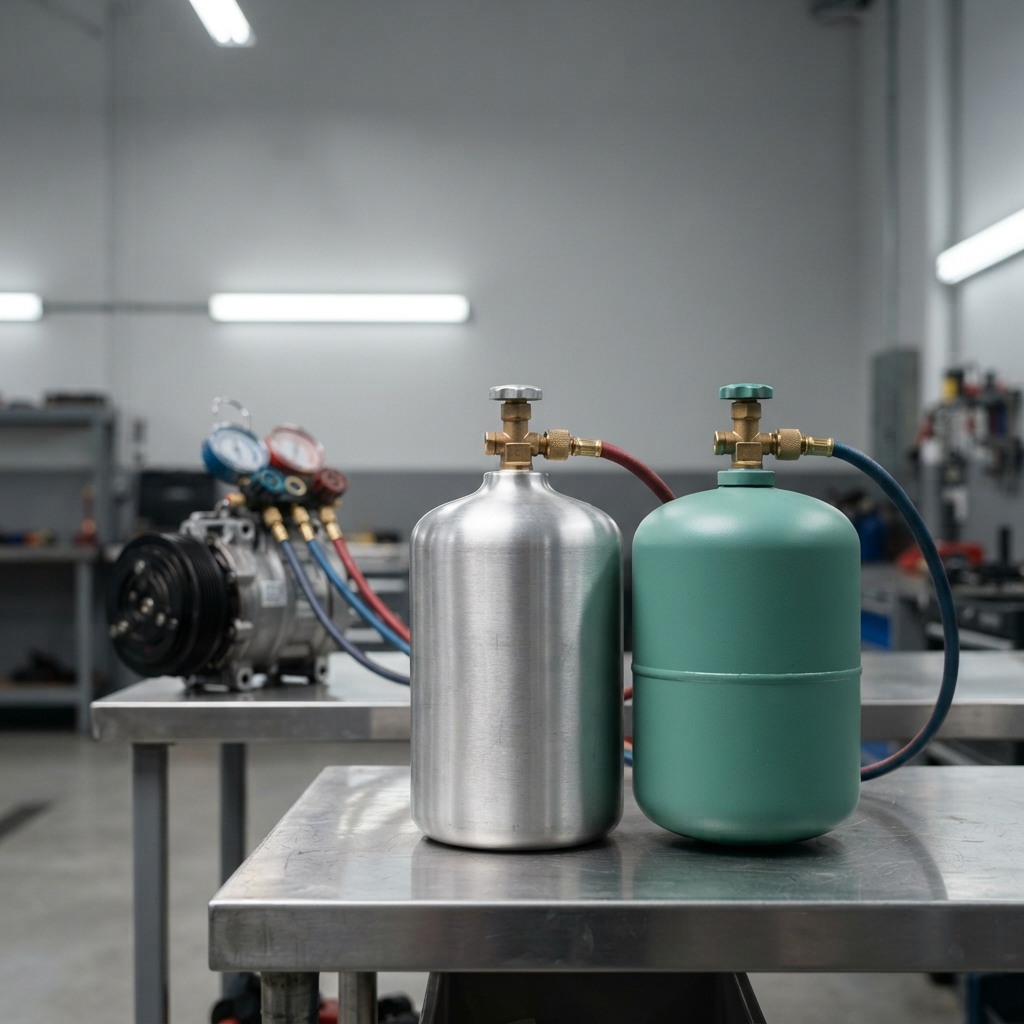
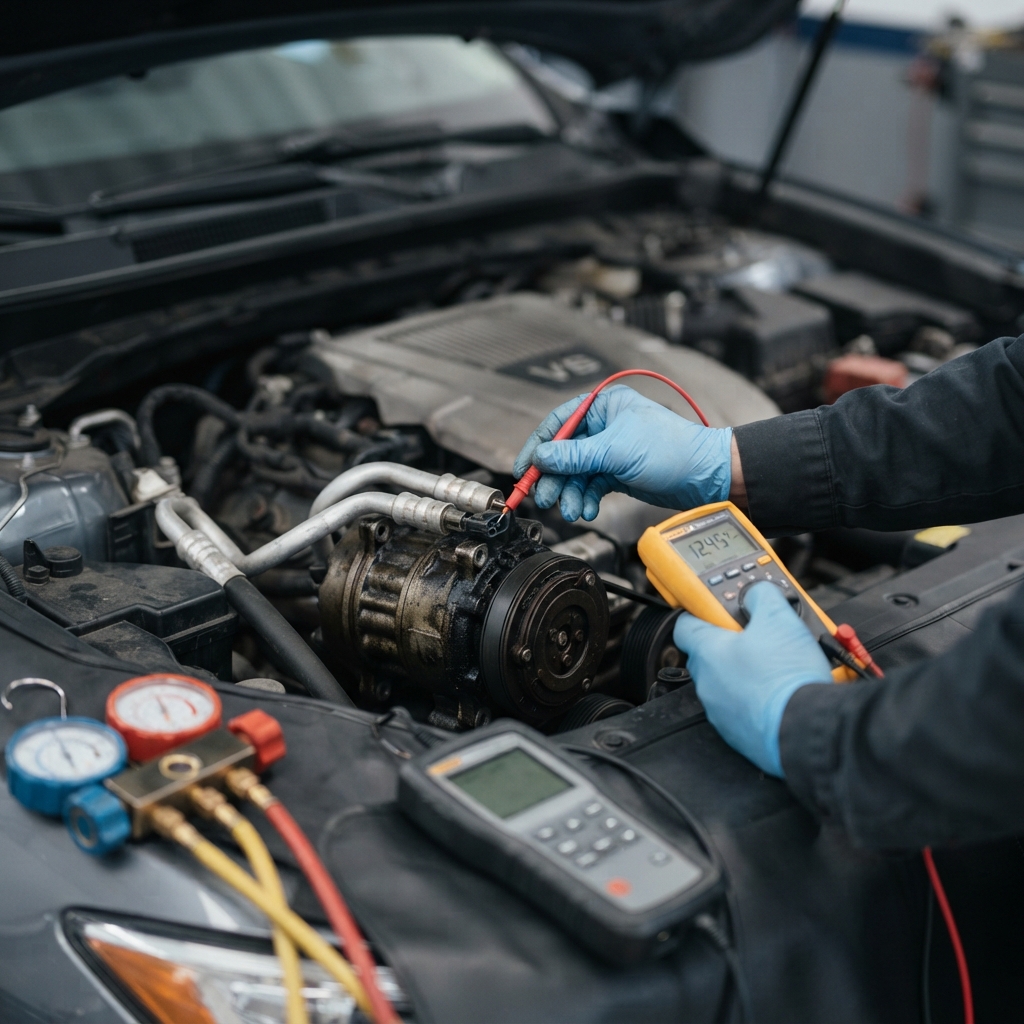
Auto parts buying is a sequence, not a shopping decision. A part works when the vehicle, the system it belongs to and the reason the original failed have all been identified first, and the fitment data has been checked against that record. This guide sets out that sequence for owners, DIY installers and workshop buyers, using an A/C compressor as the worked example because it exposes every step at once.
The goal is not to push a particular part. It is to help you reach a supplier conversation with enough information — about the auto parts replacement you actually need, the parts compatibility of the candidate unit and the evidence behind the listing — that the answer you get back is about your car, not about a generic catalogue entry.
Start With the Requirement: Vehicle, System, Use Case and Reason
Most wrong-part returns begin with a requirement that was never written down. Four questions settle that before any catalogue is opened.
1. Identify the vehicle precisely
- VIN and build data. Model year alone is too coarse. The same model year can carry different engines, accessory brackets and refrigerant circuits depending on build date and market.
- Engine code and displacement. A compressor bracket, pulley offset and hose routing are usually engine-specific, not body-specific.
- Trim and equipment. Climate control versus manual A/C, and whether the vehicle has rear A/C, changes the component list.
2. Identify the system, not only the part
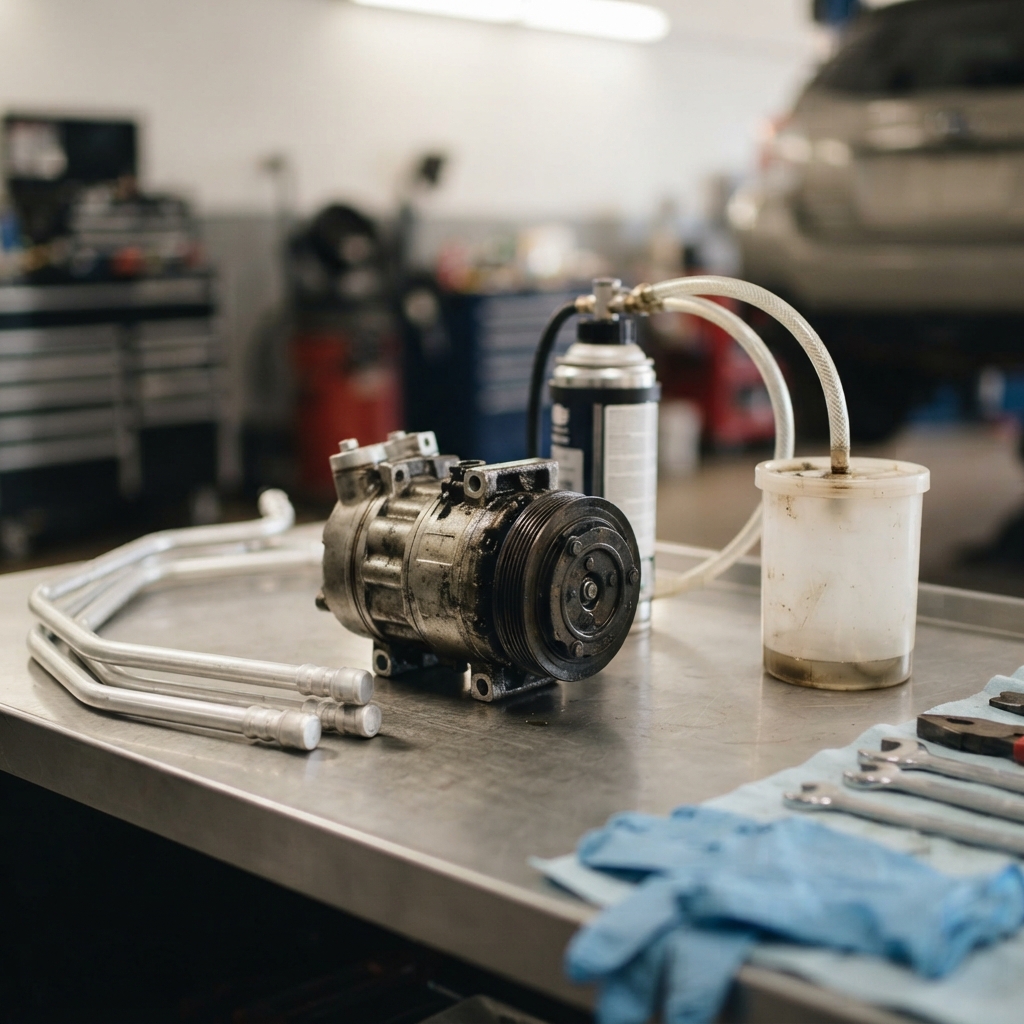
An A/C compressor sits inside a closed loop with a condenser, an expansion device, an evaporator, an accumulator or receiver-drier, refrigerant lines and controls. When a compressor seizes or sheds material internally, the debris travels with the refrigerant and settles elsewhere in that loop. Fitting a new compressor into a contaminated system is how a repair becomes a repeat repair. The A/C system flush guide explains when a flush is justified and which parts are replaced rather than cleaned.
3. Name the reason for replacement
Wear, a leaking shaft seal, a clutch or coil failure, noise, collision damage and preventive replacement each lead to a different parts list:
- A compressor that never engages is usually an electrical or control fault, not a mechanical one. Work through the compressor not engaging diagnostic sequence before ordering a compressor.
- Poor cooling only at idle points at condenser airflow before refrigerant charge, as the idle cooling diagnostic sets out.
- A noisy or seized compressor points to internal damage, which means the drier and the expansion device are part of the job.
4. Match the part to the duty, not just to the car
A commuter car, a loaded van, a taxi fleet and a machine working in a hot climate place different demands on the same nominal component. Compressor architecture matters here: fixed-displacement units run at a fixed swept volume, while variable-displacement units change output in response to a control signal, which is why the control type on the vehicle has to match the control type of the replacement. Capacity, pulley ratio and refrigerant also follow from the duty, so state the use case when you ask for a part.
Confirming Fitment: What the Paperwork Has to Show
Fitment is not a single field. It is a set of fields that have to agree at the same time, and a parts fitment record that shows only the first two is a record to question.
| Field | What to record | Why it decides the order |
|---|---|---|
| Application | Make, model, model year range, engine code, body or market variant | Defines the vehicle the part is built for; a year range alone hides engine splits |
| OE and interchange numbers | Every OE number on the record, plus any manufacturer or factory number | Lets you compare the replacement against the number on your original part |
| Pulley and clutch | Pulley diameter, groove count and profile, clutch voltage | Belt length, alignment and engagement depend on it; a matching body with the wrong pulley will not run correctly |
| Refrigerant and oil | R134a or R1234yf, lubricant type and charge guidance | Refrigerant determines the lubricant and the service equipment; the wrong pairing damages the compressor |
| Ports and connections | Port orientation, block or pad fitting, connector type | Decides whether the existing lines and harness reach without adapters |
| Condition and warranty | New or remanufactured, warranty period and what it covers | Sets the risk you carry and what evidence you keep |

One practical caution: the numbers stamped or cast on a housing are not always the OE number. Production codes, factory numbers and supplier markings can appear in the same area. Photograph every marking on the original part and send the images with the vehicle details, rather than transcribing one number from memory.
A Pre-Purchase Checklist for Auto Parts
The checklist below is what separates a part that can be supported from a part that cannot. It applies whether you are buying car maintenance parts for your own vehicle, aftermarket auto parts for a workshop customer, or an AC compressor replacement for a small fleet.
| Check | What acceptable evidence looks like |
|---|---|
| Identity | An OE number list plus an application record, not a title made of model names |
| Fitment detail | Pulley, connector, port and mounting data stated as numbers, not described as "similar" |
| Technical data | Voltage, refrigerant, lubricant and displacement or capacity stated on the record |
| Quality reference | A named quality system or standard on the record, and the supplier able to explain its scope |
| Traceability | Lot, batch or serial identity on the unit and the packaging |
| Warranty | Period, coverage and the claim route written down before purchase |
| Packaging | Port caps, pulley protection and moisture protection for a part with a desiccant or sealed circuit |
| System parts | The drier, expansion device or oil charge that the job requires, listed with the compressor |
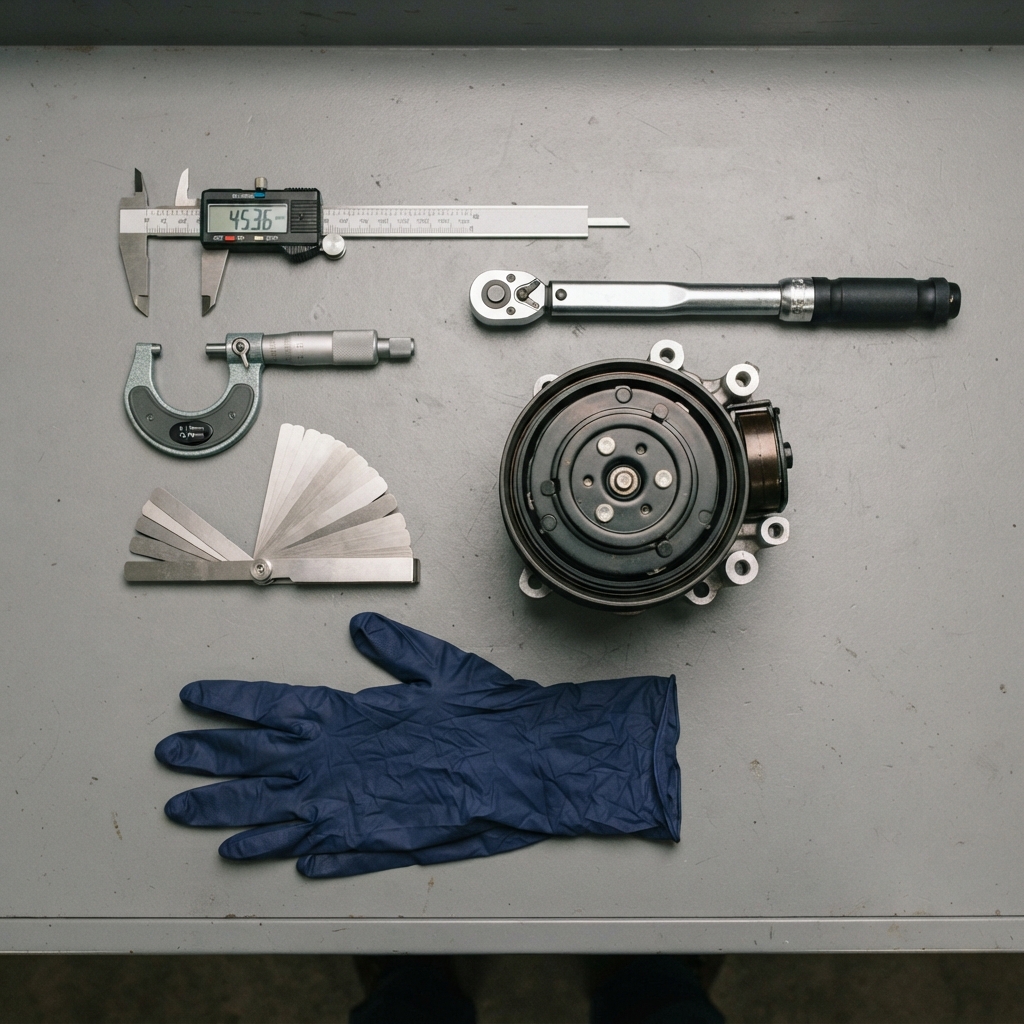
Two questions belong in every enquiry. First, which quality system does the production site work to, and can the certificate scope be shown? Second, what does the warranty claim require in practice, since a warranty that needs documentation you did not keep is not much of a warranty. For context on the first question, IATF 16949 is the automotive quality management system standard maintained by the International Automotive Task Force, which publishes its own description of the standard and its revision status at iatfglobaloversight.org.
Common Mistakes and How to Avoid Them
- Buying from the model year alone. Two vehicles built in the same year can take different compressors. Confirm with the VIN-level data or the OE number.
- Treating the OE number as the whole answer. Supersessions mean one part can replace several numbers, and one number can be listed under several brands. Compare the application record as well.
- Replacing the compressor without the circuit work. Debris from a failed compressor damages the new unit. The flush and replacement sequence is the part of the job that protects the purchase.
- Skipping the accumulator or receiver-drier. It holds the desiccant that controls moisture in the circuit; reusing an old one after a system repair leaves moisture where it does the most damage.
- Mixing refrigerants or lubricants. R134a and R1234yf use different lubricant families and different service equipment. The R1234yf versus R134a comparison covers the system-level differences, and the compressor oil guide covers PAG viscosity, charge rules and moisture control.
- Choosing aftermarket auto parts on price alone. A cheaper unit with no application data, no lot identity and an unclear claim route transfers risk to you rather than reducing cost.
- Ignoring packaging and storage. A compressor that sat uncapped on a shelf can take in moisture before it is ever installed.
- Fitting the part before checking the cause. If the original failed because of a blocked condenser, an overcharge or a control fault, the replacement inherits the same conditions.
How to Get Part Information and Discuss Requirements with zuaautoparts.com
Our site is the online side of Guangzhou Berlin Auto Parts Manufacturing Co., Ltd., a factory in Baiyun District, Guangzhou that has built piston-type automotive A/C compressors since 2006. The published range covers fixed and variable displacement compressor families from 80cc to 320cc, and the catalogue extends to cooling fan assemblies, evaporators, condensers, accumulator filter driers, expansion devices and refrigerant hose assemblies.
Two records from the current compressor range show the level of detail that makes a part orderable rather than guessable:
- BL.85.01, a CVC-type compressor for the Opel Astra H. The record lists OE numbers 09165714, 6854024, 9165714, 93176855 and 1854119 alongside OEM numbers 93176855, 1854119 and RC.600.06, a 110 mm PV5 pulley, 12 V operation, R134a refrigerant and a two-year warranty. See the Opel Astra H compressor record for the full application table.
- BL.81.344, a compressor for the Chevrolet Express 1500 and 2500 and matching GMC models. The record lists OE numbers 10366545, 15036042, 15081860, 15106396, 15169964, 77362 and 89024907, a 109 mm 4PK clutch, 12 V operation, R134a refrigerant, a two-year warranty and IATF 16949 on the part record. The Chevrolet Express compressor record carries the vehicle-by-vehicle fitment list.
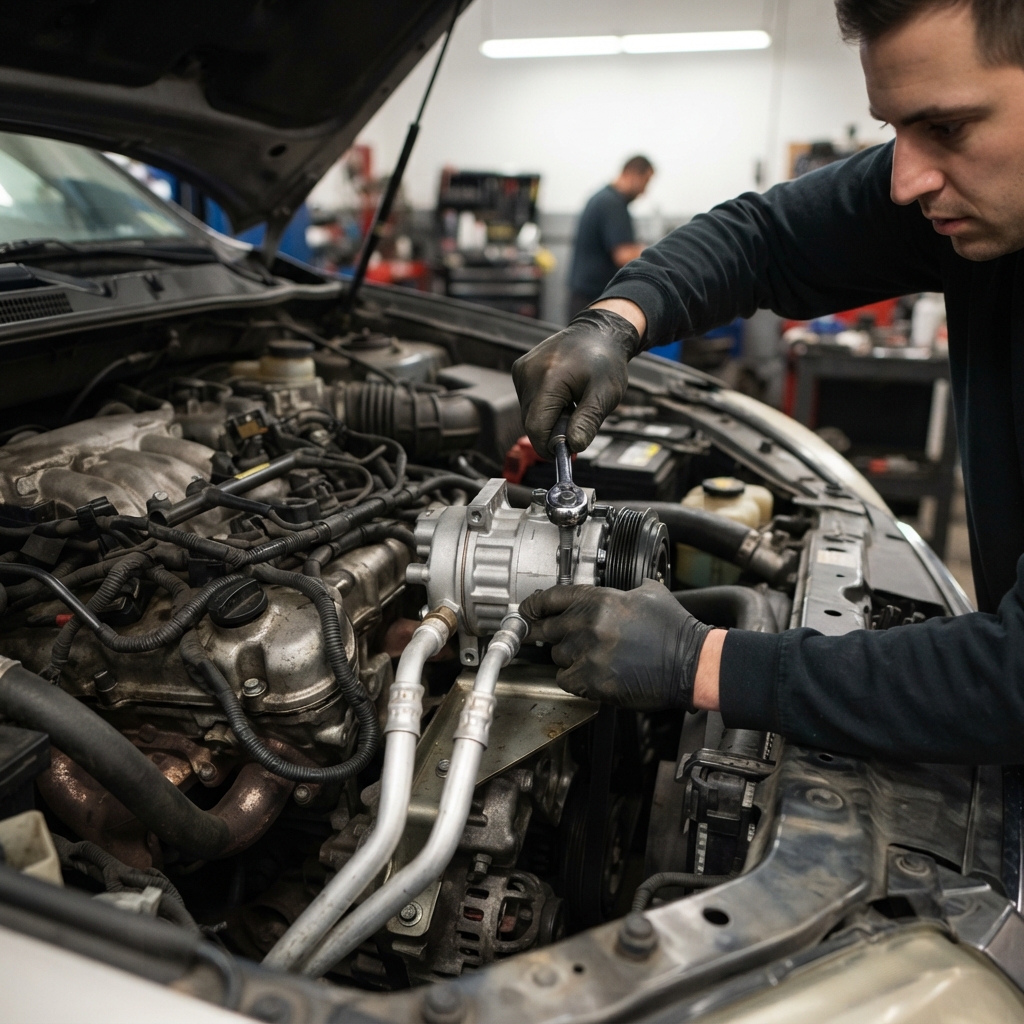
When you send a requirement through the contact page, the details that move a reply from "we have something similar" to a part number are: the VIN or full model and engine code, the OE number from the original unit, photographs of the nameplate and pulley, the refrigerant the vehicle uses, the quantity and destination, and the warranty requirement your market expects. If the vehicle is a fleet or workshop repeat order, add the failure pattern you are seeing, because a recurring failure usually changes which parts belong in the job. You can browse the full range on the products page, and the background of the factory is set out on the about page.
Frequently Asked Questions
How do I confirm that auto parts fit my car?
Match four things at once: the vehicle application record (make, model, year range, engine code), the OE number against the number on your original part, the physical interface (pulley, connector, ports, mounting), and the technical data such as refrigerant and voltage. If any one of those is missing from the listing, ask for it before ordering.
Is it acceptable to use aftermarket parts instead of OEM?
Aftermarket parts are widely used in service and repair, and the deciding factor is evidence rather than the label: a documented application record, traceable production, a stated quality system and a written warranty route. A part that cannot show those is a gamble regardless of what it is called.
Do related parts need replacing when an A/C compressor fails?
Usually yes. A failed compressor can leave debris in the circuit, and the accumulator or receiver-drier holds the desiccant that manages moisture. The flush sequence and the drier replacement are what protect the new compressor, which is why they are planned as part of the same job rather than as optional extras.
What should I include in a part enquiry?
Send the VIN or full model and engine code, the OE number and a photo of the nameplate, the pulley diameter and groove count if visible, the refrigerant type, the quantity, the destination market and any warranty requirement. That set lets a supplier confirm or reject the fitment instead of guessing.
Can I fit auto parts myself, or should a workshop do it?
Some parts are practical for a confident DIY owner with the right tools; others are not. A sealed refrigerant circuit needs recovery and charging equipment, and refrigerant handling rules differ by market, so check the local requirements before starting. Where the part affects system safety or needs calibration, a workshop with the correct equipment is the lower-risk route.
Conclusion
Buying auto parts well comes down to four steps in order: define the requirement, confirm the fitment data, check the evidence behind the part, and only then compare suppliers. A part that matches on application, interface and technical data, and that comes with traceability and a clear claim route, is a part you can install with confidence. Everything else is a maybe.
If you are working through a specific vehicle, start from the compressor and component range, then send the vehicle details, OE number and nameplate photos through the contact page so the fitment can be checked against the application record before anything is ordered.